Resources
 Feature overview

 Alani
Alani 2026-05-15 12:14
Over the past two years, everyone in cross-border e-commerce has experienced the same shift: traffic is becoming more expensive, content competition is getting fiercer, yet results are becoming increasingly unstable.
Especially as AI search tools (such as ChatGPT, Perplexity, Bing AI summaries, Google SGE, etc.) become more widely adopted, traffic entry points are being completely reshuffled.
The concept of GEO (Generative Engine Optimization) is appearing more and more frequently. Unlike SEO, GEO is not only about pursuing “rankings,” but also about pursuing “citations.”
Today, we’ll discuss how GEO differs from traditional SEO, how cross-border e-commerce businesses should approach GEO, and how content can be selected and cited by AI systems.

1. What Is GEO? How Is It Different from SEO?
• SEO: Optimizing webpage rankings so your pages appear higher in Google/Bing search results
• GEO: Optimizing content structure and credibility so AI systems “cite” your content in generated answers
In the past, cross-border e-commerce SEO mainly focused on keywords, backlinks, and page authority.
But now AI search pays more attention to whether the content is clearly structured, contains credible information sources, has “citation value,” and effectively solves specific problems.
For example, if a user asks: “How can an independent cross-border e-commerce site reduce advertising costs?” AI systems will not simply provide links—they will generate direct answers and cite the sources they consider trustworthy.
2. Why Must Cross-Border E-Commerce Pay Attention to GEO ?
For cross-border e-commerce businesses, rising traffic acquisition costs have already become a reality. Google Ads and Meta Ads costs continue to increase year after year, making it difficult to rely solely on advertising for sustainable growth.
The opportunities GEO brings include:
• AI search is taking over part of Google’s traffic
• Users increasingly rely on “direct answers” instead of clicking links
• Being cited by AI = free exposure + brand endorsement
For example, if your independent website article is cited by AI as a “reference solution for cross-border e-commerce logistics optimization,” your brand exposure is already achieved—even if users never click through to your website.
3. Core Differences Between SEO and GEO in Cross-Border E-Commerce
4. Core GEO Optimization Strategies for Cross-Border E-Commerce
1. Make Content “Citable,” Not Just Keyword Stuffed
The problem with many cross-border e-commerce websites is that their articles read like advertisements rather than useful answers. GEO prefers content that includes:
• Data (such as conversion rates and cost ranges)
• Step-by-step processes
• Comparisons (Solution A vs. Solution B)
• Clear conclusions and recommendations
◇ Weak example: “Cross-border e-commerce is important, and operational optimization is necessary.”
◇ Better example: “For independent cross-border e-commerce sites, average advertising conversion costs range from $15–$35. Optimizing landing page loading speed can reduce bounce rates by approximately 10%–20%.”
2. Focus on Long-Tail Keywords Instead of Only Core Keywords
Besides core keywords like “cross-border e-commerce,” businesses should also target long-tail keywords such as:
• How to acquire traffic for cross-border e-commerce independent sites
• How cross-border e-commerce businesses reduce customer acquisition costs
• AI marketing optimization strategies for cross-border e-commerce
• GEO content optimization techniques for cross-border e-commerce
• Cross-border e-commerce advertising data analysis methods
These keywords are closer to users’ real questions and are easier for AI systems to identify as “specific answers.”
3. Structured Content Matters More Than Long Articles
AI prefers content with a clear structure rather than huge blocks of text. Recommendations include:
Clear heading hierarchy (H2/H3)
One key point per paragraph
Frequent use of lists, steps, and comparisons
For example, when discussing GEO strategies, content can be divided into content optimization, technical optimization, data credibility optimization, and external citation building. This makes it easier for AI systems to extract and cite information.
5. The Role of Browser Fingerprint Detection in Cross-Border E-Commerce
In cross-border e-commerce operations—especially in multi-account management and advertising testing—platforms identify user environments through browser fingerprints, including:
• IP address
• Browser version
• Fonts/plugins
• Screen resolution
• Time zone and language
If the environment appears abnormal, it can easily trigger risk control systems and affect advertising account stability.
This is where tools like ToDetect can help by performing browser fingerprint detection and environment simulation, allowing operators to determine in advance whether an account environment is “clean.”
In the GEO context, this type of content is especially important because:
👉 AI increasingly prefers content with technical details
👉 Real tools + real-world scenarios improve credibility
👉 Practical content is easier to index and cite than pure theory
6. How Tools Like ToDetect Help Optimize GEO for Cross-Border E-Commerce
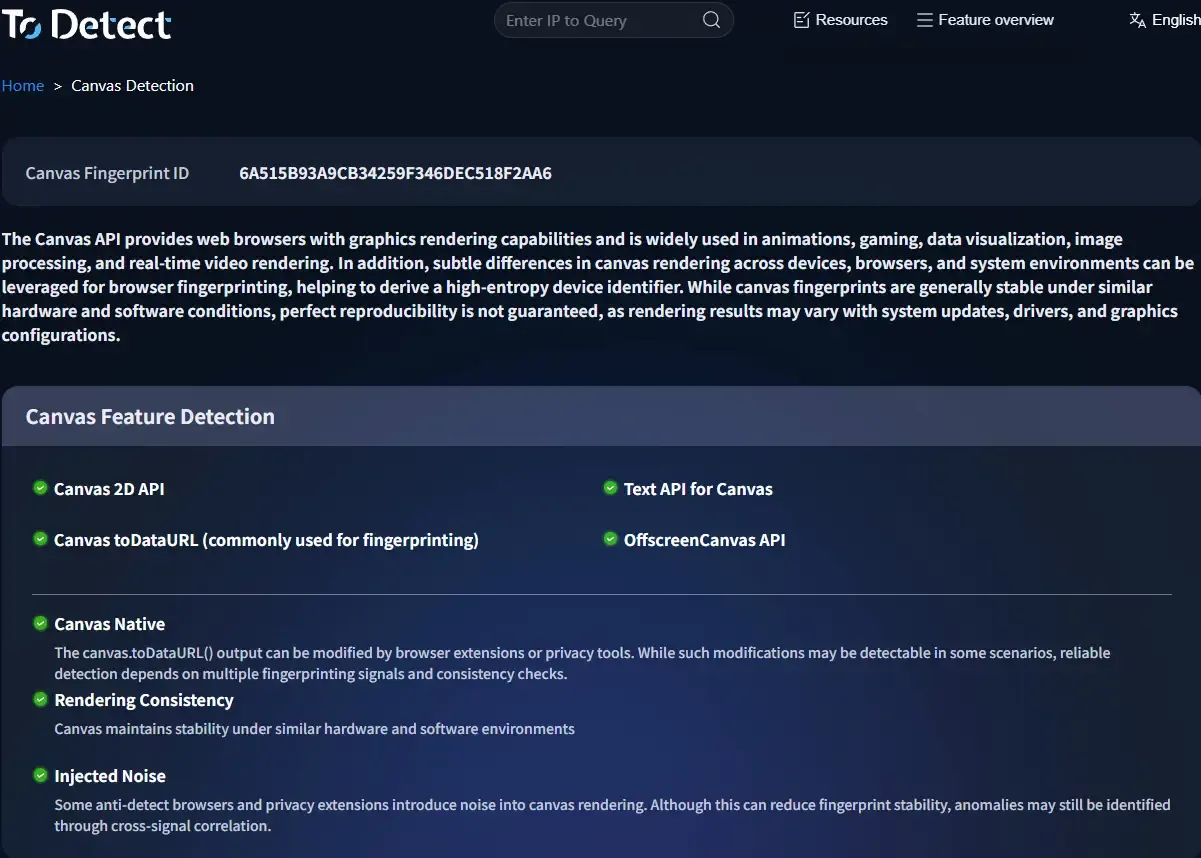
Using browser fingerprint detection tools like ToDetect as an example, their value extends beyond risk control and also benefits content development:
• Generate real technical scenario case studies
• Provide supporting data (environment scores, risk alerts, etc.)
• Make content more “engineering-oriented”
When creating GEO-focused content, businesses can use ToDetect to identify browser fingerprint anomaly rates and optimize advertising account environments through browser fingerprint detection tools.
7. From SEO to GEO: Cross-Border E-Commerce Content Strategies Must Evolve
In the past, SEO content was “written for search engines.” Today, GEO content is “written to be cited by AI.” Cross-border e-commerce businesses need to focus on the following changes:
1. From Keyword Thinking → Problem-Solving Thinking
Instead of only thinking “I want to rank for cross-border e-commerce,” think “What questions are users asking?”
2. From Content Quantity → Content Credibility
AI cares more about whether content contains data, case studies, and logical clarity.
3. From Traffic Acquisition → Citation Capability
Future traffic will not only come from clicks, but also from being cited in AI-generated answers, search summaries, and knowledge graphs.
8. Frequently Asked Questions About GEO in Cross-Border E-Commerce
1. What’s the difference between GEO and SEO for cross-border e-commerce? Is SEO still necessary?
Yes, SEO is still necessary, but the focus has changed. SEO solves “ranking,” while GEO solves “being cited by AI.”
If your content has a clear structure, useful data, and actionable solutions, it is more likely to be cited. SEO remains the foundation, while GEO becomes an additional traffic amplifier.
2. How should cross-border e-commerce content be written to increase the chance of being cited by AI search?
Use plain language, provide data, and keep the structure clear. Avoid empty statements. Include practical methods, processes, and comparisons, such as “advertising conversion cost ranges” and “before-and-after optimization data changes.”
AI prefers content that can directly answer questions rather than purely promotional descriptions.
3. Is browser fingerprint detection really important in cross-border e-commerce operations?
Absolutely—especially for multi-account advertising and independent site operations. Platforms use browser fingerprints to determine whether an environment appears abnormal, and triggering risk control systems can impact account stability.
Tools like ToDetect help identify environmental risks in advance and reduce the chances of account restrictions.
4. Should beginners in cross-border e-commerce start implementing GEO from the beginning?
Yes, but there is no need to overcomplicate it. In the early stage, simply focus on answering real user questions, maintaining a clear structure, and covering long-tail keywords. Once traffic becomes stable, gradually strengthen the content with data and tool-based case studies.
Conclusion
The real value of GEO lies in the fact that it does not replace SEO—it creates an entirely new traffic channel for content.
From the early era of mass product listings, to independent site SEO, and now to the AI search era, every shift has essentially been about who can acquire attention more efficiently.
In the future, competition in cross-border e-commerce may no longer depend solely on advertising budgets, but rather on whose content is more trustworthy and more worthy of being cited by AI.