



 Resources
 Feature overview
 Charles
 2026-04-22 11:21
Although DNS leaks may seem insignificant, they can directly expose your real browsing records and even render your privacy protection useless.
There are now many ways to detect DNS leaks, and countless tools are available online. Many people are unsure which methods and tools are the most reliable.
Today, we’ll share a complete guide to online DNS leak detection methods, along with practical tips and free tools to quickly check whether your DNS is leaking.

1. What is a DNS Leak? Why Is It Important?
DNS (Domain Name System) is like the “phonebook” of the internet. Even if you use an IP tool or proxy, if your DNS requests are not encrypted, your browsing records may still be exposed through your local ISP. This is what we call a DNS leak.
You should be especially cautious in the following scenarios:
• Using public WiFi
• Accessing external networks with IP tools
• Cross-border website or app access
• Users with high privacy and security requirements
2. What Is the Core Principle of DNS Leak Detection?
DNS leak detection essentially checks whether your DNS requests go through the intended secure channel or are routed back to your local ISP.
Detection tools typically evaluate this by:
• Recording the source IP of your DNS requests
• Determining whether the DNS servers belong to a VPN or encrypted network
• Checking for “abnormal DNS nodes”
• Using multi-node cross-validation to improve accuracy
If the results show your local ISP or DNS servers from unfamiliar countries, it can generally be concluded that a DNS leak exists.
3. What DNS Leak Detection Online Tools Are Available?
There are many free DNS leak testing tools online. No installation is required—you can simply open a webpage and run the test, making it very convenient.
1. Online DNS Leak Test Websites
Some professional security websites provide one-click detection. Simply click “Start Test,” and the system will automatically run multiple DNS queries and generate a report.
Advantages include: easy operation, fast detection, intuitive results, and support for multi-node analysis. Suitable for general users to quickly troubleshoot issues.
2. ToDetect Online Tool
Among many tools, comprehensive platforms like ToDetect are quite popular. It not only supports DNS leak detection but also provides overall network environment analysis.
How to use:
1. Open the website
2. Click the DNS detection module
3. Wait a few seconds for results
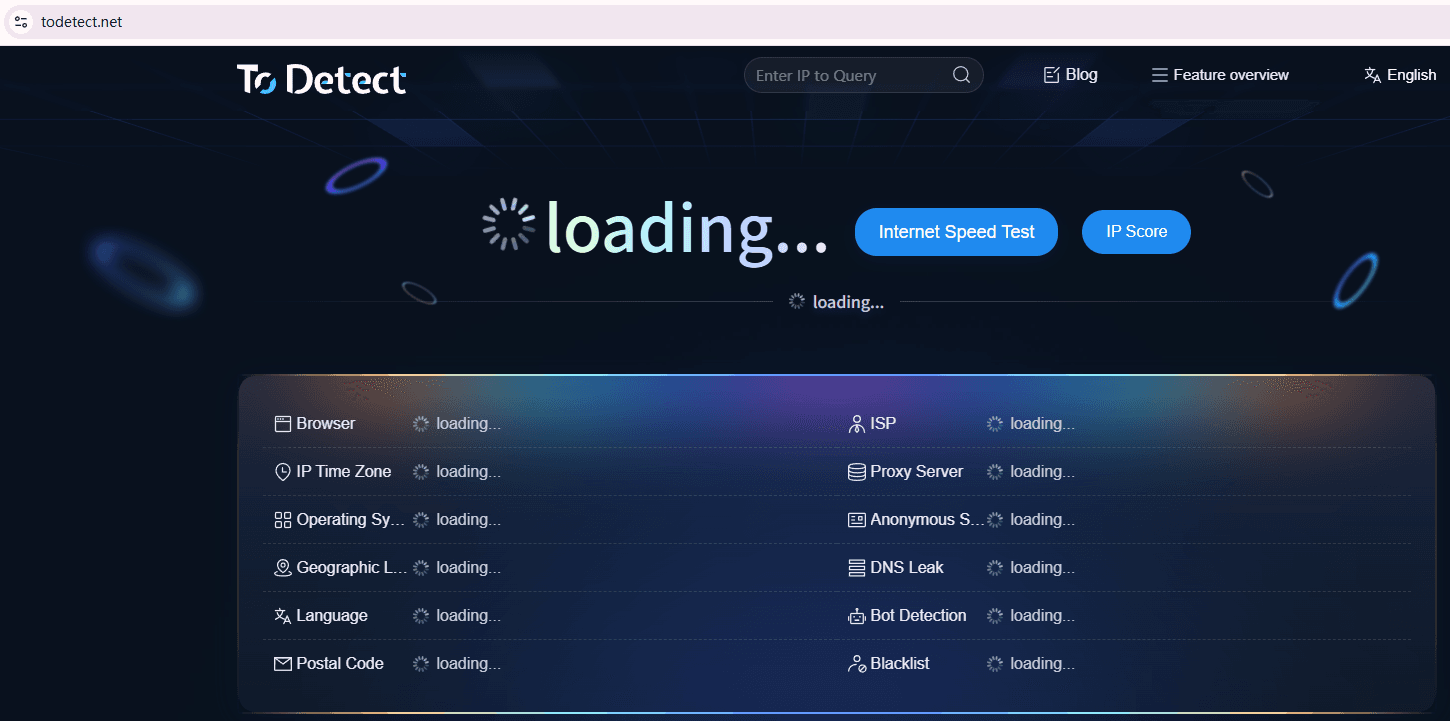
Its advantages include: multi-dimensional detection, ability to view DNS sources simultaneously, a clear interface suitable for beginners, and compatibility with other privacy testing features.
If you want a more comprehensive network security check, tools like ToDetect are more convenient.
3. Browser Fingerprinting for Additional Verification
• In addition to DNS leak testing, many users also combine it with browser fingerprint detection.
• This includes font information, screen resolution, plugins, time zone and language, and WebGL data.
• The reason is that even if DNS is not leaking, a highly unique browser fingerprint can still reveal your identity.
Therefore, many users adopt a combined approach: “DNS leak detection + browser fingerprint detection” to enhance overall privacy protection.
4. How to Determine If a DNS Leak Exists?
□ First, check the ownership of the DNS servers.
If the results show your local ISP’s DNS, it likely indicates a DNS leak.
□ Second, check whether DNS nodes are “chaotic.”
For example, if multiple countries’ DNS servers appear in a single test, this is a typical sign.
□ Check whether DNS matches your IP location.
If you are in one region but DNS results frequently point to others, this inconsistency is a warning sign.
□ One more note
Sometimes DNS leaks are not “complete” but “partial,” occurring only in certain apps or browsers. So don’t test just once—test multiple times under different network conditions for more reliable results.
5. Comparison of Common DNS Leak Detection Methods
6. Common DNS Leak Detection FAQs
1. Do you still need DNS leak detection if you’re using an IP tool?
Yes. IP tools only encrypt traffic. If DNS requests go through your local ISP, leaks can still occur. It’s recommended to run a DNS leak test after connecting.
2. If the result shows “local DNS,” is it unsafe?
Generally, yes. Local DNS indicates your requests may not be routed through secure channels, and your browsing activity could be exposed.
3. How often should you run DNS leak tests?
Test in these situations: after changing IP tools, connecting to new WiFi, or modifying network settings. For regular use, checking weekly or monthly is sufficient.
Summary: Don’t Ignore Hidden DNS Risks
Many people focus only on hiding their IP while overlooking DNS leaks. In reality, DNS leaks are one of the easiest ways for sensitive information to be exposed.
Make it a habit to regularly perform DNS leak tests. If you prefer not to deal with complex configurations, you can directly use online tools like ToDetect.