Resources
 Feature overview
Using Just a Temp Email Isn’t Enough: How to Prevent IP and DNS Leaks
 bonnie
 2025-12-23 03:59


In today's world where cybersecurity and privacy protection are becoming increasingly important, many people use temporary email (Temp Email) to protect their personal identity information, avoid spam emails, and prevent tracking by websites. However, temporary email is only the first step towards anonymity. If your IP address or DNS information is leaked, your real identity may still be exposed.
This article will provide a detailed explanation on how to avoid IP and DNS leaks while using a temporary email.
1. Why is Using Only a Temporary Email Far from Sufficient?
The main function of a temporary email is to hide your real email address, preventing you from being tracked when registering on websites or receiving emails. However, your true online identity consists of more than just your email address; it also includes:
1. IP Address: Websites can determine your geographic location and network environment through your IP address.
2. DNS Information: DNS requests can expose your internet service provider (ISP) and network environment.
3. Browser Fingerprint: Information such as your browser version, operating system, and installed extensions can also be used to identify you.
Without protecting this information, even if you use a temporary email, your anonymity can be easily compromised. In short, a temporary email is just superficial protection; IP and DNS are the critical factors for maintaining anonymity.
2. Risks of IP Leaks
An IP leak can lead to the following issues:
Exposure of Geographic Location: Websites can identify the city you are in, or even your specific network operating environment.
Multi-Account Linking: Registering multiple accounts from the same IP address makes it easy for platforms to identify them as associated accounts.
Proxy IP Blocking: Some websites detect whether an IP address is a proxy. If your real IP address is not hidden, the website may directly restrict your access or ban your account.
Solutions:
Use a high-anonymity proxy IP or a static residential IP to hide your real IP address.
Before accessing sensitive websites, you can first use the ToDetect IP Check Tool to verify whether your IP address is exposed or identified.
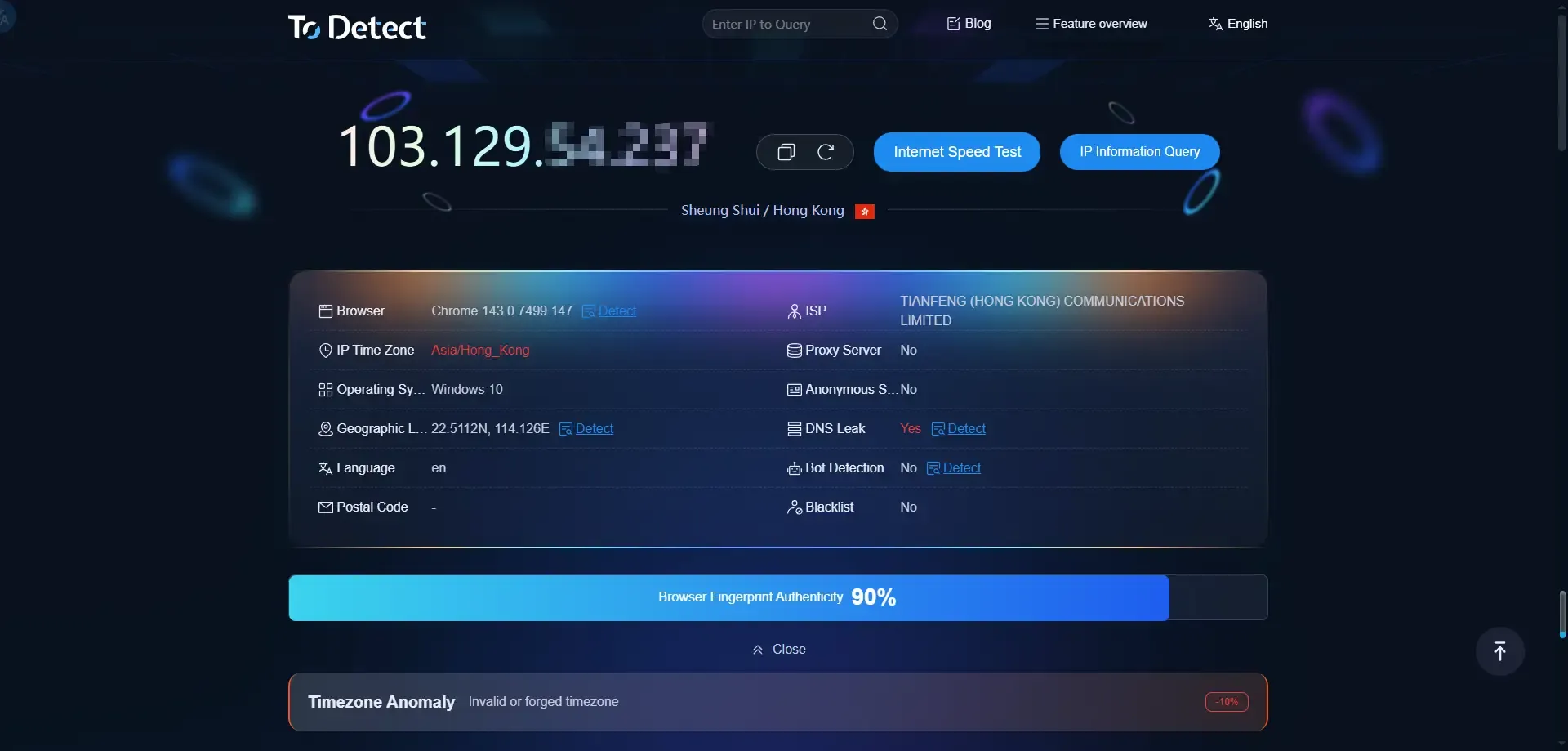
The ToDetect IP Check Tool can quickly display your public IP address, geographic location, and proxy type, allowing you to ensure security before registering or performing any operations.
3. Risks of DNS Leaks
A DNS leak occurs when your device still exposes real network information through DNS queries when accessing websites, even if you are using a proxy IP.
Risks include:
Security Vulnerabilities: DNS leaks can be exploited by attackers, increasing the risk of data interception.
Loss of Anonymity: Websites can track your real IP address through DNS requests.
Failure to Bypass Regional Restrictions: Even if you use a proxy IP, a DNS leak may cause the target website to identify your real location.
Solutions:
Use a reliable DNS server or technologies such as DNS over HTTPS (DoH) / DNS over TLS (DoT).
Use the ToDetect DNS Leak Check Tool to real-time verify whether your DNS requests are secure and whether they expose your real information.
Note: How to perform a DNS leak check with ToDetect:
1. Visit the official ToDetect website and click on "DNS Leak Check";
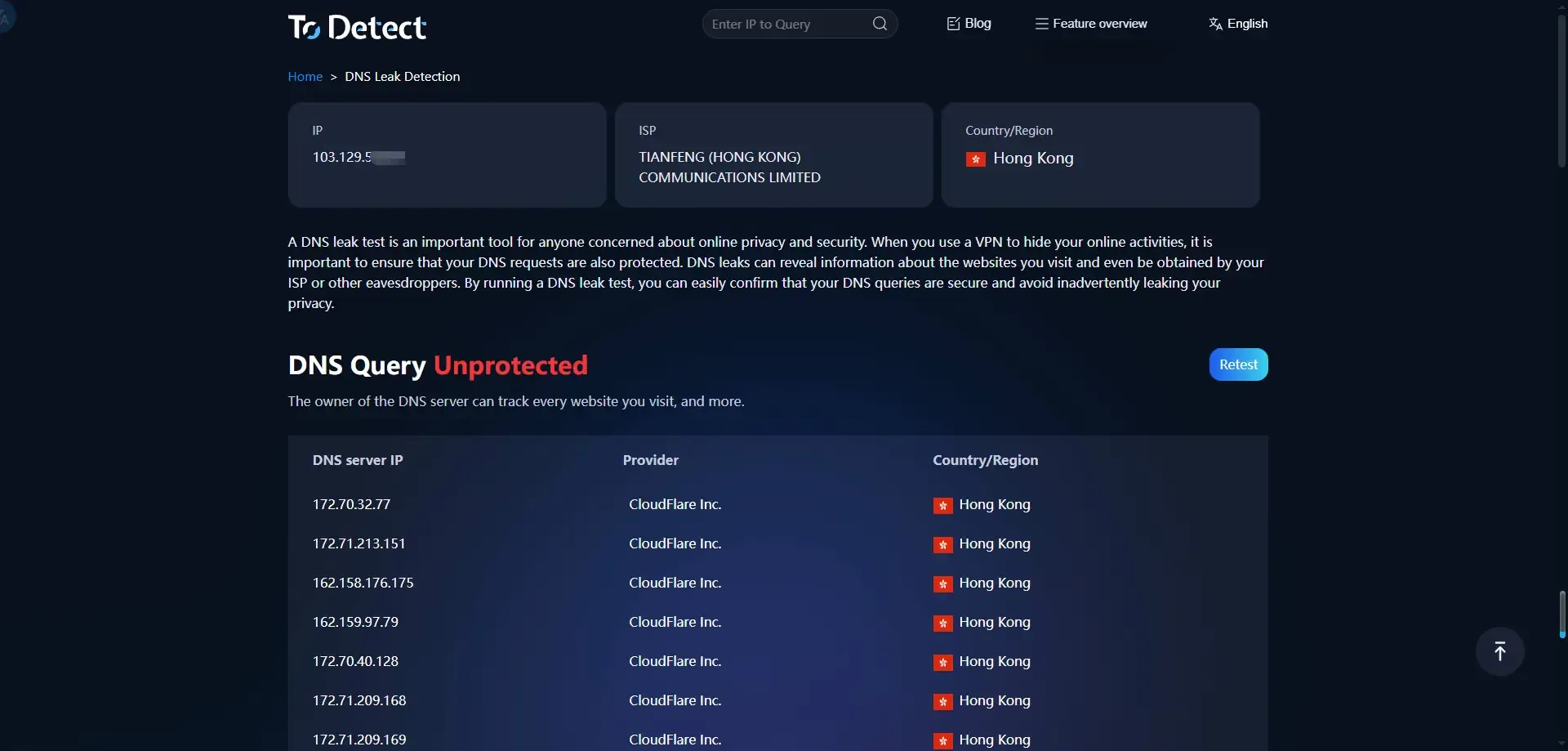
2. Simply wait for the check result; no additional operations are required as the check is performed automatically.
4. How to Use a Temporary Email Safely?
Combined with IP and DNS protection, here is a guide for using temporary email safely:
1. Register with a temporary email
On the premise that your IP and DNS are hidden, use Temp Email to register on websites or applications.
Remember to avoid frequently using temporary emails under the same IP address to prevent account linking.
2. Check your IP and DNS before registration
Open ToDetect to check if your public IP address and DNS are leaked.
If a leak is detected, first switch your proxy IP and then perform the check again to ensure no information is exposed.
5. The Value of ToDetect
ToDetect provides a full set of anonymity check tools, including:
IP Address Check: Displays your real IP address, proxy type, and geographic location.
DNS Leak Check: Detects the risk of DNS leaks.
Browser Fingerprint Check: Helps determine if websites can identify you through your browser fingerprint.
With ToDetect, you can ensure the security and reliability of your entire online identity chain while using a temporary email, greatly reducing the risk of being tracked or having your account banned.
6. Conclusion
Using a temporary email (Temp Email) can reduce the risk of email leaks, but IP and DNS leaks are the most critical privacy threats. The correct approach is as follows:
1. First, use ToDetect to check if your IP and DNS are secure;
2. Register with a temporary email;
3. Continuously monitor your network environment to prevent leaks.
Only with dual protection of your email and network environment can you achieve true anonymity and privacy security.
FAQ
Q1: How to avoid IP leaks?
Use a high-anonymity proxy IP or a static residential IP, and confirm security with the ToDetect IP Check Tool.
Q2: Will a DNS leak affect my temporary email?
Yes. A DNS leak will expose your real network information, and you may still be tracked even if you use a temporary email.
Q3: Can I use public Wi-Fi to register a temporary email?
Not recommended. Public Wi-Fi networks are prone to IP and DNS leaks, increasing the risk of identification and attacks.
 AD
AD