Resources
 Feature overview
How Fake IP Addresses Get Caught—and Why Step One Matters Most
 browser
 2026-02-04 03:08


In recent years, as long as you’ve had even minimal exposure to account operations, ad placement, or cross-border business, there’s one term you simply can’t avoid — IP spoofing.
But once you actually start operating, you quickly realize things are far from that simple. You use a proxy IP that looks “clean,” run IP information checks, confirm the region and ISP all match — yet the account still gets traffic-limited.
Today, based on real-world operational experience, we’ll break down how IP spoofing is identified step by step through the actual use of IP information checks and browser fingerprint detection, and also discuss how ordinary operators can reduce risks in the current environment.
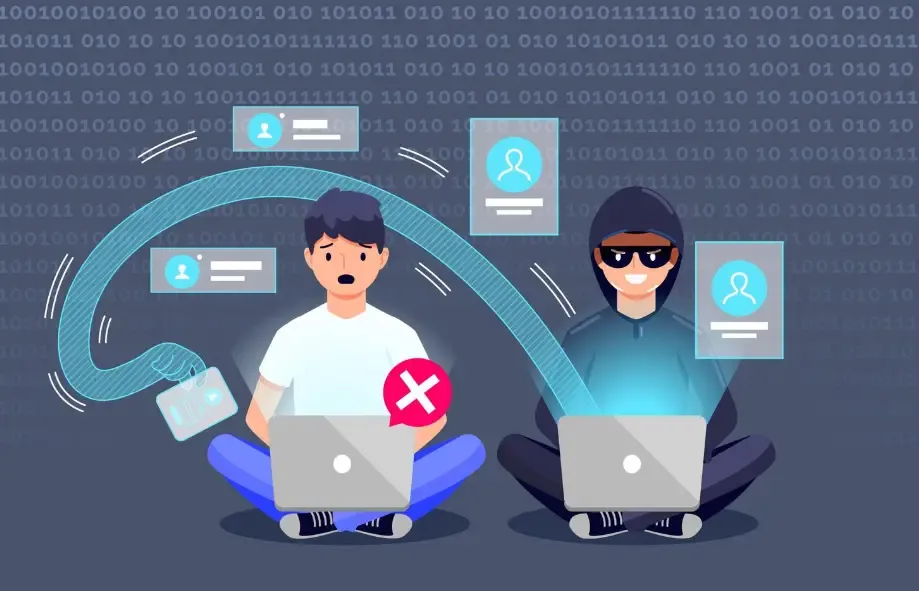
1. What Is IP Spoofing? Many People Get It Wrong from the Start
Let’s start with a common misconception: IP spoofing ≠ simply changing your IP address.
From a platform’s perspective, IP is only one dimension. Modern risk-control systems no longer rely on simple IP bans, but instead evaluate multiple factors:
• IP region and ISP
• IP historical behavior patterns
• Browser fingerprint
• Device fingerprint
• Network stability
So even if you’re using a proxy that looks “clean,” any mismatch in the surrounding information can still flag the account as abnormal.
This explains why many users run IP checks, see nothing wrong, yet still face traffic restrictions, risk controls, or even direct bans.
2. Why Did “Real” Residential IPs Still Fail?
Recently, we ran a test project using residential proxy IPs with fairly good market reputations. Early performance looked solid:
• IP information checks showed normal results
• Regions and ISPs matched correctly
• Latency and stability were acceptable
But on the third day, the platform began frequently requesting CAPTCHAs, and some accounts soon had features restricted.
We then ran a full scan using the ToDetect fingerprint analysis tool, and the problem became immediately clear.
3. When the IP Is Fine, the Real Giveaway Is the Browser Fingerprint
Through ToDetect’s browser fingerprint detection, we uncovered several key issues:
• Time zone didn’t match the IP location
• IP showed Europe, but the system time zone was still Asia
• Canvas and WebGL fingerprints had excessively high duplication
• Abnormally high fingerprint similarity across multiple accounts
• Fonts and plugins were overly uniform
• The environment didn’t resemble a real user at all
The platform didn’t explicitly accuse us of “IP spoofing.” Instead, it concluded — based on multiple signals — that this was a highly simulated environment.
In short: the IP was real, but the environment was fake.
4. How Should IP Information Checks Be Used Properly?
Many people only check three things: country, city, and ISP.
In practice, that’s far from enough. You should also evaluate:
• Whether the IP has been heavily abused
• Whether it appears in data-center or cloud provider ranges
• Whether the IP’s behavior profile is abnormal
• Whether it logically aligns with the browser fingerprint
Tools like the ToDetect fingerprint checker are most effective when used together with IP analysis — not in isolation.
5. Practical Tips: How to Reduce the Risk of IP Spoofing Detection
1. IPs Must Be Logically Consistent, Not Just “Usable”
Before attempting IP spoofing, IP information checks are mandatory — but don’t just skim the surface. Pay attention to:
• Country / city
• ISP type (residential / mobile / enterprise)
• Whether the IP is frequently rotated or reused
• Whether it belongs to a high-risk IP range
Most importantly: the IP must match your actual usage environment.
The IP is located in Germany with a local residential ISP, but the browser language is Chinese, the system time zone is UTC+8, and activity follows Asian working hours.
Even with a “clean” IP, this kind of mismatch is very likely to trigger risk controls.
2. Don’t Ignore Browser Fingerprint Detection — It’s the Most Common Failure Point
In real-world scenarios, these fingerprints are especially risky:
• Highly duplicated Canvas fingerprints
• Overly consistent WebGL rendering data
• Fonts that don’t match the region
• Clearly automated plugin patterns
Before going live, we usually run a full scan with the ToDetect fingerprint tool, focusing on:
• Whether fingerprint uniqueness is too high or too low
• Whether there are obvious environment conflicts
If an environment is already labeled “high risk” by ToDetect, issues after launch are only a matter of time.
3. IP, Device, and Behavior Must All Align
Based on recent industry trends, platforms rarely rely on a single signal anymore.
A truly stable environment requires all three of the following:
• IP level: clean, stable, region-appropriate
• Device level: realistic, differentiated browser fingerprints
• Behavior level: human-like operation patterns
For example:
• Avoid high-frequency actions immediately after changing IPs
• Allow a “warm-up period” for new environments
• Vary operation paths instead of following fixed routines
These details often matter more than the IP itself.
4. In Multi-Account Operations, the Biggest Risk Is Hidden Association
In multi-account scenarios, detection often isn’t caused by a single account, but by correlations between accounts.
Common failure causes include:
• Similar browser fingerprints across multiple accounts
• Overly concentrated IP ranges
• Highly synchronized login and activity times
Solutions are simple in theory, but hard in execution:
• Use isolated environments for each account
• Regularly compare fingerprints using ToDetect
• Distribute IPs naturally, not in clusters
Platforms aren’t afraid of multiple accounts — they’re afraid you look like the same person.
5. Tools Are for Early Detection, Not Post-Mortem Fixes
Many people only start running IP checks or browser fingerprint detection after an account is restricted or banned.
From a practical standpoint, these steps should happen much earlier. A recommended workflow:
1. Run IP checks to eliminate obvious high-risk IPs
2. Use ToDetect to evaluate the overall environment
3. Fix issues immediately instead of pushing forward blindly
4. Recheck regularly, especially after environment changes
It may feel tedious, but it can save enormous trial-and-error costs.
Final Thoughts
In hindsight, IP spoofing has never been about technical showmanship — it’s about overall authenticity.
You can change IPs, but it’s extremely difficult to fool an entire logical decision system. You can run IP checks, but if you ignore browser fingerprint detection, subtle inconsistencies will still expose you.
If you’re working on account-related projects or managing multiple environments, it’s worth establishing a workflow around IP information checks + ToDetect browser fingerprint detection early — don’t wait until bans force you to relearn the basics.
 AD
AD