Resources
 Feature overview
Still Getting Banned? Did You Set Up Canvas Fingerprinting?
 bonnie
 2026-01-08 05:45


IP addresses are an important factor affecting account security, access stability, and risk control judgments. With the development of cross-border e-commerce, overseas social media operations, and advertising campaigns, it is essential to understand and correctly choose the right type of IP.
This article provides an in-depth analysis of the differences between dynamic IPs and static IPs, teaches you how to identify the type of IP you are currently using, and helps you choose the most suitable IP solution based on your business needs.

1. What Is a Dynamic IP?
A dynamic IP refers to an IP address that changes periodically or irregularly. Each time you reconnect, redial, or refresh the network, the system reallocates a new address from the IP pool.
Typical Characteristics of Dynamic IPs
IP address is not fixed
Short usage cycle
Distributed sources
These IPs are commonly found in home broadband, mobile networks, and some dynamic proxy services, and are widely used for data collection, ad verification, and regional testing.
2. What Is a Static IP?
A static IP is an IP address that remains unchanged over a long period of time. No matter when you go online, the same IP address is assigned to you.
Typical Characteristics of Static IPs
• Long-term fixed IP
• Stable network environment
• High controllability
Static IPs are commonly used on servers, enterprise networks, and high-quality residential proxies, making them suitable for long-term operational activities.
3. Static IP vs Dynamic IP: Which Is More Secure?
There is no absolute answer as to whether dynamic IPs or static IPs are more secure—the key lies in how they are used and the environment in which they are applied.
• Although dynamic IPs reduce the risk of a single IP being blocked through rotation, overly frequent switching or mixed IP sources may instead trigger abnormal monitoring and risk control alerts.
• When a static IP remains clean over the long term and is strictly bound to a single account, its stability and consistency often result in higher trust and security, reducing the likelihood of being flagged by platforms.
In addition, IP security also depends on IP quality—high-quality residential IPs are generally more trustworthy than standard data center IPs.
Whether you combine the IP with proper browser fingerprint management and standardized operating practices also directly affects overall account security.
Therefore, choosing the more secure IP type ultimately depends on how you use the IP, along with high-quality resources and well-designed risk control strategies, to truly ensure operational security.
4. How to Check the Type of IP You Are Using?
Method 1: Check DHCP via Command Line
Note: This method usually applies only to home broadband directly connected to an optical modem (not VPNs / proxies / cloud servers).
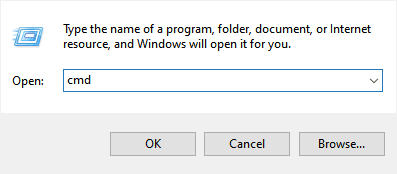
1. Press Win + R, then enter cmd
2. In the command window, enter ipconfig /all and press Enter

3. If DHCP is enabled and shown as “Yes,” it usually indicates that your IP is a dynamic IP.
Method 2: Reconnect the Network to See If the IP Changes
Disconnect and reconnect the network, proxy, or VPN multiple times;
During this process, open the ToDetect IP address lookup page and record the IP address;
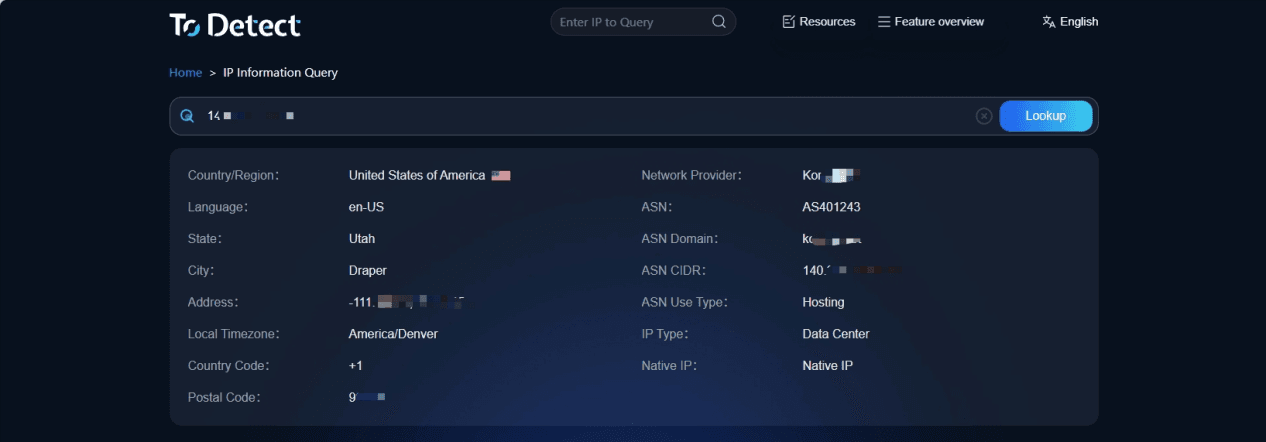
• If the IP changes, it can generally be identified as a dynamic IP;
• If it remains the same, it is a static IP.
In addition, ToDetect can also show whether your IP is a residential IP, whether it comes from a data center, and whether it is identified as a proxy.
5. How to Choose the Right IP for Yourself?
1. Does Your Business Require Frequent IP Changes?
If your operations require frequent changes in identity or location, such as regional verification before ad placement or data scraping, dynamic IPs are a more suitable choice.
By continuously rotating IP addresses, dynamic IPs effectively reduce the risk of a single IP being tracked or blocked over time, making operations more discreet and flexible.
2. Do You Need Long-Term Stable Login and Identity Consistency?
For scenarios such as cross-border e-commerce backends, overseas social media accounts, and advertising accounts that require long-term login and stable identities, static IPs are a better fit.
Stable static IPs help avoid frequent verification and risk control caused by IP changes, improving account security and operational efficiency.
Note: Ensure that each account is assigned an independent and clean static IP, and pair it with a stable browser environment to minimize the risk of account linking or bans.
3. Comprehensive Consideration of Risk Control and Security
Whether you choose a dynamic or static IP, IP quality and usage methods are critical.
• High-quality residential IPs or IPs provided by professional proxy platforms can significantly reduce the risk of being flagged;
• Using ToDetect for IP and browser fingerprint checks helps you evaluate IP security and platform recognition risks in real time, allowing you to adjust your strategy accordingly.
Summary
Dynamic IPs and static IPs each have their own advantages and applicable scenarios. You should make informed choices based on your business needs and operating environment.
By using professional detection tools such as ToDetect to monitor IP types and security status in real time, combined with high-quality IP resources and standardized operating practices,
you can maximize account security, reduce risk control issues, and support more stable and long-term cross-border operations and digital marketing efforts.
 AD
AD