



 Resources
 Feature overview
 Ganesh
 2026-09-04 18:44
Residential proxies route traffic through IP addresses associated with consumer internet connections. They can support approved public data collection, local SEO research, price monitoring, ad verification, and regional website testing when a workflow needs a relevant location context. IP quality, targeting precision, session control, and predictable costs all affect whether a residential network fits the task.
According to DataReportal, 6.12 billion people were using the internet at the start of April 2026, equal to 73.8% of the global population. As websites, prices, search results, and advertising can vary by country, city, and network context, residential proxies help teams run approved workflows from more relevant locations. This guide compares ten providers by network control, targeting, sessions, scalability, pricing, and customer-review ratings.
What Are Residential Proxies?
Residential proxies route requests through IP addresses assigned by internet service providers to consumer connections. Instead of sending traffic directly from a company server or office network, a proxy provider routes it through an available residential IP in the selected location.
These proxies can use rotating or sticky sessions. Rotating residential proxies change the exit IP based on the selected rule and can suit broader data-collection tasks, while sticky sessions keep the same IP for a defined period to support multi-page browsing or other workflows that need continuity. Providers may offer country, state, city, ZIP code, ISP, or ASN targeting, depending on the network. Unlike datacenter proxies, residential IPs provide a consumer-network context, but they should always be used in line with website terms, applicable laws, and reasonable request-rate limits.
What Are the Main Residential Proxy Use Cases?
Residential proxies can support several public-web workflows, particularly when results vary by location or repeated activity needs to be separated from an organization's main network. They are most useful when a team needs to collect permitted public data, compare market-specific information, or test how a website appears to users in different regions.
Web Scraping
Teams can collect permitted public data from websites for product research, directory building, content analysis, or market intelligence. Controlled rotation can spread requests across available IPs, while session settings can be adjusted to the source and extraction method.
SEO Monitoring
Search results vary by location, language, and user context. Residential proxies help SEO teams review country-level, city-level, or more granular SERPs for rank tracking, local visibility checks, and competitor research.
Price and Market Research
E-commerce prices, stock availability, delivery options, and promotional messaging can differ between markets. Location-targeted residential access can support more relevant regional comparisons when gathering public information.
Ad Verification
Advertisers and agencies can use residential connections to check whether approved campaign placements, creatives, and landing pages appear as expected in a target market. This is useful for reviewing geo-specific delivery and localization.
Localized Testing
Development, QA, and product teams can test public-facing pages, content delivery, and user journeys from selected locations. Sticky sessions can help when a test requires the same connection identity through several steps.
When Are the Best USA Proxy Servers Useful for Localized Work?
Best USA proxy servers are useful when a workflow needs to reflect US search, commerce, advertising, or web-access conditions. The right level of targeting depends on whether the work is national, state-specific, or city-specific. They can also help teams keep repeated US-focused research and testing requests separate from their primary corporate network.
● US SERP tracking: Review Google and other search results from the intended US market instead of one generic location.
● Local price monitoring: Compare public product prices, delivery messages, and availability across US regions.
● Ad verification: Check whether a campaign is visible to users in a selected US location and whether the correct landing page loads.
● State and city targeting: Support local SEO research, regional competitor checks, and area-specific content testing.
● US market research: Collect public listings, reviews, directories, and search results relevant to US audiences.
● Regional website testing: Review how a public website performs from a selected US connection context.
What Makes the Best Residential Proxies Reliable?
A large proxy pool alone does not guarantee useful performance. The best residential proxies combine consistently available IPs, accurate targeting, and session controls that match the workflow. Connection quality, protocol support, and the ability to maintain the required location during repeated requests also affect how well a proxy performs in practice.
Clean IP Quality
IP reputation and sourcing affect how consistently a public target responds to requests. Teams should test the network against their actual websites, locations, request volume, and browser or scraping setup before scaling.
Controlled Rotation
A rotation rule should fit the task rather than change identities unnecessarily. Broad discovery work may benefit from frequent rotation, while pagination, carts, and multi-step browser flows often need more stable behavior. Configurable rotation helps teams match IP changes to the request volume, target website, and duration of the approved workflow.
Stable Sessions
Sticky sessions keep one connection identity for a defined time. This can help with sessions that move through several pages, maintain a selected location, or require consistent behavior during an approved workflow.
Precise Geo-Targeting
Country-level coverage is useful for broad international work, while city, state, ZIP code, ISP, and ASN targeting can matter for local research. The provider should support the exact geographic precision required by reporting or testing.
Connection Compatibility
HTTP, HTTPS, and SOCKS5 compatibility affects how easily a proxy works with browsers, scripts, scrapers, automation tools, and internal systems. Authentication options should also fit the team's environment and access controls. Common protocol support simplifies setup across tools and production workflows.
What Matters When Choosing Residential Proxies?
The most suitable plan is the one that supports the real workload, not simply the provider with the largest advertised pool or lowest entry price. Teams need to compare required locations, session behavior, traffic volume, and tool compatibility before selecting a plan.
● IP quality: Assess the provider's IP sourcing, reputation, and consistency against the actual target sites.
● Geo-targeting: Confirm that the required countries, cities, ZIP codes, ISPs, or ASNs are available on the relevant product.
● Session control: Compare rotation behavior and sticky-session duration with the length and complexity of the workflow.
● Performance: Test connection success, response consistency, and stability at realistic request volumes.
● Scalability and pricing: Review traffic allowances, thread capacity, and the total cost of traffic, retries, and future growth.
How Do Residential and Datacenter Proxies Compare?
Residential and datacenter proxies serve different technical needs. The choice depends on the sensitivity of the target, the required location context, expected request volume, and budget. Residential proxies generally provide a consumer-network context and broader location controls, while datacenter proxies often prioritize speed and lower operating costs.
IP Source and Context
Residential proxies use IPs associated with consumer ISP connections, while datacenter proxies use server-based IP addresses from hosting infrastructure. Residential access can provide a more relevant consumer-network context for location-sensitive public-web tasks.
Speed and Cost
Datacenter proxies are often faster and less expensive for bulk technical tasks or lower-sensitivity public targets. Residential traffic generally costs more because it relies on consumer-network IP supply and more variable availability.
Targeting and Sessions
Residential networks frequently provide broader geographic targeting and flexible rotation or sticky-session options. Datacenter products can be a better match when fixed IPs, higher speeds, and predictable server-based infrastructure matter most.
How Did We Rank the Providers?
This ranking considers the practical factors that affect residential proxy use across recurring business, research, and technical workflows. It focuses on how effectively each provider supports real location-specific tasks, from smaller testing projects to sustained data-collection operations.
● Network quality: Residential IP sourcing, reputation, and suitability for consistent approved access.
● Location coverage: Availability of relevant countries, regions, cities, and specialized targeting options.
● Targeting precision: The level of geographic and network control offered on residential plans.
● Session flexibility: Rotation controls and sticky-session duration for short and longer workflows.
● Connection stability: Protocol compatibility, response consistency, and practical performance for recurring work.
● Pricing and scale: Entry costs, traffic structure, concurrency, and the ability to grow with demand.
What Are the 10 Best Residential Proxies in 2026?
The providers below offer residential proxy products for different priorities, from private rotating access and high-volume data collection to self-service management and granular targeting. Always test a provider with your permitted workflow before committing to a larger plan.
1. Live Proxies
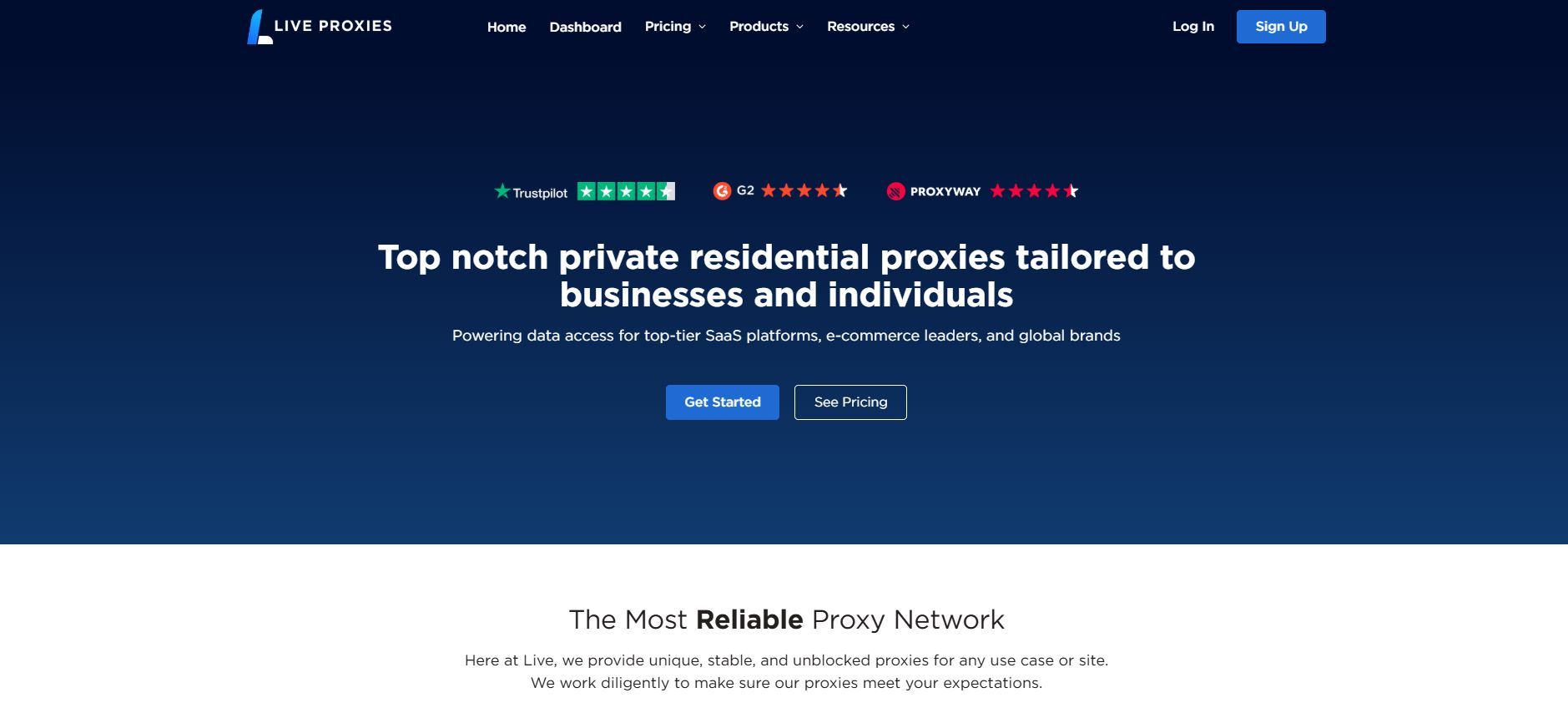
Live Proxies is a strong option for teams that need private rotating residential access for persistent, location-specific workflows. Its rotating residential proxy network combines private IP allocation, millions of IPs across 55 countries, unlimited threads, and country, city, and ASN targeting. HTTP and SOCKS5 support, together with sticky sessions of up to 24 hours, make it well-suited to approved public-data collection, SEO monitoring, price research, and browser automation where concurrency and session continuity matter.
Product Focus
● Private IP allocation: Supports exclusive B2C allocation and target-based B2B allocation to help organize separate workflows.
● Millions of IPs: Provides broad rotating coverage across 55 countries, with strong availability in the US, Canada, and the UK.
● Unlimited threads: Supports parallel work without restrictive thread limits on the selected plan.
● Location and protocol controls: Includes country, city, and ASN targeting with HTTP and SOCKS5 support.
Workload Fit
● Long-running sessions: Sticky residential sessions of up to 24 hours can support multi-page and repeat-access workflows.
● Localized monitoring: Useful for country-, city-, and ASN-specific SEO, pricing, and market-research tasks.
● Parallel collection: Private allocation and unlimited threads suit teams operating multiple approved workers at once.
2. Decodo
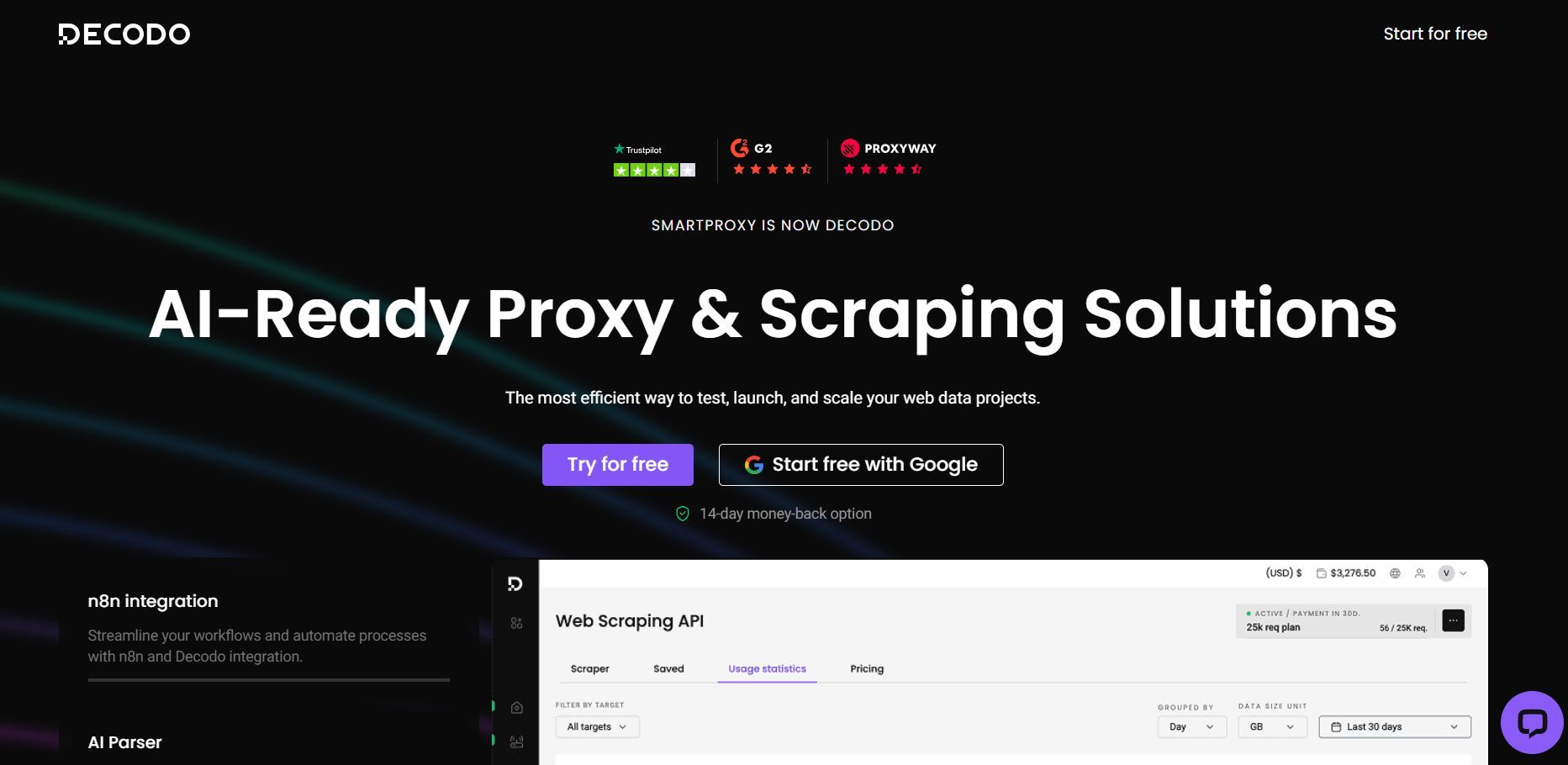
Decodo, formerly Smartproxy, provides residential proxies alongside ISP, mobile, and datacenter products. Its residential offering is suitable for teams that need flexible connection types, accessible controls, and the option to combine direct proxy access with managed data-collection tools. This makes it a practical choice for growing teams that need to adjust their setup for different targets, locations, and stages of a collection workflow.
Product Focus
● Location controls: Supports country, state, city, and ZIP code targeting for regional research and localized collection.
● Session flexibility: Offers rotating and sticky configurations for broad extraction and multi-step browsing.
● Developer tools: Provides proxy management and SERP-related products for teams with automated workflows.
Workload Fit
● SEO monitoring: Supports localized rank tracking, competitor reviews, and public SERP collection.
● Multi-market research: Useful when one workflow needs to compare several countries or local markets.
● Growing automation: Fits teams that need a flexible setup as data requirements become more complex.
3. Oxylabs
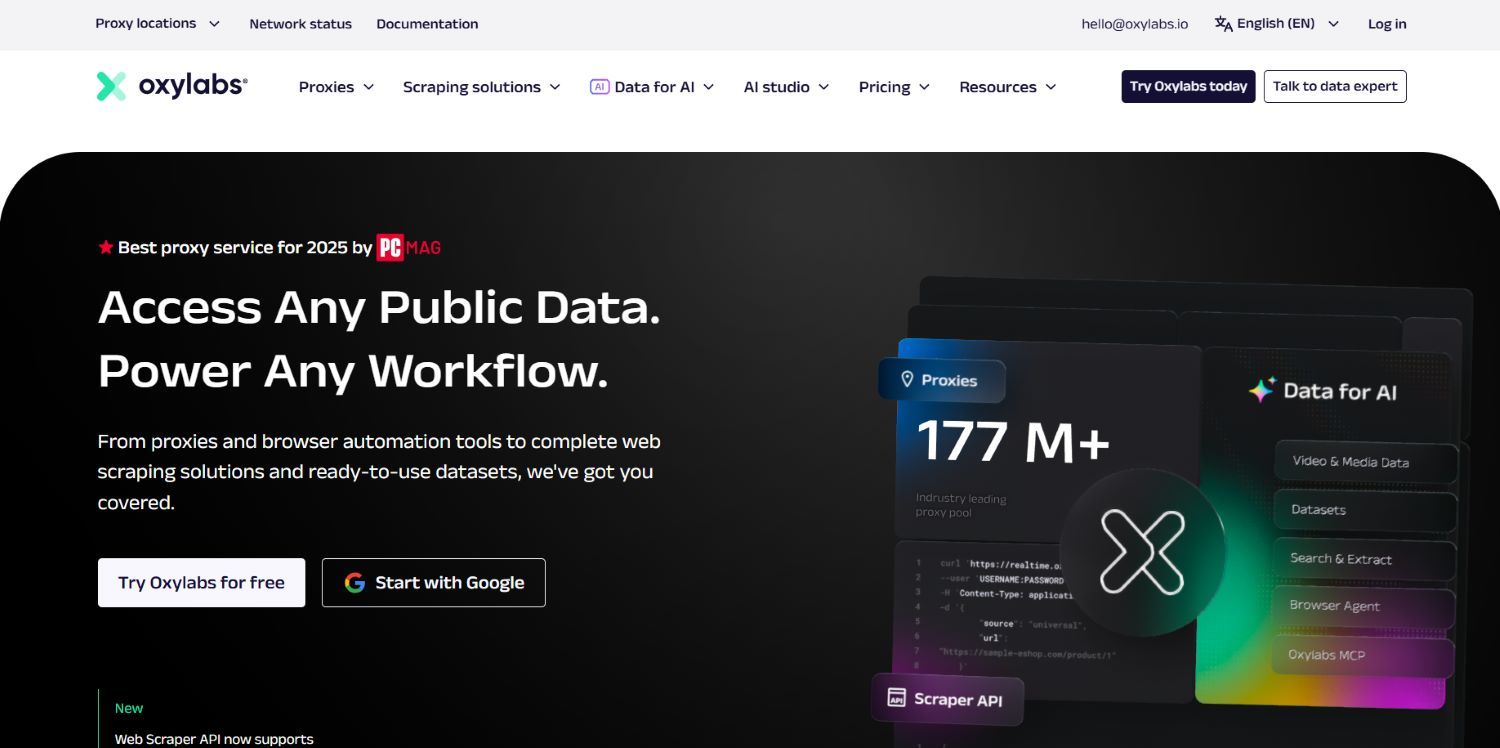
Oxylabs is an enterprise-focused provider with residential proxies and a broader web-data collection ecosystem. It is best suited to organizations that need high-volume capacity, detailed targeting, structured support, and managed tools alongside raw proxy access. Its wider product range can help larger teams coordinate recurring collection projects across multiple markets and public-data sources. This can reduce the need to manage separate vendors as data requirements grow.
Product Focus
● Enterprise infrastructure: Built for large data operations and sustained collection workflows.
● Granular targeting: Offers location controls that can include country, city, state, ZIP code, and ASN options.
● Managed data tools: Provides web-scraping and SERP-related products in addition to residential proxy access.
Workload Fit
● Large-scale scraping: Suitable for teams collecting permitted public data across many pages, markets, or product categories.
● Market intelligence: Supports international research that requires geographically relevant results.
● Enterprise pipelines: Fits structured data programs with internal engineering, reporting, and compliance processes.
4. SOAX
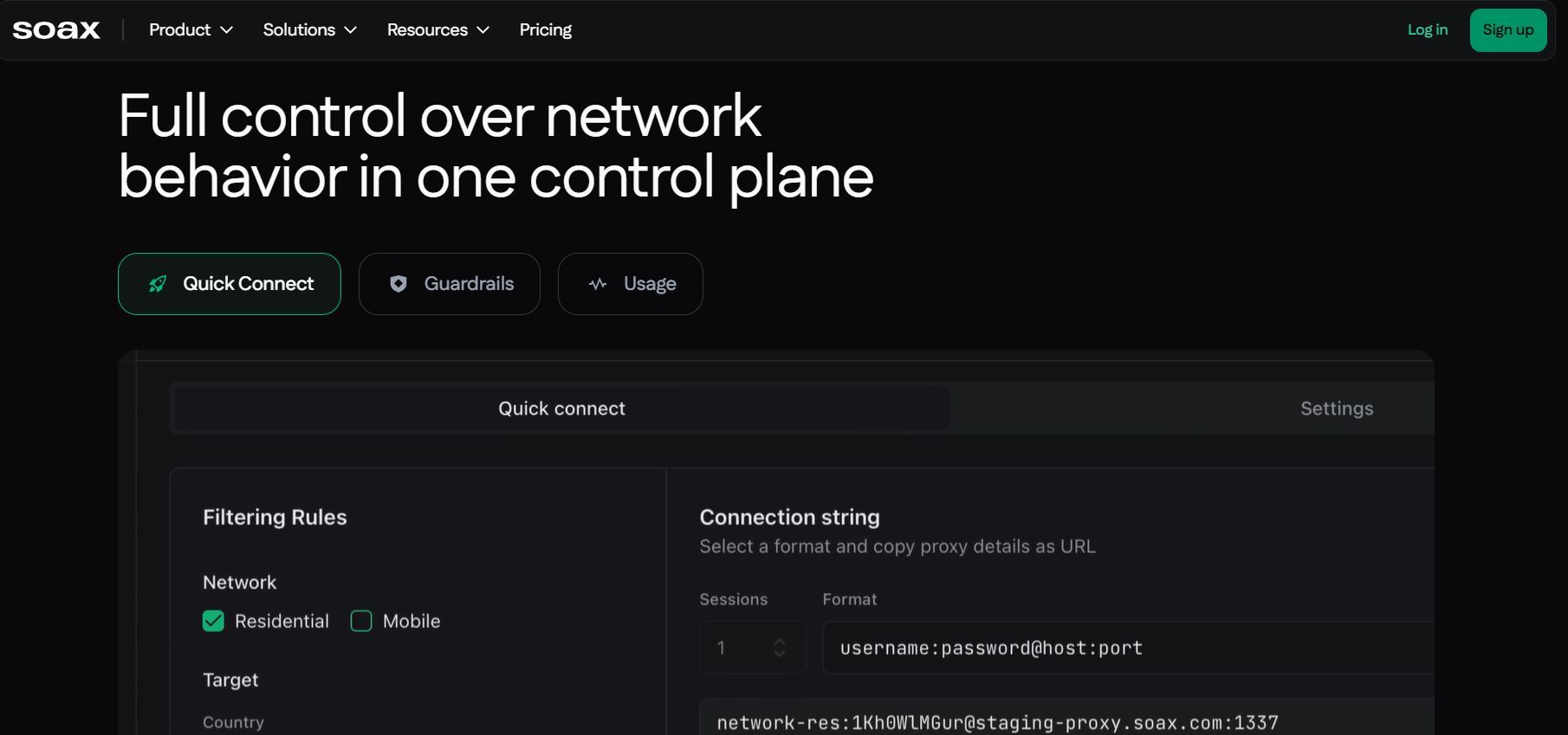
SOAX provides residential and mobile proxies for teams that need detailed location and network controls. Its residential product is particularly relevant when country-level targeting is not sufficient, and research depends on city, ISP, or ASN context. Rotating and sticky session options also give teams flexibility when they need to balance broad collection with stable, location-specific browsing. This makes the provider relevant for localized SEO, ad verification, and market research where the connection context can influence the result.
Product Focus
● Detailed targeting: Supports country, region, city, ISP, and ASN selection on relevant residential configurations.
● Session options: Provides rotating and sticky sessions for different request patterns and workflow lengths.
● Controlled access: Offers account and session controls for managing location-sensitive traffic.
Workload Fit
● Local research: Useful for city-specific search, pricing, advertising, and public-content checks.
● Localization testing: Supports reviewing websites and online services from a selected regional context.
● Network-sensitive tasks: Fits research where ISP or ASN conditions may affect the result.
5. IPRoyal
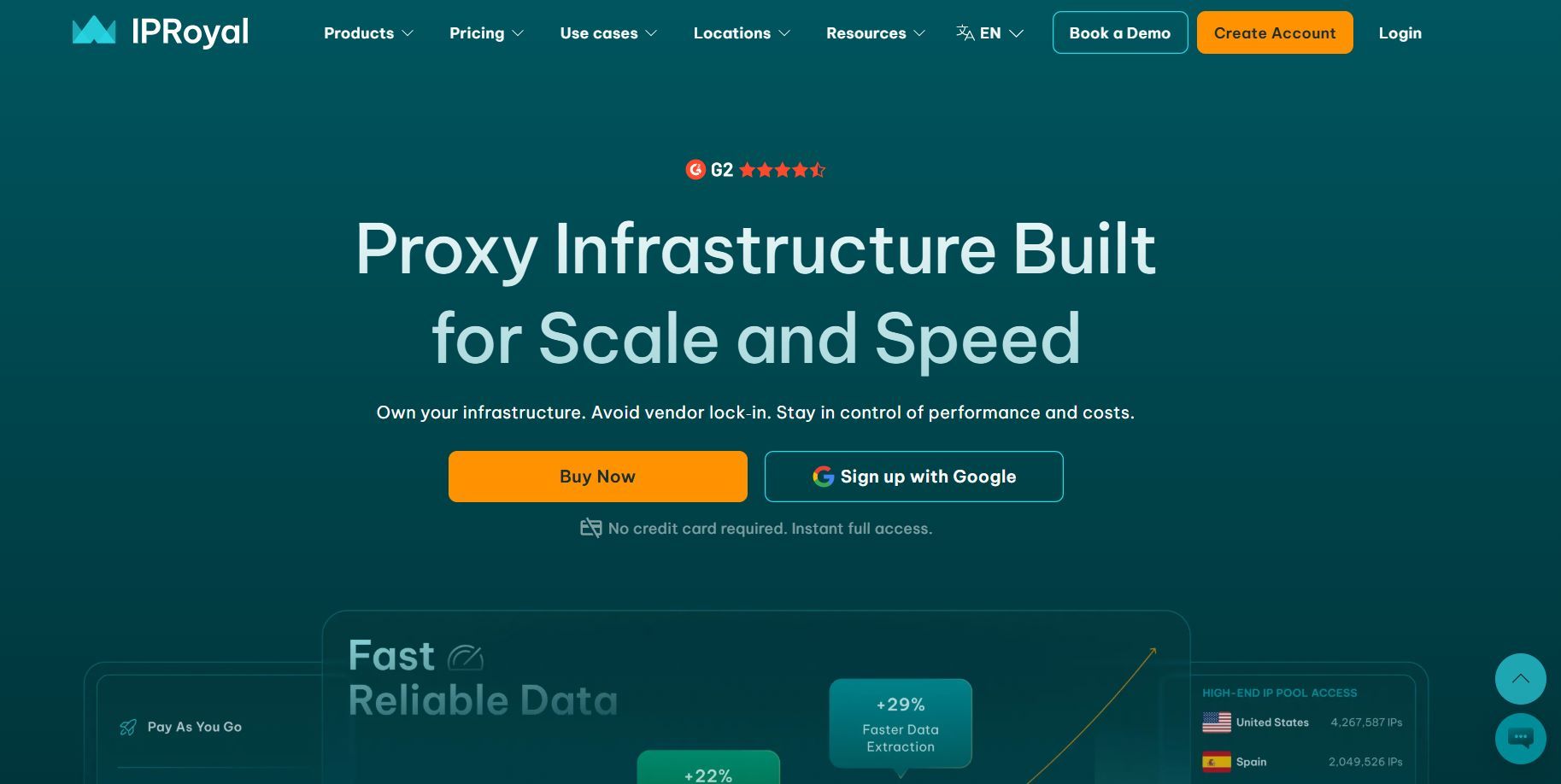
IPRoyal offers residential proxies for smaller and mid-sized teams that prefer flexible purchasing and straightforward controls. Its non-expiring residential traffic can be useful for intermittent projects that do not need to consume a fixed monthly allowance. The provider also offers location filters and longer sticky-session options, which can support recurring research, SEO monitoring, and repeat checks across selected markets.
Product Focus
● Flexible purchasing: Residential traffic is available through pay-as-you-go and volume-based options.
● Long sticky sessions: Supports sticky sessions that can last up to seven days for persistent workflows.
● Location filters: Provides country, state, city, ZIP code, and ASN targeting where available.
Workload Fit
● Recurring checks: Suitable for scheduled SEO monitoring, public-content reviews, and periodic research.
● Smaller projects: Works well when teams need to start gradually without a large ongoing commitment.
● Stable browsing flows: Long session availability can support workflows that revisit the same public source over time.
6. Webshare
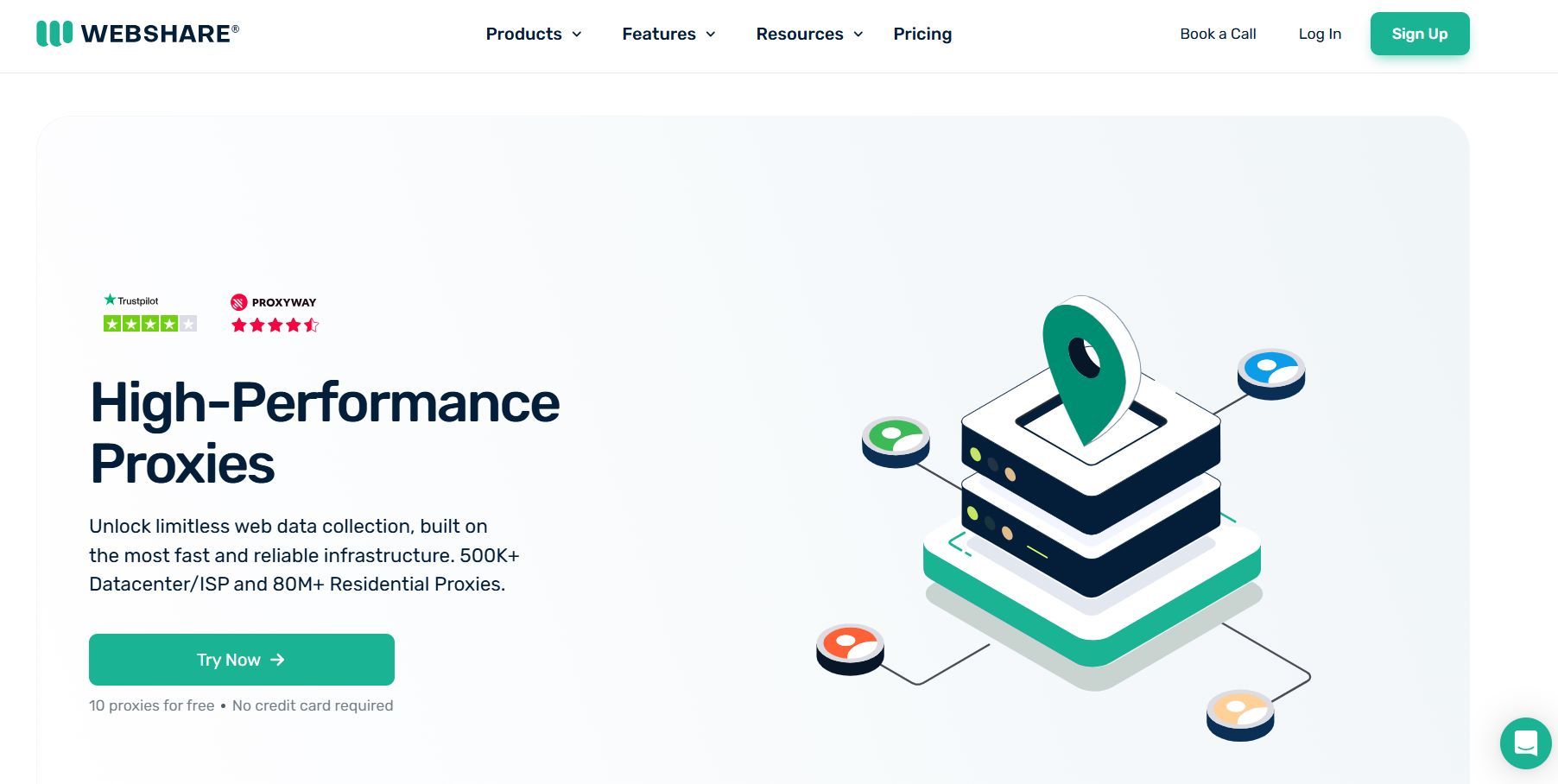
Webshare is a self-service provider with residential, ISP, and datacenter products. Its residential network can suit teams that manage their own scripts, proxy lists, and collection tools while needing practical targeting controls and scalable access. The dashboard and API-based controls make it useful for teams that want to configure credentials, locations, and proxy use directly within their existing workflow. It is particularly relevant for development, testing, and recurring data tasks that do not require a fully managed enterprise service.
Product Focus
● Self-service dashboard: Lets users manage proxy access, credentials, and traffic through a straightforward interface.
● Location controls: Supports country, city, state, ASN, and ZIP code targeting on relevant residential plans.
● Automation compatibility: API access can help connect proxy retrieval to internal tools and scheduled jobs.
Workload Fit
● Routine scraping: Suitable for approved recurring public-data collection through self-managed tools.
● Price monitoring: Supports regional product and availability checks across defined locations.
● Development testing: Useful for teams validating scripts, parsers, and proxy behavior before scaling.
7. Rayobyte
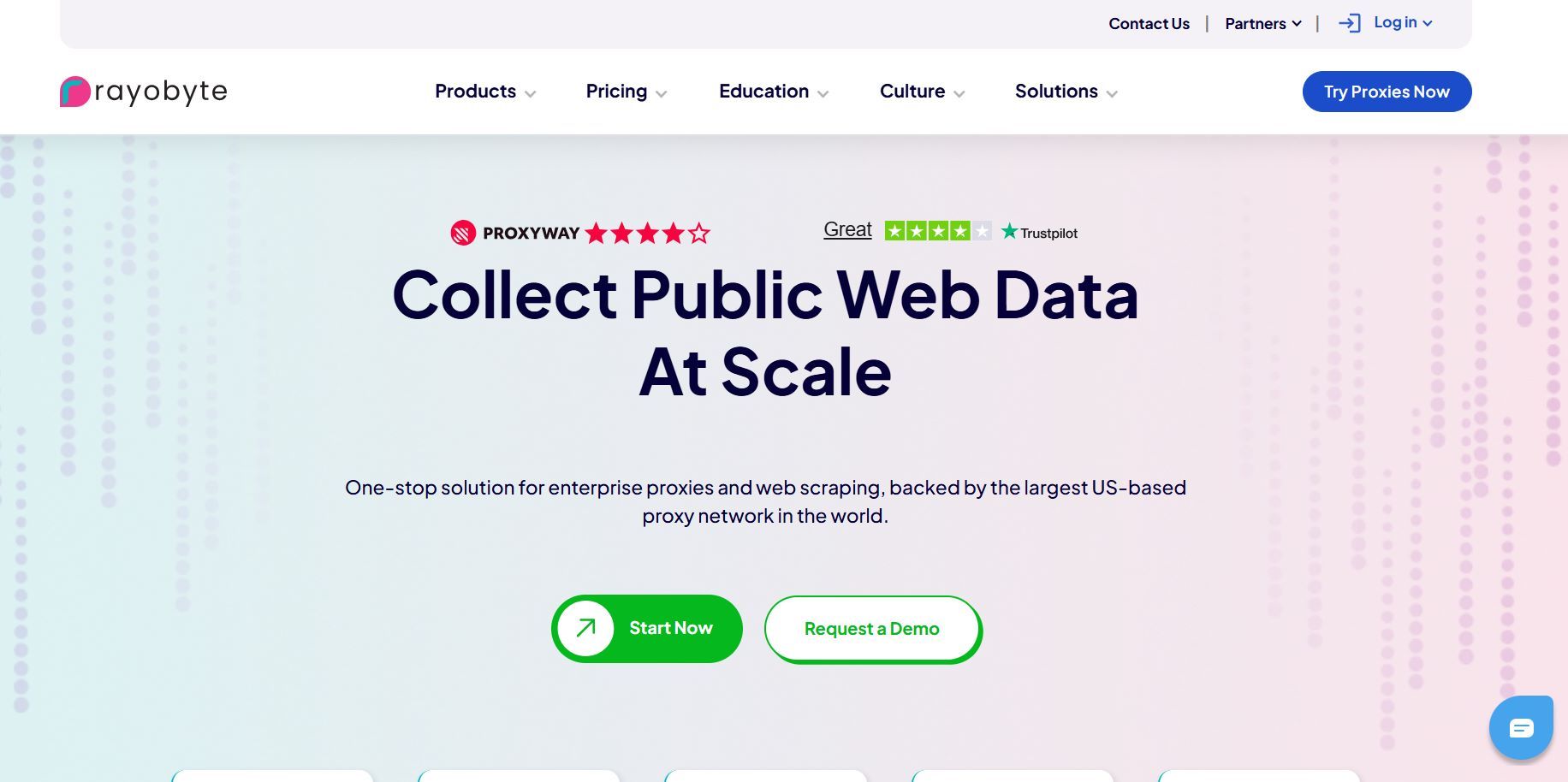
Rayobyte provides residential proxies alongside ISP and datacenter options. It can suit teams that need a controlled setup for regional public-web research, especially when US-oriented testing and data collection are important. Its product range gives technical teams the option to use different proxy types as project requirements change between stable sessions, faster collection, and location-specific research. This flexibility can be useful when one team manages several projects with different access and performance needs.
Product Focus
● Regional targeting: Supports country, region, and city controls for localized data requests.
● Session continuity: Offers sticky-session options for workflows that need a consistent identity.
● Mixed infrastructure: Provides several proxy types for teams that use different networks across projects.
Workload Fit
● US monitoring: Useful for US-focused SEO, e-commerce research, and public-directory collection.
● Regional testing: Supports location-specific website reviews and content checks.
● Mixed proxy projects: Fits technical teams that combine residential access with ISP or datacenter infrastructure.
8. ProxyEmpire
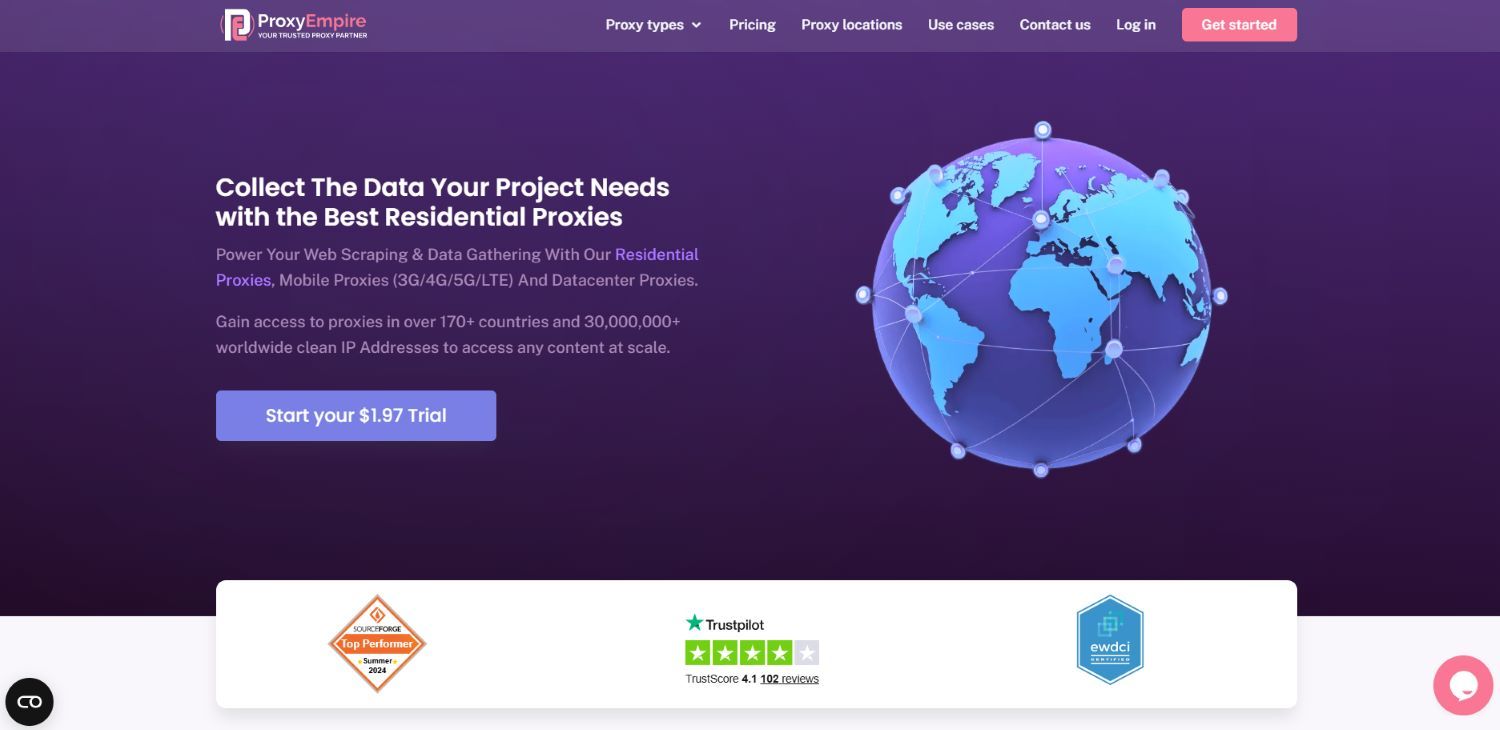
ProxyEmpire offers rotating, unlimited, and static residential products, alongside mobile and datacenter options. It is a flexible choice for teams that need to adjust rotation, session behavior, and location settings to match different public-web tasks. Its geo-targeting and session options can support regional research, price monitoring, and other recurring workflows that require a controlled connection context.
Product Focus
● Residential product range: Includes rotating, unlimited, and static residential options for different operating models.
● Geo-targeting: Supports country, region, city, and ISP targeting on relevant plans.
● Session controls: Provides several rotation settings and sticky-session options for recurring work.
Workload Fit
● Geo-specific scraping: Suitable for collecting public data from selected national or regional markets.
● Price monitoring: Helps teams compare public e-commerce information across locations.
● Flexible growth: Can fit projects that begin with smaller traffic needs and expand over time.
9. DataImpulse
DataImpulse is a cost-focused provider offering residential, mobile, datacenter, and premium residential products. Its pay-as-you-go structure can suit teams that need controlled residential access without a fixed traffic-expiration deadline. Country targeting, rotating and sticky sessions, and HTTP(S) and SOCKS5 support make it relevant for smaller collection projects, testing, and workflows that expand gradually. It can be a practical option when a team wants to test locations and proxy behavior before committing to higher traffic volumes.
Product Focus
● Flexible billing: Uses a pay-as-you-go model with non-expiring traffic for lighter or intermittent use.
● Targeting options: Provides country targeting plus selected city, ZIP code, and ASN controls.
● Rotation and protocols: Supports rotating and sticky sessions with HTTP(S) and SOCKS5 compatibility.
Workload Fit
● Testing projects: Useful for validating collection logic, targeting, and session behavior before scaling.
● Lightweight scraping: Fits smaller public research tasks and cost-sensitive data collection.
● Growing workflows: Can support teams adding traffic gradually as their collection requirements expand.
10. Infatica
Infatica provides residential proxies alongside mobile, ISP, and datacenter products, as well as web-data collection tools. It can suit teams that use API-driven processes or need to combine residential access with broader data infrastructure. Its location controls and flexible rotation options support recurring public-web research, automated collection, and market-monitoring workflows. This can help teams keep proxy access and data-gathering tools within a more unified technical setup.
Product Focus
● Residential coverage: Supports country, region, and city targeting for localized data tasks.
● Flexible rotation: Provides rotating and timed session configurations for recurring public-web workflows.
● Data tooling: Offers web-data and SERP-related products that can complement raw proxy access.
Workload Fit
● API-driven collection: Useful for teams that connect proxy traffic to scripts, dashboards, and automated pipelines.
● Search-data workflows: Supports recurring public SERP and content collection for research purposes.
● Business intelligence: Fits ongoing market, competitor, and public-web monitoring projects.
How Can You Choose the Right Residential Proxy Type?
Residential proxy configuration should reflect the session length, location precision, and technical requirements of the work. Selecting the wrong rotation or targeting model can add unnecessary cost and reduce consistency. Start by defining whether the task requires broad rotation, a stable session, or a long-term residential identity.
● Rotating residential proxies: Best for broad public-data collection, discovery tasks, and workflows that benefit from changing IPs.
● Sticky residential proxies: Better for multi-step browsing, pagination, carts, and other tasks that need the same identity for a period.
● Static residential proxies: Useful when a workflow requires a long-term, stable residential identity rather than rotating access.
● Location needs: Select the country, state, city, ZIP code, ISP, or ASN precision that the project genuinely requires.
● Session duration: Match the sticky-session limit to the expected length of the browser, crawler, or research flow.
● Scale and concurrency: Confirm that traffic allowances and thread capacity fit the number of parallel workers.
What Are the Most Common Residential Proxy Mistakes to Avoid?
Residential proxies work best when teams test them against a clearly defined, permitted workflow. Poor configuration can waste traffic, create inconsistent results, and make a suitable provider appear ineffective during recurring work. A short pilot with real locations and tools can reveal these issues before the project expands.
Choosing by Pool Size Alone
A large IP pool does not prove that a provider offers suitable IP quality, targeting, or session stability for a particular target. Test real locations, request patterns, and tools before relying on headline figures, especially when the workflow needs specific markets or a consistent connection context.
Using the Wrong Rotation or Session Setup
Frequent IP changes can interrupt multi-step workflows, while sessions that are too long may not fit broad collection tasks. Match rotation behavior and sticky-session duration to the target website, request volume, and expected workflow length. This helps maintain stable behavior without using more traffic than necessary.
Overlooking Targeting and Compatibility
Confirm that the plan supports the required locations and works with the intended browser, scraper, API client, or automation tool. Protocols, authentication methods, and location availability can significantly affect setup and create avoidable technical delays. Teams also need to verify that the selected product tier includes the required controls.
Comparing Only Headline Pricing
The lowest per-GB price is not always the lowest operating cost. Include retries, location requirements, session settings, traffic-expiration rules, and expected growth when comparing plans. A slightly higher rate may be more practical if it provides the session controls and locations the workflow actually needs.
Conclusion
The best residential proxy provider depends on the workflow, not only the network's advertised size. Teams need to prioritize IP quality, location accuracy, session control, protocol compatibility, and the real cost of completing approved tasks.
A suitable setup aligns the proxy type, targeting precision, and session behavior with the task at hand. Testing a provider with real locations, traffic patterns, and tools before scaling helps teams make a more reliable long-term decision.