



 Resources
 Feature overview
 Ganesh
 2026-09-04 10:31
Evaluating whether an IP address is worth using requires looking beyond basic metrics—you need to check if it's a residential network, assess its risk score, identify any obvious proxy traits, and inspect for anomalies in the network environment like DNS or WebRTC leaks.
While many websites offer IP lookup services today, their focuses vary significantly. Some excel at looking up ASNs and ISPs, others specialize in IP risk scoring, and a few provide all-in-one checks covering IP quality, proxy attributes, and overall network environment.
Below is a side-by-side comparison of several popular IP detection platforms. We will evaluate them across practical key metrics—IP purity, risk score, residential vs. datacenter detection, and DNS/WebRTC checks—to help you determine which tool fits your specific workflow best.

1. IP Lookup: What Data Points Actually Matter?
Different IP lookup sites rely on different data sources and detection rules. A single IP address might show a low risk score on Platform A, yet get flagged as a proxy on Platform B. For this reason, you shouldn't rely solely on a single score when testing IP quality.
In practice, a reliable workflow starts with checking the IP type—determining whether it is residential or datacenter. Next, inspect the risk score, proxy attributes, ASN, and ISP. Finally, evaluate environmental factors like DNS and WebRTC leaks.
A practical online IP check workflow follows this sequence: IP Type → IP Risk Score → Proxy Attributes → ISP/ASN → DNS → WebRTC.
2. ToDetect: Best for Comprehensive IP Quality Testing
If you prefer not to jump between multiple websites, ToDetect offers one of the most consolidated feature sets available.
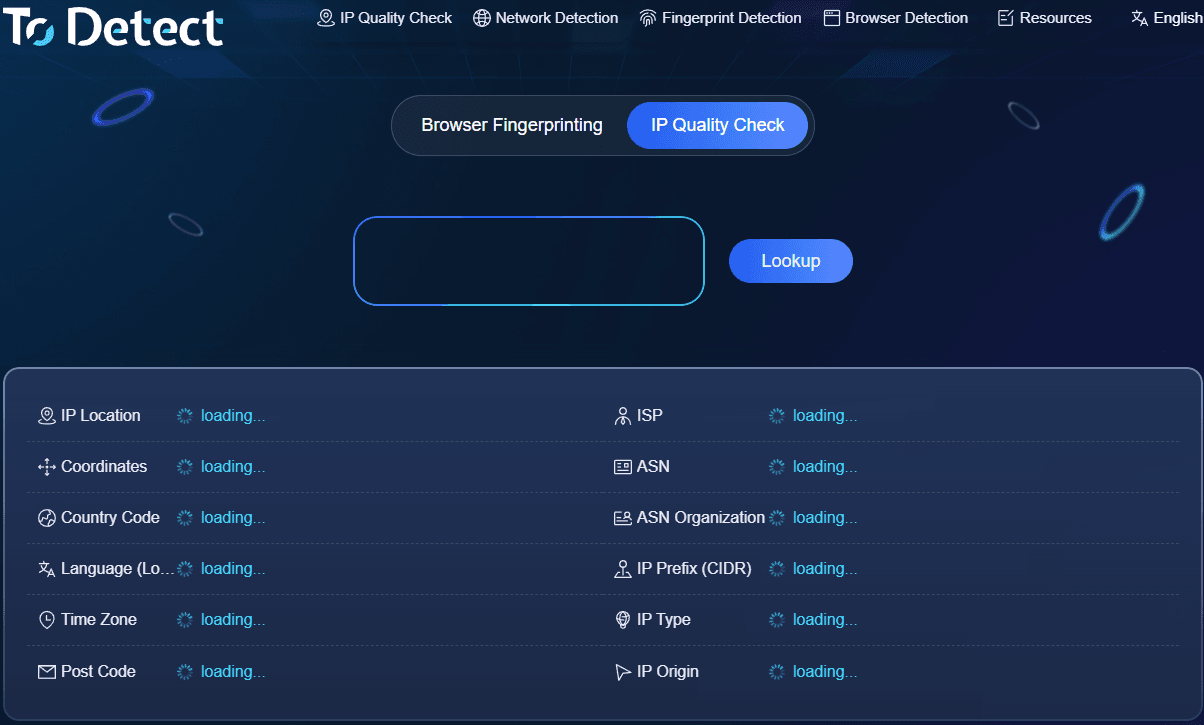
The biggest difference between ToDetect and traditional IP lookup sites is that it doesn't just show your geolocation—it analyzes IP quality, risk levels, network types, and browser environments together in one view.
Often, the IP address itself shows no issues, but the surrounding environment introduces risks. For example, if your exit IP appears in the United States but the DNS lookup resolves to a conflicting geographic region, standard IP risk scoring alone won't flag the mismatch.
Best for: Proxy IP checks, IP purity testing, IP risk queries, and DNS/WebRTC leak inspection.
3. IPinfo: Excellent for Geolocation and ASN Queries
IPinfo isn't typically used as a full IP purity checker, but rather as an essential tool for verifying background details. Entering an IP provides clear baseline data, including country, city, ISP, ASN, and organization.
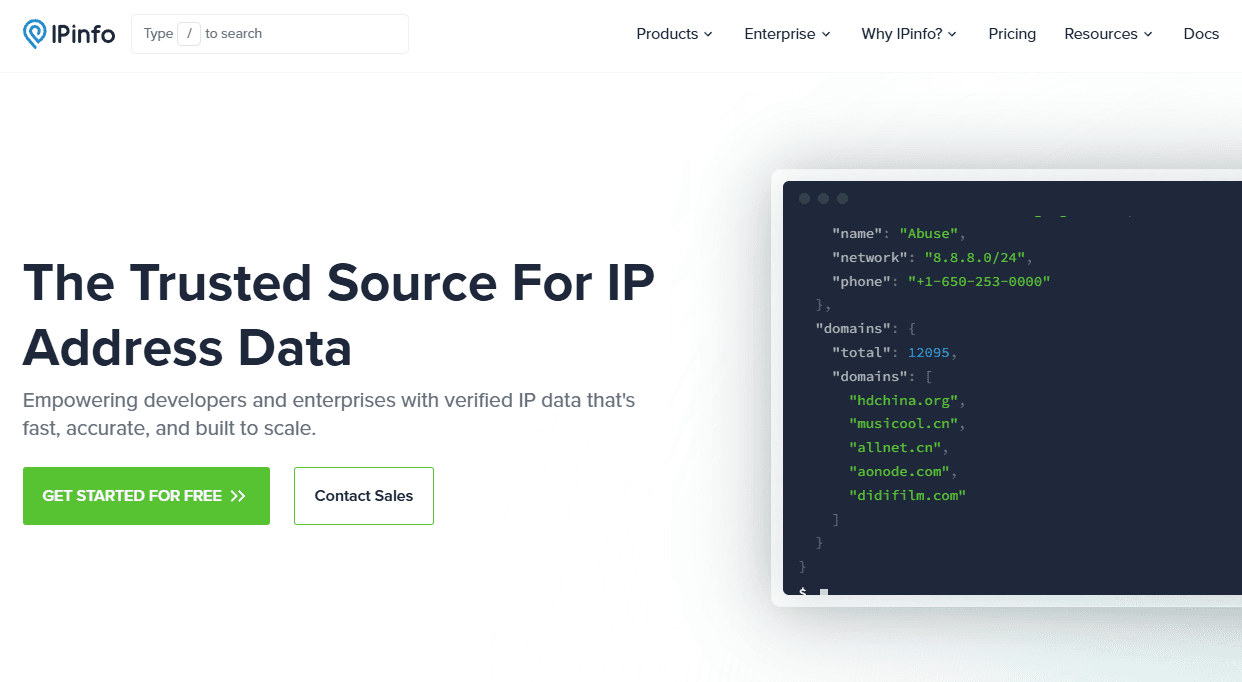
IPinfo is especially useful when identifying the network carrier behind an IP address. For instance, if a provider claims an IP is residential in a specific region, you can double-check the associated ASN and network organization before using other tools to verify its network classification.
Best for: IP geolocation lookup, ISP queries, ASN lookup, and basic IP metadata verification.
4. IPQualityScore: Specialized in IP Fraud & Risk Scoring
If evaluating IP risk scores is your top priority, IPQualityScore serves as a strong auxiliary tool. Unlike basic IP lookup websites, its focus lies in fraud detection, IP reputation scoring, and proxy identification.

Keep in mind that risk scores are proprietary ratings calculated using each platform's internal dataset—they are not universal industry standards. A low risk score on one system doesn't guarantee the IP will receive identical ratings across all external target sites.
Best for: IP risk scoring, IP reputation lookup, and supplemental proxy detection.
5. Scamalytics: Ideal for Secondary Risk Cross-Checking
Scamalytics is another platform highly recommended for cross-validation. It focuses primarily on IP fraud risk and reputation analysis. If initial tests return ambiguous risk results for an IP, running it through Scamalytics provides a useful second opinion.
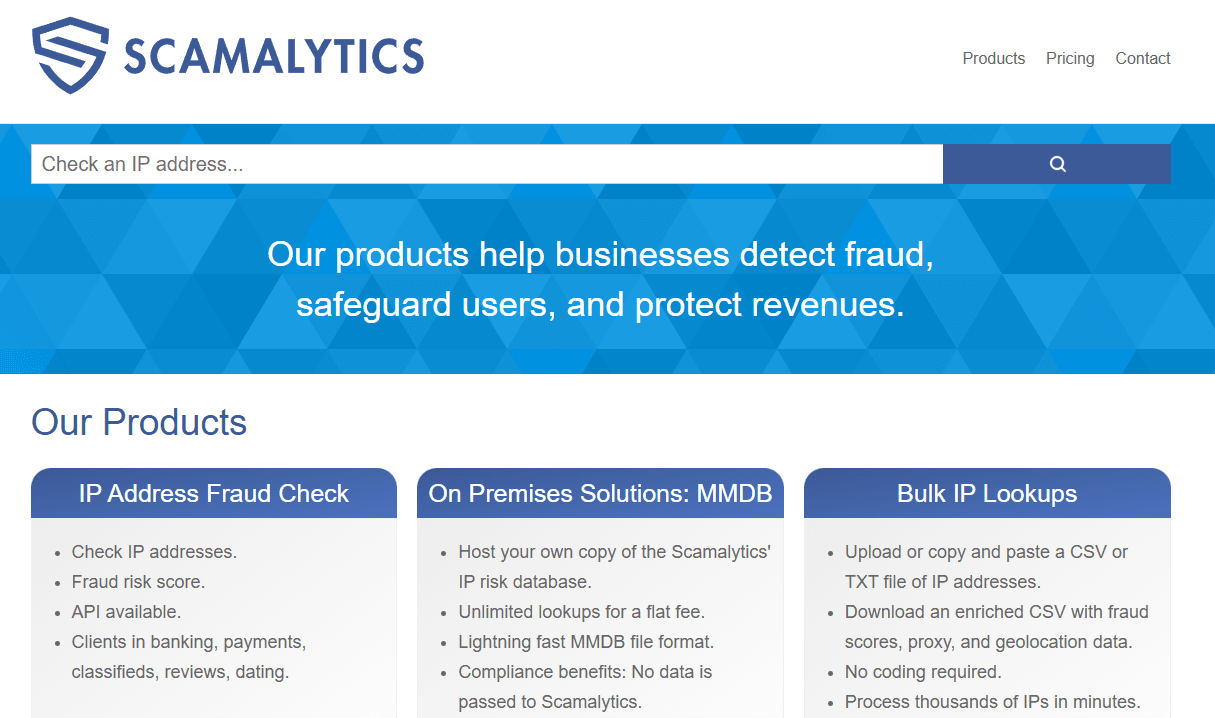
Because "IP purity" is not a standardized metric, different sites maintain varying database update schedules, fraud thresholds, and evaluation algorithms. As a result, Scamalytics is best used as a secondary or tertiary check rather than a single source of truth.
Best for: IP fraud risk lookup, IP reputation analysis, and cross-checking IP quality.
6. IPOK: Convenient for Quick Environment Diagnostics
Finally, IPOK offers a clean, straightforward interface that displays public IP addresses, risk levels, IP types, and ISPs alongside WebRTC and DNS leak testing tools.
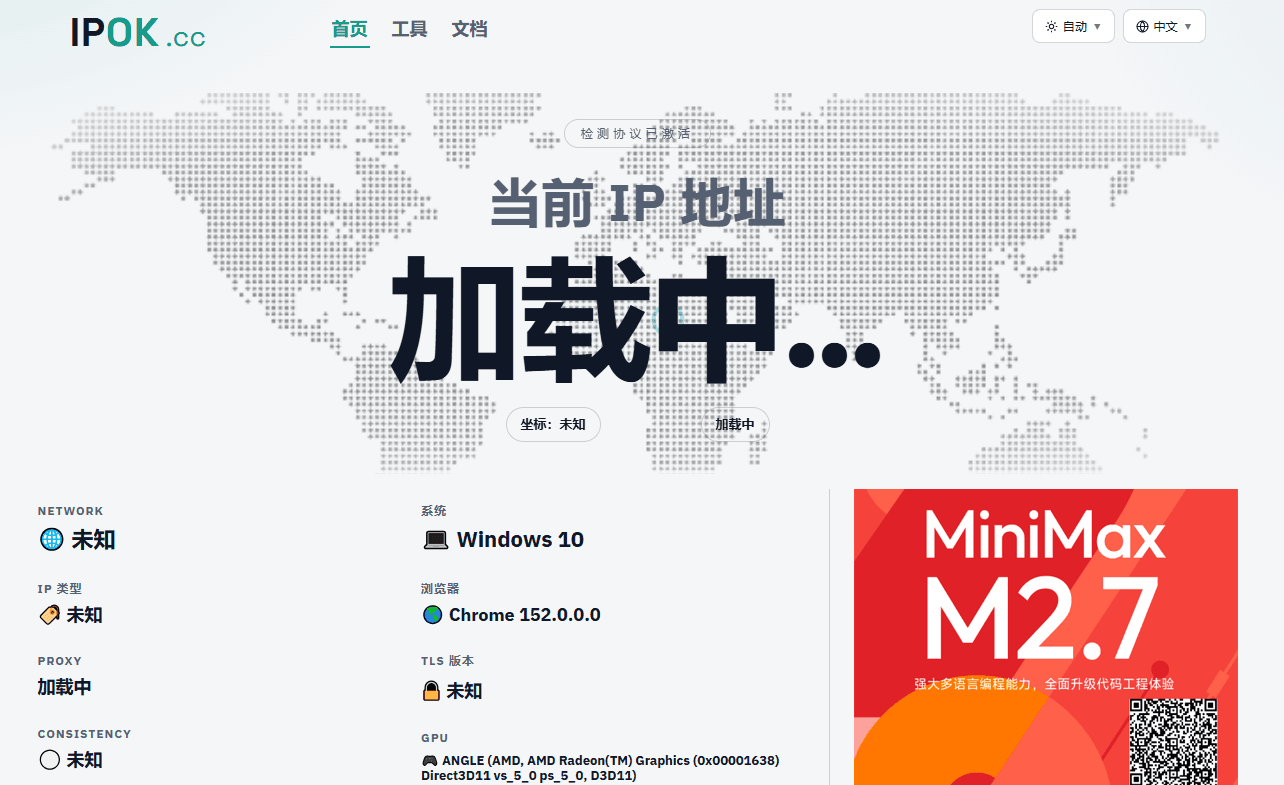
If you simply need a fast answer to "Does my current IP environment have obvious red flags?", IPOK provides a smooth user experience—particularly for DNS and WebRTC checks, which are frequently overlooked during proxy testing.
Best for: Fast IP classification, risk score queries, DNS leak testing, and WebRTC leak checks.
7. How to Choose Among 5 Online IP Testing Tools?
8. Frequently Asked Questions About Online IP Testing
1. What is considered a good or normal IP purity level?
There is no single industry benchmark for IP purity, so you shouldn't rely on a single score alone. Instead, evaluate the overall profile: IP risk score, residential/datacenter status, proxy tags, ASN/ISP reputation, and past abuse records. If multiple independent risk databases show clean results, the overall assessment is far more dependable.
2. Why does a residential IP still show a high risk score?
Being classified as a residential IP refers strictly to the network type, which does not guarantee cleanliness. If the IP was previously overused, engaged in abusive request behavior, or flagged in fraud databases, its risk score will remain elevated despite its residential status.
3. Why do different testing sites produce conflicting results for the same IP?
This variance is completely normal. Online IP detection platforms rely on different underlying databases, refresh schedules, and risk calculation algorithms. As a result, the same IP address may receive varying risk scores or proxy classifications across platforms.
Summary
Comparing these five tools highlights clear differences in focus. ToDetect shines as an all-in-one platform—evaluating IP purity, risk scores, residential/datacenter detection, proxy attributes, and DNS/WebRTC configuration simultaneously.
When evaluating newly purchased residential or proxy IPs for high-stakes workflows, avoid drawing conclusions based solely on a initial "Low Risk" label. Perform a full environment test first, then cross-reference the IP on another platform to ensure stability and cleanliness.
Ultimately, the goal of an IP testing tool isn't to make a definitive decision on whether an IP works, but to surface as much relevant network and risk telemetry as possible. The more complete your view of the data, the lower your chances of choosing an unreliable IP.