



 Resources
 Feature overview
 Ganesh
 2026-07-24 12:04
Many users have encountered situations where the network is working normally, yet verification codes are triggered frequently; there is no abnormal operation, but the platform still restricts access; or a purchased proxy IP works well at first but suddenly becomes invalid after a few days. All of these issues are related to IP quality.
Never assume that an IP is safe just because it can access platforms normally. In reality, some IPs may already be marked as high-risk even though they appear to work properly.
Today, we will explain how to determine whether an IP is secure, how to check whether your current IP has potential risks, and how to choose the right tools for detection.

1. Why is IP Risk Detection Necessary?
When using online resources, many users only focus on whether an IP can access the target website, while ignoring the risk attributes behind the IP. The main purpose of IP risk detection is to determine whether the current IP has potential risks, including:
• Whether the IP has been marked as a malicious address;
• Whether it belongs to a proxy IP or data center IP;
• Whether it has blacklist records;
• Whether its historical usage shows abnormal behavior;
• Whether the IP location and ISP information are authentic;
• Whether the IP is likely to trigger website risk control systems.
For businesses, performing IP security checks in advance can reduce the risk of service interruptions. For individual users, it can also prevent account restrictions caused by using high-risk IPs.
2. What Kind of IP Can Be Considered Safe, Clean, and Reliable?
Determining whether an IP is high quality is not simply about whether it can connect to the internet. Multiple factors need to be analyzed together.
1. IP Reputation
IP reputation is one of the most important indicators in risk control detection. If an IP has previously been used for spam emails, malicious crawling, bulk registrations, or other abusive activities, its risk level is usually higher. Clean IPs generally have good historical records, no obvious violations, and are not flagged by security databases.
2. IP Type
Common IP types include: residential IPs; mobile network IPs; data center IPs; exit IPs; and proxy IPs. Different IP types are suitable for different business scenarios, so performing proxy IP detection is essential when using proxy resources.
3. IP Blacklist Status
Many security organizations maintain IP risk databases. If an IP has been involved in attacks, fraud, or abnormal access activities, it may be added to a blacklist. Professional IP detection tools can quickly determine whether an IP has security risks.
4. Authenticity of IP Location
Some low-quality proxy IPs may show inconsistent locations. For example, an IP may appear to be located in the United States, while the actual exit location comes from another region. Such anomalies are easily detected by platforms and may increase account risks.
3. How to Perform an IP Security Self-Check?
Method 1: Use an Online IP Lookup Tool
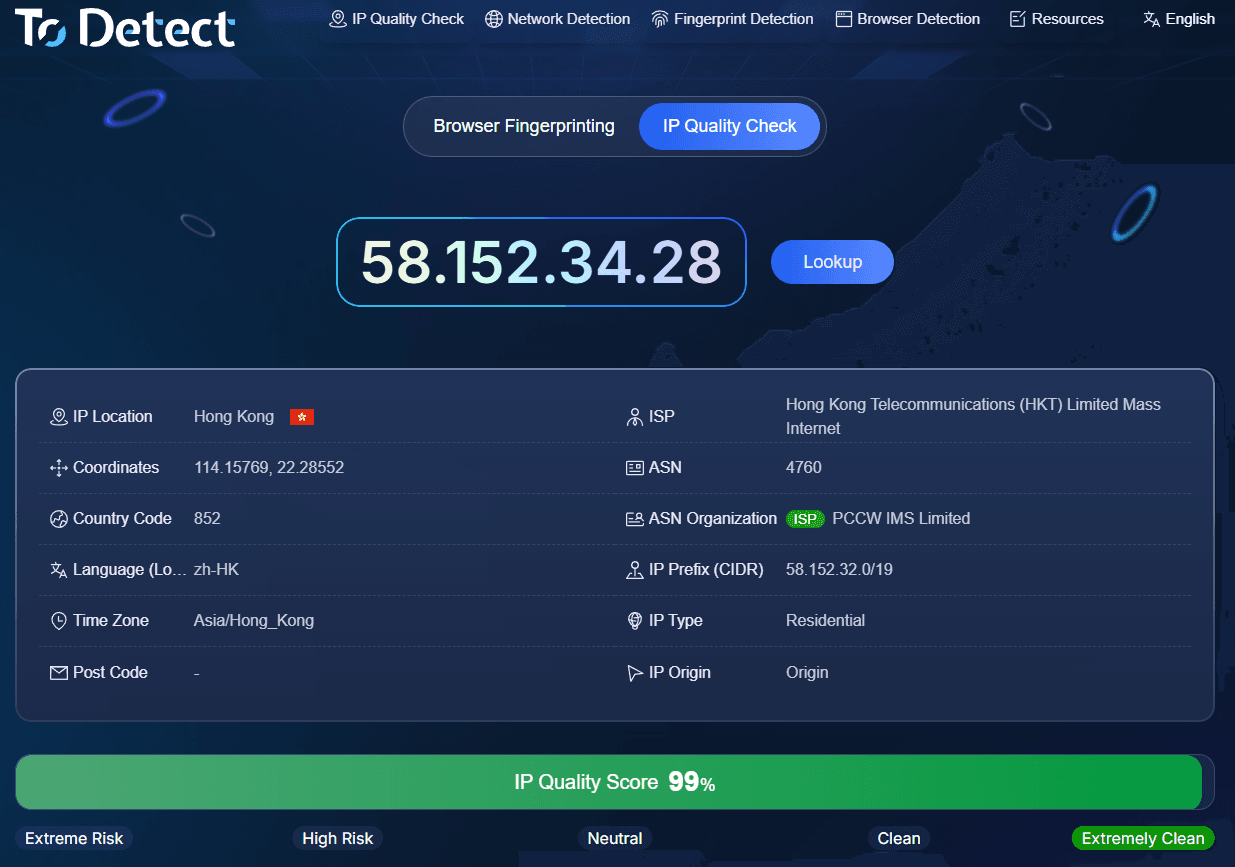
For ordinary users, the fastest method is to use an online IP lookup service. Online IP lookup tools usually provide information such as: current IP address; IP country and region; network provider; ASN information; IP type; and basic risk indicators.
These tools are easy to use and require no software installation. Users only need to enter an IP address to view basic information.
However, ordinary IP lookup only answers the question of "who owns this IP" and cannot fully determine whether the IP is safe. For commercial purposes, further risk detection is required.
Method 2: Use a Professional IP Detection Tool
Professional IP detection tools usually combine multiple databases to perform comprehensive analysis.
They evaluate factors including IP reputation score, blacklist databases, proxy identification, data center identification, fraud risk assessment, and historical risk records, providing more complete information.
There are many IP detection platforms available today. Among them, ToDetect focuses on IP risk analysis and network environment detection, helping users evaluate IP quality, identify proxies, and assess potential risks.
4. Why Must Proxy IPs Be Tested?
Proxy IP usage has become increasingly common, but many users overlook one important issue: cheaper proxy IPs are not always better. Low-quality proxy IPs may have the following problems:
1. High IP Reuse Rate
Some shared proxies are used by many users simultaneously. One IP may have already been accessed by multiple accounts. If one of those users performs prohibited actions, later users may also be affected.
2. Low IP Reputation
Some free proxy resources are frequently used for automated operations and are easily marked as risky sources by websites.
3. Unstable Network Environment
Proxy IPs that frequently disconnect or have slow speeds can reduce business efficiency. Therefore, before purchasing or using proxy IPs, it is recommended to perform proxy IP detection to confirm IP type, risk level, and stability.
5. What Data Should Be Considered in IP Quality Checks?
Many people only look at whether an IP is marked as "safe" or "unsafe" when performing IP quality checks. In reality, a complete IP quality analysis should include:
• IP reputation score. A higher score indicates a healthier historical IP environment.
• Risk labels. Check whether it includes spam risk, fraud risk, malicious access risk, or proxy risk.
• IP ownership organization. Determine whether the IP belongs to residential broadband, cloud servers, or IDC data centers.
Historical behavior. Some detection systems analyze whether the IP has had abnormal activities in the past. Only by combining all these factors can you truly determine whether an IP is worth using.
6. Frequently Asked Questions About IP Quality Testing
Q1: Why can my IP access websites normally but still show risks in detection results?
Many users encounter this situation. Being able to access the internet does not mean an IP has good quality. It is recommended to use professional IP risk detection tools to check IP reputation, blacklist records, and proxy attributes.
Q2: Why should proxy IPs always be tested before use?
Proxy IPs may have problems such as high reuse rates, poor reputation, and inaccurate locations. Using untested proxy IPs directly may lead to account abnormalities or access restrictions. Proxy IP detection helps users understand IP type, risk level, and stability in advance, allowing them to select safer and more reliable proxy resources.
Q3: What is the difference between ordinary online IP lookup and professional IP detection tools?
Online IP lookup mainly provides basic information such as IP address, location, and ISP. Professional IP detection tools further analyze IP reputation, risk labels, proxy attributes, and historical security data. For example, platforms like ToDetect can provide more comprehensive IP quality checks to determine whether an IP is suitable for long-term business use.
7. What Should You Consider When Choosing an IP Detection Tool in 2026?
With more and more IP detection services available, consider the following points when choosing a tool:
First, check whether the detection dimensions are comprehensive. A good tool should analyze not only IP ownership but also risk level, proxy attributes, and reputation.
Second, check database update frequency. IP risks change quickly, and outdated data has limited reference value.
Third, check whether detection results are detailed. Tools that only display "safe" or "dangerous" cannot meet practical requirements.
Fourth, check whether batch detection is supported. For enterprise users, batch functions can greatly improve efficiency when testing large numbers of IPs.
Summary:
IP has become an important factor affecting account security, business stability, and online reputation. Whether you are an individual user or an enterprise team, IP risk management should not be ignored.
By using the ToDetect IP detection tool, combined with online IP lookup, proxy IP detection, and IP quality checks, users can gain a more comprehensive understanding of their current IP environment and identify potential risks in advance.
In 2026, online competition is essentially also a competition of network environment quality. By managing IP risks before problems occur, you can ensure that your network resources deliver their true value.