Resources
 Feature overview

 Ganesh
 2026-08-24 10:57
Nowadays, many people encounter a common problem when using static IPs: even though they purchased a "high-quality static IP," they experience unstable speeds, access anomalies, or even account environment instability during actual use.
When buying static IPs, many users focus solely on the country, region, price, and speed, without conducting an IP purity test beforehand. As a result, after using it for a while, they discover issues such as proxy flags, risk records, or abnormal network types, which negatively impact their experience.
Today, let's explore how to test static IP purity, which reliable online IP detection tools are available, and how to determine if a static IP is clean and stable.

1. What is Static IP Purity Testing?
IP purity testing involves using professional detection platforms to analyze an IP address's network attributes and historical risk status, determining whether it is suitable for long-term use.
A truly high-quality static IP usually needs to meet several criteria: a genuine and stable IP type (not belonging to an obvious data center node), no extensive history of abuse records, no obvious proxy or abnormal network tags, reasonable geolocation, ISP, and ASN information, and overall consistent network environment parameters.
Therefore, before purchasing a static residential IP or using a fixed IP for the long term, running a check via a static IP detection tool is highly necessary.
2. Which Metrics Should You Focus On in Static IP Testing?
Many beginners doing static IP testing for the first time don't know what key factors to evaluate. In practice, whether an IP is worth using depends on the following core aspects:
1) Check if the IP type is genuine
IP type is a critical metric for judging purity. Common IP types include: Residential, Datacenter, Mobile, and Hosting.
Generally speaking, residential network IPs closely mimic a regular user's network environment in terms of authenticity, whereas certain datacenter IPs are shared among many users and are more prone to risk flagging.
2) Check for proxy flags
Many IP detection tools offer Proxy Detection features. If an IP is flagged as a Proxy, Hosting server, Tor node, or high-risk network, its overall trustworthiness may be compromised.
Especially when selecting a static IP for long-term use, looking at the location alone is insufficient; you must check whether it carries obvious proxy characteristics.
3) Check the IP risk score
Some detection platforms analyze IP risk based on historical data, evaluating factors such as spam activity records, inclusion in risk databases, heavy shared usage, or abnormal behavior history.
Note that different platforms use different data sources and algorithms, so risk scores may vary across websites. The best approach is cross-testing with multiple tools rather than relying on a single source.
4) Check for DNS and WebRTC leaks
Many users focus solely on the IP address itself while neglecting the browser and overall network environment. For instance: DNS requests exposing the true network, WebRTC leaking the real local address, or browser fingerprints mismatching the IP environment can all lead to environment anomalies.
For this reason, comprehensive online IP detection tools today usually include DNS leak, WebRTC leak, and browser environment check capabilities.
3. Which Online IP Purity Detection Tools Are Best?
There are many IP purity detection tools available online, each with different strengths. Some excel at IP geolocation lookup, while others focus on proxy risk detection. Below are several popular platforms:
1) ToDetect: Comprehensive IP Purity Detection Tool (Recommended)
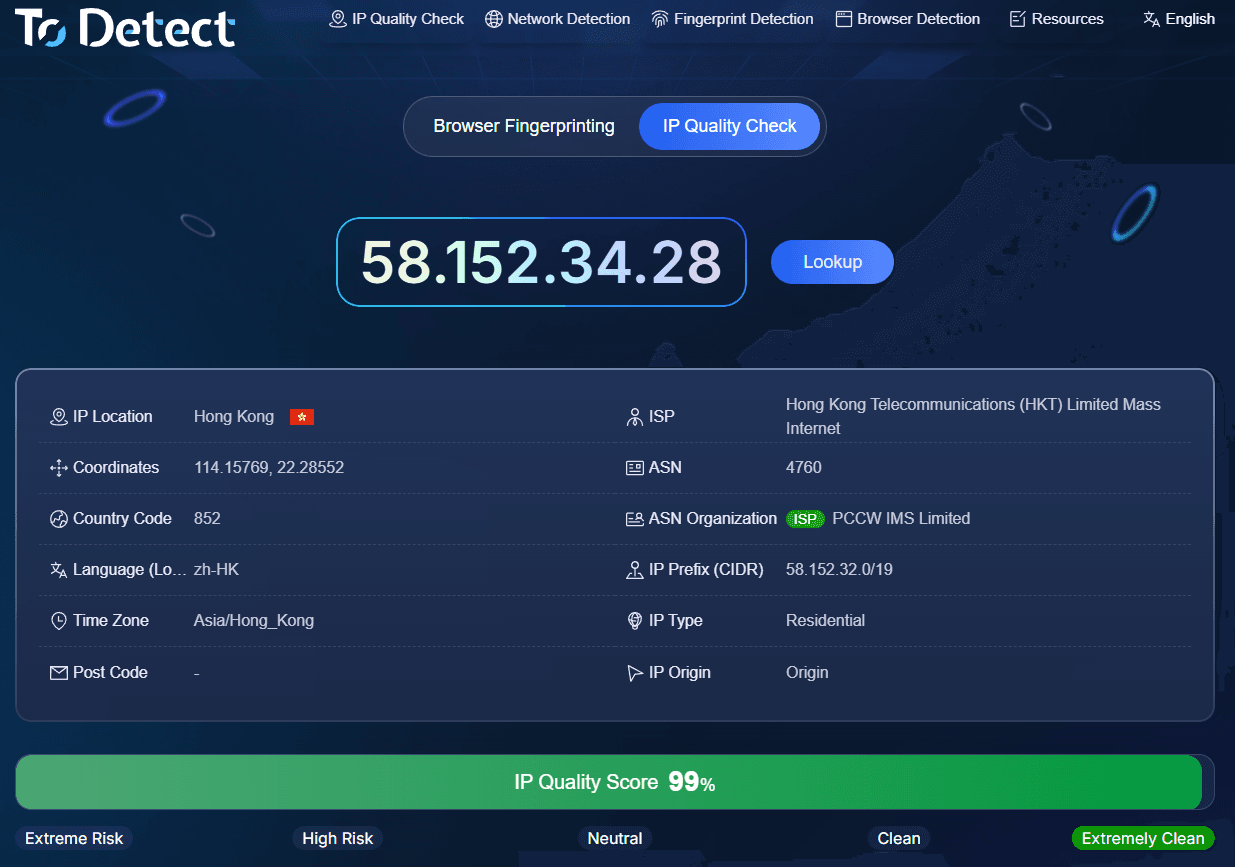
If you want to quickly complete a full online IP test, ToDetect is one of the most convenient choices. Unlike traditional IP lookup sites that only display IP address, country/region, and ISP provider, ToDetect places greater focus on IP quality and network environment analysis.
It can evaluate: IP quality scores, IP type identification, proxy attribute analysis, DNS leak detection, WebRTC detection, and browser environment metrics. For users testing static IPs, proxy IP quality, or cross-border network environments, this multi-dimensional detection approach is far more practical.
2) IPinfo: Best for Basic IP Information Queries

IPinfo is a well-known IP information tool tailored toward basic data queries, such as IP country origin, city location, ISP information, and ASN organization details.
If your only requirement is to verify where an IP originates, IPinfo is very convenient. However, if your focus is IP purity detection, you should combine it with dedicated risk analysis tools.
3) IPQualityScore: Focused on Risk and Proxy Detection
IPQualityScore (IPQS) centers around IP reputation, proxy identification, and risk scoring.
For needs like determining whether an IP is a proxy, high-risk, or evaluating reputation status, IPQS provides reliable reference points. Like other platforms, however, its scores serve as a reference and may not reflect the evaluation criteria of every target site.
4) Scamalytics: Ideal for Fraud Risk Analysis
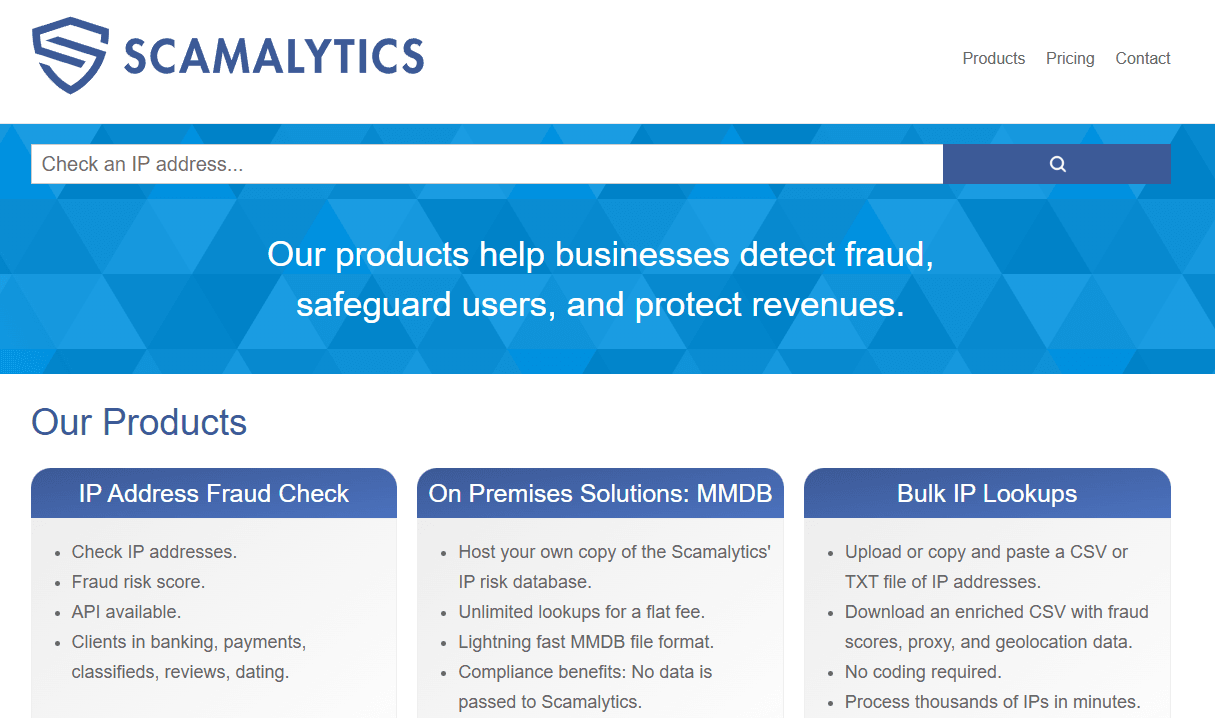
Scamalytics focuses primarily on fraud risk and IP reputation analysis, making it well-suited for scenarios requiring strict risk level evaluations. For standard users looking to perform a quick static IP test, an all-in-one comprehensive tool is usually more convenient.
4. Static IP Purity Detection Tools Comparison Table
| Static IP Purity Detection Tool | Core Detection Focus | Detection Depth | Data Presentation | Target Audience | Overall Rating |
|---|---|---|---|---|---|
| ToDetect | IP purity, proxy recognition, risk analysis, DNS/WebRTC detection, network environment evaluation | ⭐⭐⭐⭐⭐ | Multi-dimensional comprehensive reports, intuitive results | Static IP users, proxy IP testing, cross-border network testing | ⭐⭐⭐⭐⭐ |
| IPQualityScore (IPQS) | IP reputation, proxy detection, risk scoring | ⭐⭐⭐⭐☆ | Focused on risk data analytics | Users concerned with IP risk and security auditing | ⭐⭐⭐⭐☆ |
| Scamalytics | Fraud risk, IP reputation database analysis | ⭐⭐⭐⭐ | Primarily risk tag displays | Users needing to judge IP fraud risk levels | ⭐⭐⭐⭐ |
| IPinfo | IP location, ISP, ASN, geographic data lookup | ⭐⭐⭐ | Clear basic information | Users looking to verify IP origin info | ⭐⭐⭐⭐ |
| AbuseIPDB | IP complaint history, abuse record tracking | ⭐⭐⭐ | Focuses on blacklist and report logs | Users monitoring IP historical abuse records | ⭐⭐⭐ |
5. How Should You Perform Static IP Purity Testing?
If you only need a temporary check of basic IP details, standard online IP lookups work fine. But if you plan to use a static IP for long-term operations, follow this step-by-step methodology:
• Step 1: Check basic IP info. Verify that the country, city, ISP, and ASN are reasonable.
• Step 2: Detect the IP type. Confirm whether it is Residential, Datacenter, or another network type.
• Step 3: Test risk and proxy attributes. Check for Proxy, Hosting, or high-risk tags.
• Step 4: Inspect the network environment. Check for DNS leaks, WebRTC leaks, or browser environment mismatches.
• Step 5: Perform cross-validation with multiple tools. Do not rely on a single platform's score; combining multiple tools provides higher accuracy.
Summary:
Online IP detection tools on the market each have their own strengths. If you want a fast, comprehensive look at IP quality, choosing a platform with broader detection coverage and clear data visualization is ideal.
Before committing to a static IP, avoid focusing solely on price and speed. Instead, perform thorough testing using a professional static IP detection tool. Assessing IP types, risk tiers, proxy tags, DNS, and WebRTC settings across multiple dimensions ensures you gain an accurate understanding of the IP's true quality.
Comprehensive IP purity tools like ToDetect are well-suited for everyday workflow integration. They quickly clarify IP quality, proxy traits, and environmental stability. Taking a few minutes to test an IP prior to production deployment can save you from costly hidden issues down the road.