



 Resources
 Feature overview
 Ganesh
 2026-07-25 10:36
In the digital age, an IP address is not just a digital identifier for devices connecting to the internet; it also carries an invisible "credit file."
Whether you are a regular internet user or a professional engaged in cross-border e-commerce or social media operations, IP reputation directly determines whether your online activities go smoothly.

What is IP Reputation?
IP reputation is a risk assessment metric established by multiple security organizations, internet service providers, and platforms based on an IP's historical behavior, risk records, network type, and other factors.
Different databases may have different criteria, meaning the results for the same IP can vary across different detection systems.
If an IP address is detected engaging in malicious activities such as sending spam, spreading malware, abnormal scanning, brute-forcing accounts, or participating in fraudulent activities, its reputation will drop, and it may even be blacklisted (DNSBL).
Conversely, IPs consistently engaged in legitimate and compliant activities maintain a higher reputation score.
Why Does IP Reputation Affect Account Security?
For many platforms (such as Amazon, Facebook, and Google), IP reputation is a core metric used by their risk control systems to evaluate user authenticity and security.
Triggering risk controls and verifications: If an IP has a low reputation or is judged by the risk control system to carry a higher risk, the platform may suspect that the account is compromised or operated by a malicious bot, frequently triggering CAPTCHAs, phone verifications, or even direct login restrictions.
Account association risks: In cross-border e-commerce, if multiple accounts share the same network environment over a long period while exhibiting overlapping device fingerprints, behavioral patterns, or other linking factors, it can increase the risk of platform risk control flags, potentially leading to bans.
Identity and environment alignment: Advanced risk control systems combine browser environments, network protocol characteristics, IP types, and other multidimensional data to verify whether the access environment matches.
For example, if a browser environment indicates a regular user device, but the egress IP belongs to an obvious datacenter proxy node, this logical conflict between identity and environment will directly increase the risk weight.
Why Does It Limit Access Permissions?
IPs with low reputation often operate in a "restricted mode" across the internet:
Low email delivery rates: Emails sent from low-reputation IPs are frequently flagged as spam or directly blocked by providers like Gmail and Outlook.
Website access restrictions: Many firewalls and security devices block specific IPs based on IP reputation databases, preventing users from properly accessing certain websites, services, or API endpoints.
Poor ad performance: Advertising platforms may restrict ad delivery or even ban ad accounts associated with low-reputation IPs.
Why Can "Exclusive IPs" Also Have Reputation Issues?
Due to the exhaustion of IPv4 addresses, IPs globally are constantly being recycled. This means a newly purchased "exclusive first-hand IP" may have inherited the "negative assets" of its previous user.
In addition, some security systems reference the IP's subnet, ASN, and historical risk records, meaning abnormal activities within the same network range can indirectly affect risk assessments.
Furthermore, WebRTC and DNS leaks may expose the real network environment, leading to inconsistencies between the proxy IP and the actual access environment and increasing the likelihood of platform risk detection.
How to Maintain and Check IP Reputation?
To ensure secure account operations, performing regular IP quality checks is crucial. You can use professional IP detection tools like ToDetect to view risk scores, blacklist statuses, DNS leaks, and proxy identifications.
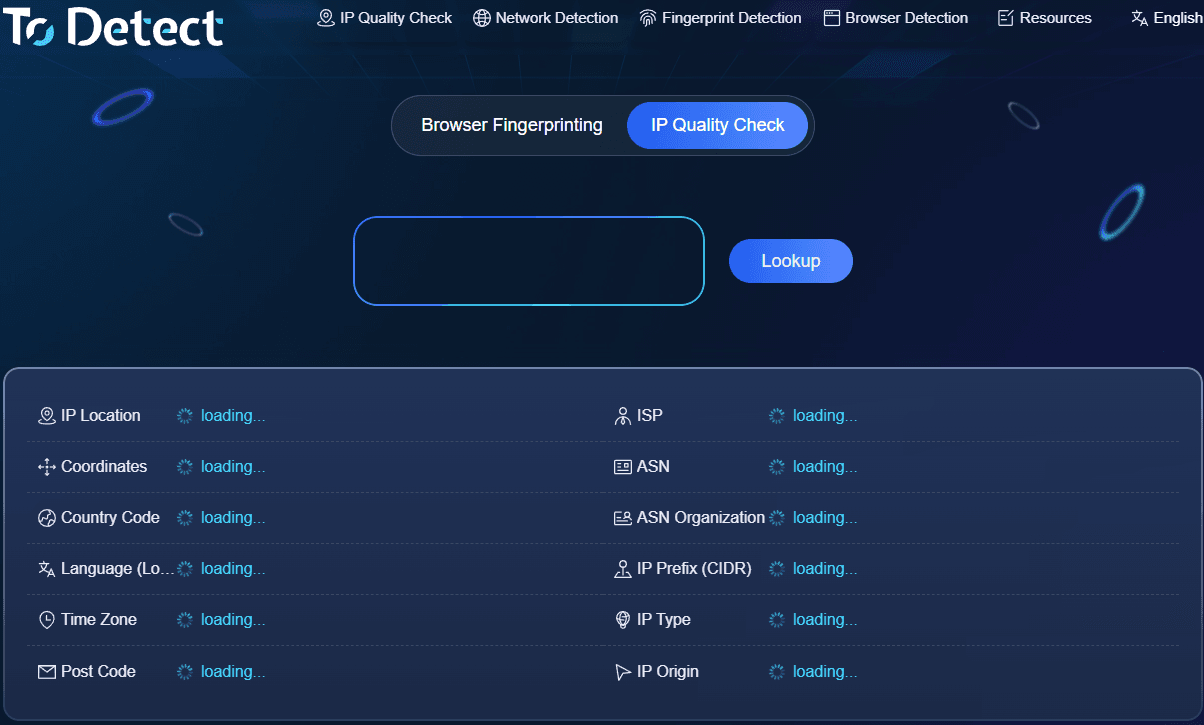
In daily use, pay attention to the following points:
Ensure device security: Prevent devices from being infected with Trojans that turn them into attacker relays (proxies).
Use quality networks: Generally, IPs from real ISP residential networks closely match regular user access environments, making them less likely to trigger basic risk rules compared to certain datacenter IPs.
Avoid high-frequency actions: High-frequency registrations or data scraping over a short period will rapidly deplete an IP's reputation.
Frequently Asked Questions (FAQ)
Q1: Can a low IP reputation be manually recovered?
For individual users, manually clearing blacklist records (such as filing appeals with Spamhaus) is very complex and time-consuming. It is usually recommended to simply replace it with a new, reputable IP.
Q2: Does 100% camouflage mean high IP reputation?
Not necessarily. Camouflage refers to the degree to which you hide your true identity (a mask), while reputation is the "criminal record" of that IP in risk control databases.
An IP can have high anonymity, but if its historical risk records are poor, it may still face restrictions.
Q3: Are dynamic IPs cleaner than static IPs?
Not necessarily. IP quality mainly depends on its source, historical usage, and management practices, rather than whether it is dynamic or static by nature.
Q4: How do I know if my IP is safe?
It is recommended to use professional tools to run a deep scan and check for blacklist records, DNS leaks, or bot detection risks.
For more insights on IP reputation, browser fingerprints, and network environment checks, visit ToDetect for detailed analysis.