Resources
 Feature overview

 Ganesh
 2026-07-31 14:46
Many users believe that simply using a proxy IP to replace their “network identity” is enough to achieve anonymity and privacy protection. However, the reality is far more complex.
Modern website risk control systems work like experienced investigators.
They do not only check a visitor’s IP address but also analyze multiple signals, including network attributes, device fingerprints, and user behavior patterns.
“Exposing real network characteristics” does not necessarily mean revealing your actual IP address.
Instead, it means websites can identify that you are using a proxy or detect abnormal access patterns through various environmental signals.

The following are the main reasons why proxy environments can still expose real network characteristics:
Key Reasons Why Proxy IPs Reveal Real Characteristics
1. Proxy Anonymity Levels and Request Header Information
Some low-anonymity proxies may add or forward specific HTTP headers, such as Via, Forwarded, or X-Forwarded-For.
If the proxy service fails to properly remove these headers, the destination server can identify that the request is passing through a proxy node.
2. Potential Information Leaks Through WebRTC
WebRTC (Web Real-Time Communication) is a browser-based technology used for real-time audio and video communication.
Under certain browser configurations or improperly configured proxy environments, WebRTC’s ICE candidate discovery process may bypass standard HTTP/SOCKS proxy routing and expose real network information, local IP addresses, or IPv6 addresses.
3. DNS Leaks Causing Location Inconsistencies
Ideally, all traffic, including DNS requests, should be routed through the proxy connection.
However, if the client configuration has leaks, DNS requests may still be sent through the local ISP’s DNS servers.
For example, when the proxy IP appears to be located in the United States but the DNS resolver belongs to the user’s local network provider, this inconsistency can become a risk signal for fraud detection systems.
4. Browser Fingerprints: The Hidden Device Footprint
Modern websites widely use browser fingerprinting technology to collect information such as User-Agent, screen resolution, timezone, installed fonts, Canvas, and WebGL rendering characteristics through JavaScript.
If users frequently change IP addresses while keeping the same device fingerprint, or if their timezone/language does not match the IP location, risk control systems may associate multiple requests with the same device environment.
5. TLS Fingerprint (JA3/JA4) Detection
TLS fingerprint detection is mainly used to analyze client communication characteristics.
During a TLS handshake, the supported encryption suites, TLS versions, and extension fields create a unique JA3/JA4 signature.
If requests are generated by automation scripts, non-standard browsers, or specialized request tools, their TLS handshake parameters may differ significantly from those of mainstream browsers, increasing the risk of detection.
6. IP Quality and Risk History
Even with a properly configured client environment, a low-quality proxy IP may still fail security checks. Common risk factors include:
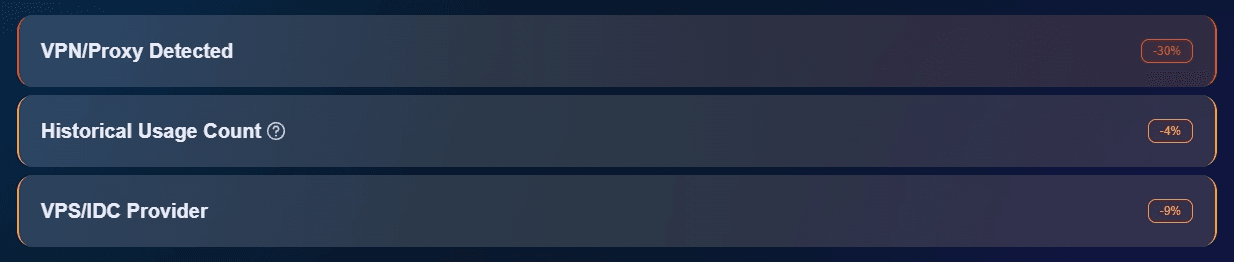
ASN Attributes: IPs belonging to cloud providers such as AWS, Google Cloud, or hosting data centers (IDC) are often assigned higher risk scores;
Abuse History: IPs previously involved in spam activity, automated scraping, or listed in public blacklists may have reduced trust levels;
High Sharing Rate: Multiple users sharing the same proxy node for sensitive operations can increase detection risks.
7. Machine-Like Behavioral Patterns
Modern risk control systems also analyze user behavior patterns.
Requests with high frequency, fixed intervals, no mouse movement, missing cookie history, or failure to load static resources may trigger blocks or verification challenges, even when using clean residential IPs.
How to Test and Evaluate Your Proxy Network Environment
Ensuring a reliable network environment requires more than simply checking whether a webpage loads.
A professional diagnostic process is recommended:
Check IP Type and ASN: Verify whether the IP is residential or data center-based, and evaluate its ownership, reputation, and risk level;
Detect DNS and WebRTC Leaks: Ensure DNS requests and network routing remain consistent with the proxy location without exposing original ISP information;
Verify Environment Consistency: Check whether system timezone, browser language, WebGL, Canvas, and other fingerprint attributes match the IP location.
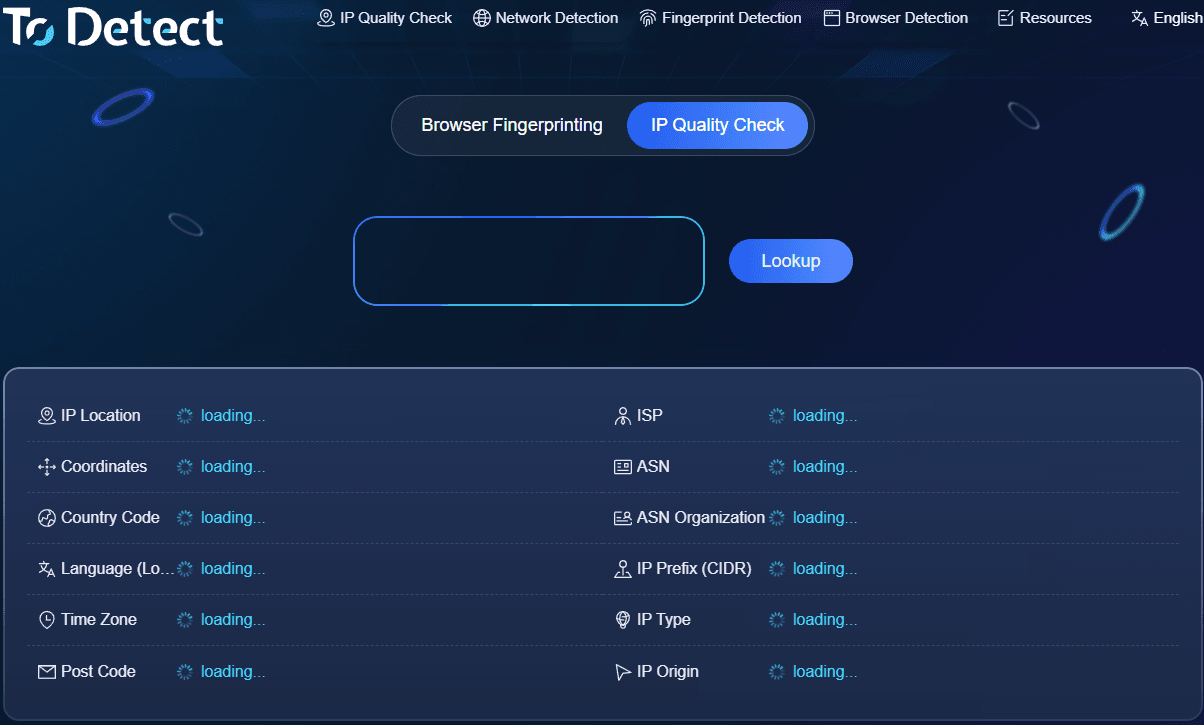
You can visit ToDetect to access professional IP quality assessment, ASN risk analysis, browser environment consistency checks, and DNS/WebRTC leak detection services, helping you quickly identify and optimize potential network risks.
Frequently Asked Questions (FAQ)
Q1: Why am I still blocked when using a high-anonymity proxy?
A high-anonymity proxy only prevents proxy-related information from appearing in HTTP headers.
Websites can still detect risks through browser fingerprint inconsistencies, DNS leaks, data center IP attributes, or previous IP abuse history.
It is recommended to evaluate both the network environment and IP quality together.
Q2: Can disabling WebRTC in the browser completely solve the problem?
Disabling WebRTC can prevent leaks caused by this protocol. However, excessive browser modifications may sometimes create larger differences from normal user environments.
Instead of simply disabling features, it is recommended to use tools and browser configurations that support proxy routing matching or safe WebRTC replacement.
Q3: How can I accurately evaluate whether my proxy IP is secure?
Besides checking the IP location, you should also consider risk scores (Fraud Score), blacklist records, ASN attributes, and proxy detection tags.
You can use ToDetect IP Detection Tool for advanced online analysis and evaluate the overall trustworthiness of your current network environment.