Resources
 Feature overview

 Alani
Alani 2026-06-02 11:39
As cross-border e-commerce becomes increasingly competitive, platforms such as Amazon, eBay, TikTok Shop, and Shopee are continuously raising their requirements for account security and operational compliance.
Many people believe that platforms determine whether accounts are linked mainly by IP addresses. In reality, cross-border e-commerce risk control systems have already entered a multi-dimensional identification era.
As platform risk control models continue to upgrade, and even begin to strengthen fingerprint browser detection, how can we gradually become smarter and better aligned with a real user environment?

1. Why is cross-border e-commerce risk control becoming stricter?
To combat fake orders, fraudulent reviews, policy violations, bulk account registrations, and other abusive behaviors, platform risk control systems have evolved from simple IP detection to device recognition, behavioral analysis, and big data correlation analysis.
When an account logs in, platforms not only monitor IP addresses but also collect browser version, operating system, screen resolution, timezone and language, WebGL parameters, Canvas fingerprint, font information, and more.
Even if the IP is changed, accounts using identical or highly similar device fingerprints may still be flagged as related.
This is why more cross-border sellers are paying attention to professional fingerprint browser solutions.
2. New requirements after platform risk control upgrades
Early fingerprint browsers mainly focused on basic environment isolation. However, as platform capabilities improve, device authenticity detection has become much more precise. Modern fingerprint browsers are no longer just about modifying a few parameters.
1. More realistic device fingerprint simulation
Platforms now check whether device parameters are logically consistent. For example:
• Mac system paired with Windows GPU parameters
• US IP matched with China timezone
• Chrome version incompatible with operating system version
Such abnormal combinations may trigger risk alerts. Therefore, next-generation fingerprint browsers must build more realistic and consistent device profiles.
2. Higher-quality browser fingerprint environments
Many platforms now have advanced fingerprint detection capabilities. Beyond basic parameters, they analyze Canvas fingerprint, AudioContext fingerprint, WebRTC data, and WebGL rendering data.
If these signals show obvious signs of spoofing, they can be detected by the system. Therefore, high-quality fingerprint environments have become a key benchmark for browser fingerprint technology.
3. Stronger anti-association capability
One of the biggest concerns for cross-border sellers is account association. On platforms like Amazon, Walmart, and TikTok Shop, a single account issue can even affect an entire store matrix.
Therefore, modern fingerprint browsers must not only isolate environments but also provide Cookie isolation, local cache separation, browser configuration isolation, and independent network management to reduce association risks.
3. Comparison of risk control requirements across different stages of cross-border e-commerce
| Risk Control Stage | Main Detection Method | Seller Solutions | Problems | New Requirements for Fingerprint Browsers |
|---|---|---|---|---|
| Early Stage | IP address detection | Proxy IP switching | Device information easily exposed | Basic environment isolation |
| Mid Stage | IP + device identification | VPN + multi-browser operations | Increased account linkage risk | Independent fingerprint environments |
| Advanced Stage | Browser fingerprint analysis | Fingerprint browser account management | Low authenticity of fingerprint parameters | High-fidelity device environment |
| Smart Stage | Behavior tracking analysis | Automation tools | Easily detected as abnormal behavior | Human-like behavior simulation |
| AI Stage | Multi-dimensional data correlation | Integrated risk control solutions | More accurate risk detection | Intelligent anti-association & dynamic environment optimization |
4. Fingerprint browser detection is becoming a new industry challenge
It is worth noting that in recent years, many platforms have strengthened fingerprint browser detection capabilities.
Platforms do not only identify device parameters themselves, but also evaluate whether they match real human behavior patterns. For example:
• Mouse movement trajectory naturalness
• Page dwell time reasonableness
• Login behavior consistency with user habits
• Presence of automation-like browser behavior
This means the competition is shifting from “whether fingerprint browsers are used” to “whether the fingerprint browser environment is realistic enough.”
If the browser environment has obvious flaws, even changing IP and device parameters may not prevent detection.
5. How ToDetect helps sellers handle risk control upgrades
Facing increasingly complex cross-border e-commerce risk control systems, many sellers are turning to more professional solutions.
Taking ToDetect as an example, its core idea is not simply modifying browser parameters, but building a trustworthy browser fingerprint environment to achieve account isolation and risk control.
In practice, ToDetect helps users:
• Create independent browser environments
• Manage multiple cross-border e-commerce accounts
• Reduce account association risks
• Improve environment authenticity
• Optimize team collaboration efficiency
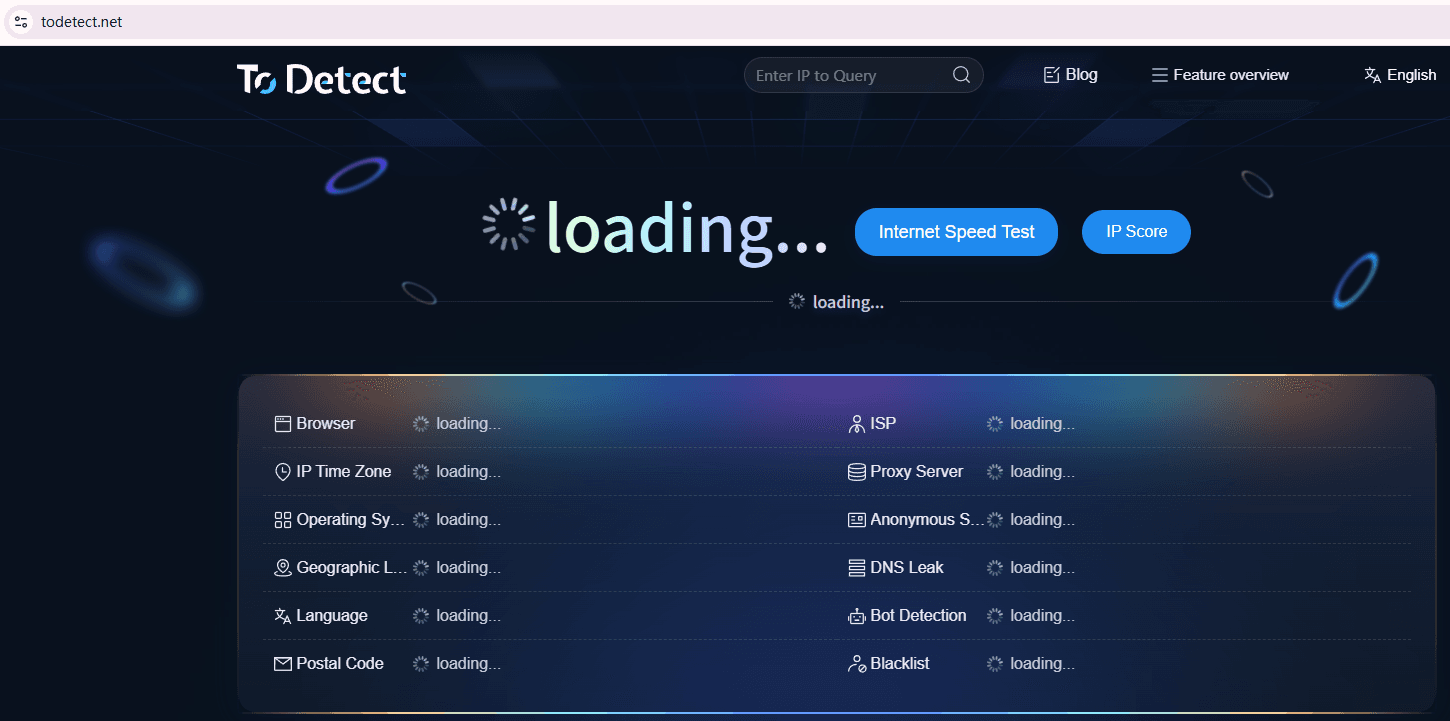
For teams operating multiple stores or advertising accounts, this unified management approach can significantly improve efficiency.
At the same time, as platform risk models continue to evolve, fingerprint browsers with continuous update capabilities are becoming increasingly important.
6. Future development trends of fingerprint browsers
From an industry perspective, fingerprint browsers will move toward greater intelligence in the future, mainly in the following aspects:
🔶 AI-driven environment optimization
Using artificial intelligence to analyze platform rule changes and dynamically adjust browser parameters for higher authenticity.
🔶 More realistic user behavior simulation
Simulating normal browsing, clicking, and dwell behaviors to reduce abnormal signals.
🔶 Automated risk assessment
Real-time monitoring of account risk environments and early detection of potential association issues.
🔶 Deep cross-platform adaptation
Building dedicated risk control adaptation solutions for Amazon, TikTok Shop, eBay, Shopee, and other platforms.
Conclusion
Cross-border e-commerce risk control continues to evolve, and platform account environment detection has entered a refined stage. For sellers, future competition is not only about product selection and operational skills, but also about risk management capabilities.
However, it is important to note that fingerprint browsers are not a universal solution. A truly stable and secure operation model still relies on compliance, proper management, and a genuine browser fingerprint environment.
In the future, as fingerprint detection technology and platform risk control capabilities evolve together, products like ToDetect that continuously improve environment authenticity and anti-association capabilities will play an increasingly important role in cross-border e-commerce operations.