Resources
 Feature overview

 Ganesh
 2026-10-12 10:58
When people weigh a static IP against a dynamic IP, the first things they usually compare are price and stability. But after using one for a while, you start to realize that whether the address stays fixed is only one piece of the picture — the quality of the address itself, the network route, and how everything is configured matter just as much.
For anyone who needs a consistent network environment over the long term, a static IP usually makes it easier to keep the same outbound address; a dynamic IP can do the job too. Neither is inherently better — what matters is your specific use case and how the network actually performs.
Static IPs emphasize a stable address, dynamic IPs offer more flexibility, and IP quality is what ultimately determines whether an address suits what you're trying to do.

1. Static vs. Dynamic IPs: What's the Real Difference?
A dynamic IP is typically handed out by your ISP according to its own allocation policy. The address may change when you reconnect, when the lease renews, or when the provider reshuffles its pool. That said, "dynamic" doesn't mean you get a new address every time you connect — some addresses can stay the same for quite a while.
Its advantage is flexibility: it works well for temporary access, network testing, and similar scenarios. Just keep in mind that once the address changes, the new one may come with a different location, network type, and history.
A static IP, on the other hand, remains the same throughout the agreed period, which makes it a better fit for anything that needs a consistent outbound identity over time. Fixed office networks, remote access, and online services that depend on a stable outbound address all tend to value that continuity.
That said, a fixed address doesn't mean a good one. If a static IP carries a poor risk history, or the route suffers frequent latency spikes and dropped connections, a permanent address won't necessarily give you a better experience.
| Comparison | Static IP | Dynamic IP |
|---|---|---|
| Address changes | Usually stays the same | May change per the allocation policy |
| Key characteristic | Easy to keep a consistent outbound address | More flexible |
| Long-term workloads | A good fit when a fixed outbound address is required | Address changes need to be factored in |
| IP quality | Depends on the address history and network performance | Quality can vary from one address to another |
| What to evaluate | Stability, network attributes, and cost | Allocation method, route performance, and cost |
One thing worth being clear about: static and dynamic describe how an IP is assigned and whether it changes. They say nothing about whether the address belongs to a residential network or a data center, and you can't judge how "clean" an IP is from those two labels alone.
2. Beyond Stability, What Else Determines Whether an IP Is Built for the Long Haul?
Judging IP quality isn't just about whether the address stays put — network attributes, risk history, and real-world connection performance all come into play.
IP cleanliness and risk history
IP cleanliness mainly covers public blacklist entries, abnormal flags, and other risk signals. Not finding a blacklist entry doesn't guarantee an address is risk-free; and a warning from one platform doesn't mean every other service will flag it as suspicious.
Network type and ISP information
Network type and ISP details matter just as much. Common labels such as Residential, ISP, and Datacenter help you understand how an address is being classified.
A residential IP is generally closer to an ordinary home connection, but that doesn't automatically make it clean; likewise, a data center IP isn't inherently suspicious just because of its network type. If the ISP, ASN, organization name, or location doesn't match expectations, look at the other signals before drawing conclusions.
Route stability and connection performance
Route performance deserves attention too. A single latency spike doesn't mean the network is bad, but persistent packet loss, dropped connections, or noticeable speed swings can hurt remote work, online operations, and other long-term use cases.
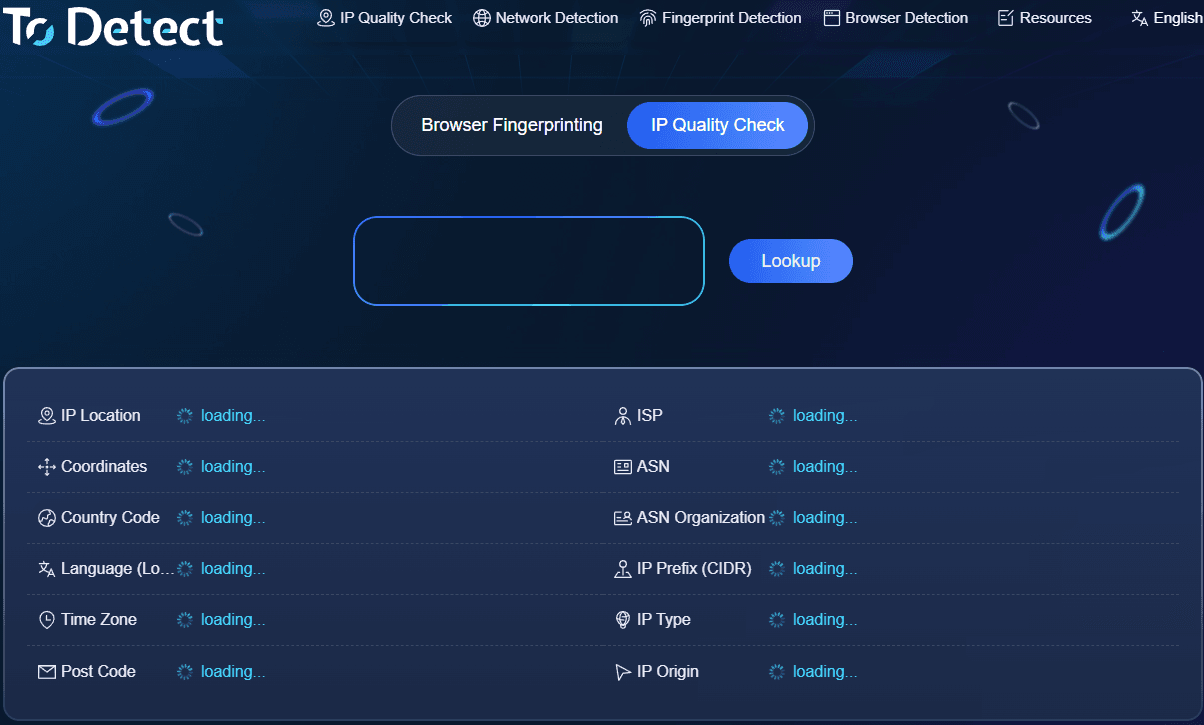
ToDetect lets you check IP details, network attributes, and related environment test results in one place. Looking at them together is far more useful than making a call based on a "residential IP" or "static IP" label alone.
3. Choosing Between the Two Types of IP: Which Fits Your Scenario?
If you need a fixed office outbound address, a remote connection, or your business depends on a relatively stable network address, a static IP is usually the better choice. It cuts down on the management overhead of an address that keeps moving — though whether it's suitable for a particular service still depends on platform rules, route quality, and your requirements.
If you're only testing temporarily, need short-term access, or your work doesn't depend on a fixed outbound address, a dynamic IP may be more flexible — and there's no reason to pay extra for a static one. Even if the address changes, as long as it doesn't affect your workflow, there's no need to insist on static.
If you're on a tight budget but want a static IP over the long term, don't decide on price alone. A low price doesn't automatically mean poor quality, and a high price doesn't guarantee good quality either.
The same goes for residential IPs — don't judge by the name. Different platforms may classify the residential attribute differently, and even an address that shows up as residential can still carry a risky history. Network type, address quality, and route stability are three separate dimensions, and they shouldn't be lumped together.
4. What Common Issues Get Overlooked in Day-to-Day Use?
Some people assume that swapping the IP means the whole network environment changes with it. In practice, changing the IP doesn't mean your DNS settings, device configuration, and browser environment change along with it. If you run into access problems, look at the specifics to work out whether the issue comes from the address, your network setup, or the service itself.
Another commonly overlooked point: IP detection results aren't permanent. Risk databases get updated and providers can change the way they allocate addresses, so a result from the past only reflects the situation at that time — it can't be taken as a promise of the current state.
Network type shouldn't be your only criterion either. Residential IPs, ISP addresses, and data center IPs each have different network attributes, and whether they fit still depends on the specific use case.
5. Online IP Quality Checks: Common Questions Answered
Q: If my dynamic IP changes often, will that hurt long-term use?
It depends on what you're doing. If your work doesn't rely on a fixed outbound address, a dynamic IP is usually fine; if you need to keep a remote connection or a consistent outbound identity, factor in the impact of address changes. Dynamic IPs don't necessarily change frequently — it comes down to how your provider allocates them.
Q: Static IP prices vary wildly. How do I tell whether one is worth it?
Compare network type, IP ownership, risk history, route stability, and service terms side by side. Two addresses both labeled "static" can differ enormously in actual network attributes and real-world performance, so don't decide on price or a single label.
Q: How often should I run an IP quality check?
There's no fixed frequency that suits every scenario. For a network you use long term, you can review the key metrics periodically based on how much you use it; if you switch routes, change network settings, or run into problems, check right away. There's no need to keep re-testing things that haven't changed just to hit some testing quota.
Q: If an IP isn't on any blacklist, can I use it long term without worry?
You can't conclude that from a single signal. A blacklist is only one part of the picture — you still need to consider network type, ISP information, DNS, and actual route performance. Different platforms update their data at different rates, so a single check doesn't tell the whole story.
Summary
Static vs. dynamic IP ultimately comes down to a trade-off between address stability and flexibility. If you need a fixed outbound address over the long term, lean toward static; if your use case can tolerate address changes, dynamic is a perfectly good choice too.
What really shapes the long-term experience isn't just whether the IP stays fixed — it's address quality, network attributes, route performance, and what your business actually needs. There's no point chasing one type blindly; define your goal first, then judge against real network conditions, and you're far more likely to land on the setup that fits.