Resources
 Feature overview

 Ganesh
 2026-08-26 11:02
After purchasing a residential IP, don't rush to use it directly. Running a residential IP quality check first will save you a lot of trouble later. Through online IP detection, you can evaluate an IP's actual performance across multiple dimensions, including IP location, ISP, ASN, network type, proxy attributes, and risk score.
However, a common question arises: with so many IP detection tools available online, which one is actually worth using? If you want to accurately assess IP quality, residential authenticity, and proxy risk, choosing a detection tool cannot be done randomly.
Today, we've rounded up several top IP detection tools worth watching in 2026, comparing their performance in residential IP quality detection, online IP lookup, proxy IP detection, and IP risk analysis to help you find the best fit for your needs.

1. Residential IP Quality Check: Which Key Metrics Should You Look At?
Whether a residential IP is worth using can be evaluated through the following workflow: IP Location → ISP/ASN → IP Type → Proxy Attributes → Risk History → Network Environment
1. Accuracy of IP Location
First, verify whether the detected country, region, and city match the purchased resource. For instance, if you bought a US residential IP but detection reveals a different country or significant city discrepancy, the IP requires further verification.
2. ISP and ASN Consistency
ISP and ASN details reveal the network operator and infrastructure behind the IP. For residential IPs, confirming that the ISP and ASN align with expectations is a critical step in quality checking.
3. Detection of Proxy or Data Center Attributes
This serves as a core indicator in proxy IP detection. Although two IPs may both appear as "US IPs," true residential networks and data center IPs differ completely in their underlying risk profiles.
4. IP Risk Score and Reputation
Whether an IP has been heavily overused or flagged for abuse in the past directly impacts operational performance. Comprehensive IP testing must look beyond raw IP strings to include holistic risk analysis.
2. 2026 Residential IP Quality Check Tools Ranking
For quick comparison, review the summary ranking table below.
| Rank | Tool | Core Advantage | Key Focus | Difficulty | Rating |
|---|---|---|---|---|---|
| 🥇 01 | ToDetect | Multi-dimensional testing | IP Quality, Proxy, Risk, Environment | ⭐ | ★★★★★ |
| 🥈 02 | Scamalytics | Outstanding risk detection | Fraud Score, Proxy Detection | ⭐⭐ | ★★★★☆ |
| 🥉 03 | IPQualityScore | Risk & proxy analysis | Proxy Attributes, Fraud Scoring | ⭐⭐ | ★★★★☆ |
| 04 | IPinfo | Detailed basic network data | Geolocation, ISP, ASN | ⭐ | ★★★★☆ |
| 05 | IP2Location | Rich IP location data | Geolocation, ISP, Network Data | ⭐⭐ | ★★★★☆ |
| 06 | WHOER | Easy to use | IP Data, Browser Environment | ⭐ | ★★★★☆ |
3. Rank 1: ToDetect
Ideal for comprehensive residential IP testing and daily use. If your goal goes beyond simply finding where an IP is located and involves verifying IP purity, proxy detection, and network environment, ToDetect is the top recommendation.
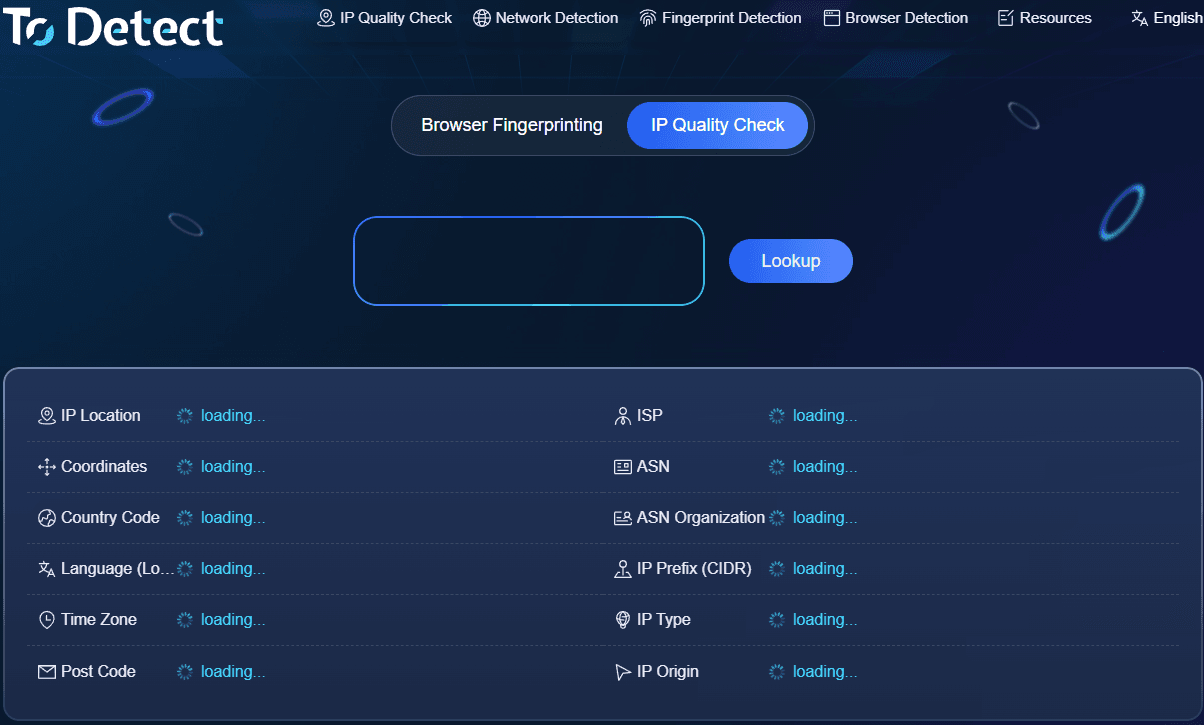
Its core advantage lies in multi-dimensional analysis: instead of basic location data, it checks IP quality scores, proxy detection parameters, risk levels, and overall network health in a unified dashboard.
4. Rank 2: Scamalytics
Scamalytics is well-suited for users sensitive to fraud risks. Rather than focusing on geolocation details, it specializes in evaluating IP risk scores and detecting proxy server signatures.
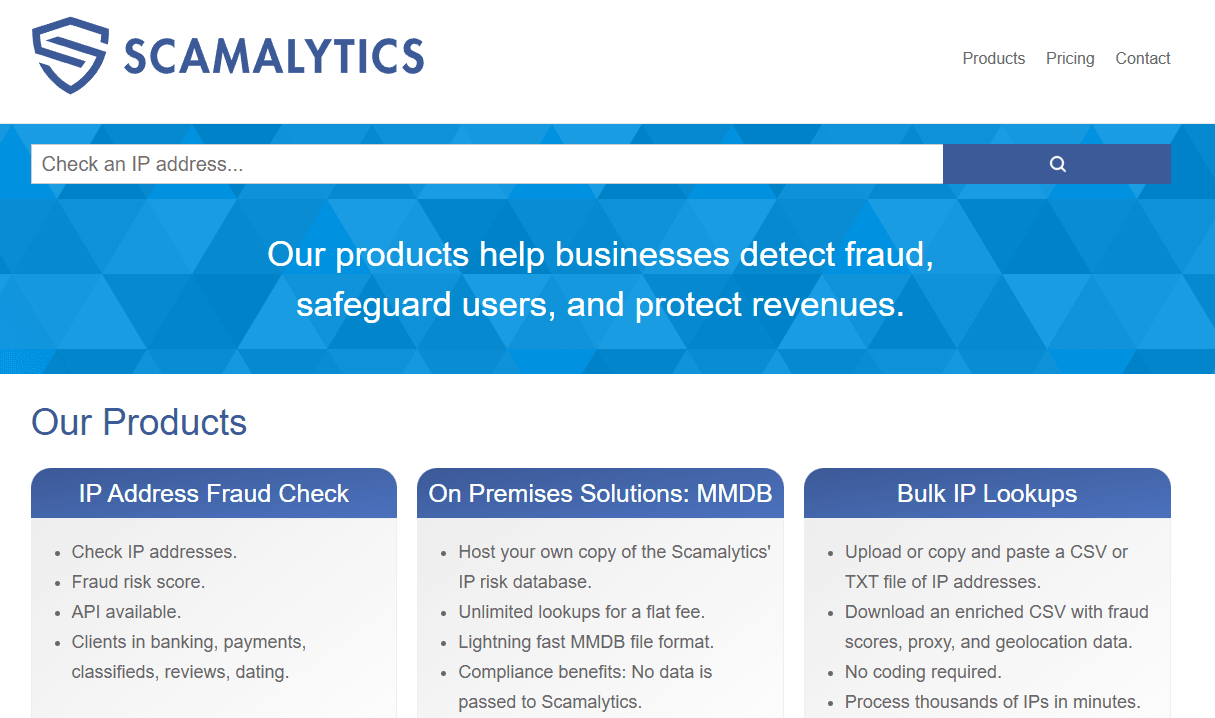
If you have already verified an IP's country, ISP, and ASN using other tools, Scamalytics works exceptionally well as a secondary tool for cross-verifying fraud scores.
5. Rank 3: IPQualityScore (IPQS)
IPQualityScore is another popular security tool for identifying IP risks. For users checking proxy status and anti-fraud indicators, it offers solid technical insights during proxy verification.
However, IPQS metrics tend to be developer-focused. Regular users seeking a simple answer on whether an IP works may find its complex parameter layout unnecessary.
6. Rank 4: IPinfo
If your primary requirement is querying core IP data, IPinfo is a highly dependable tool. It delivers clean datasets on IP location, ASN, and ISP parameters.
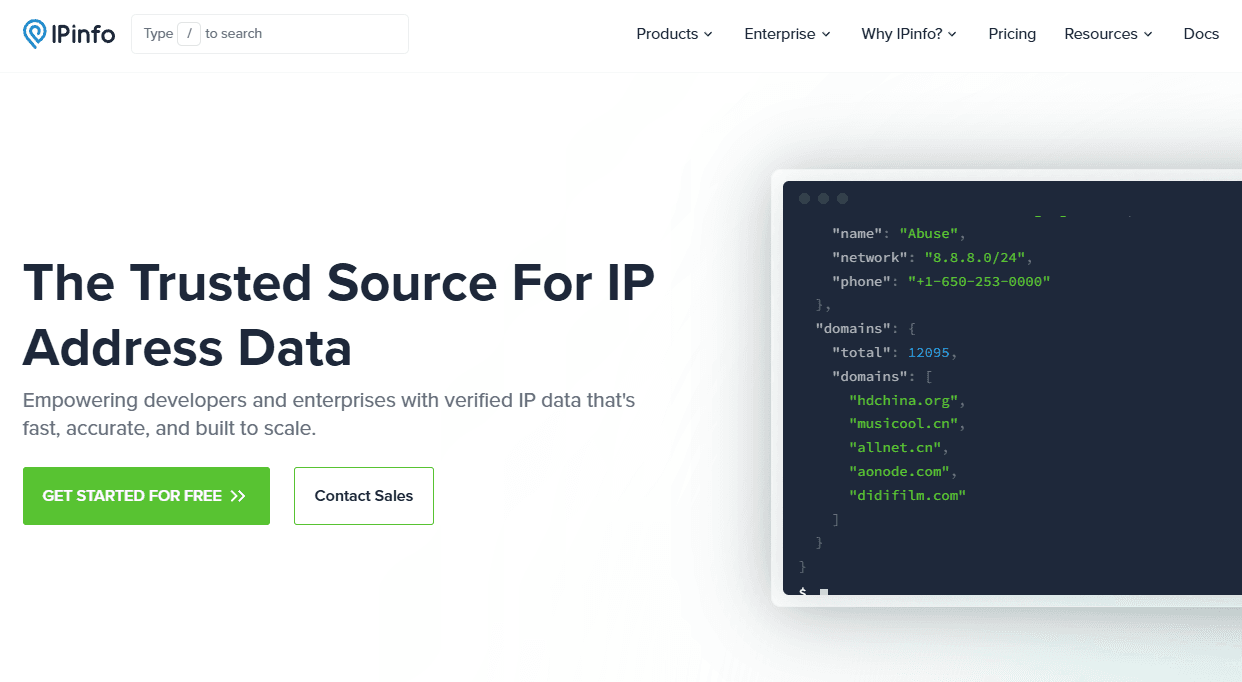
Because IPinfo focuses mainly on standard network data lookup, pairing it with specialized fraud or proxy detection platforms is recommended when assessing residential IP purity.
7. Rank 5: IP2Location
IP2Location emphasizes precise IP geolocation database mapping. It holds significant value for software developers, data analysts, and bulk IP queries.
While everyday users can utilize its geographical and ISP feedback during quality checks, combining it with proxy-specific scanners yields a more balanced assessment.
8. Rank 6: WHOER
WHOER is great for beginners starting out with basic IP checks. Its primary advantage is simplicity, allowing users to quickly verify IP details, basic location, and browser environment settings.
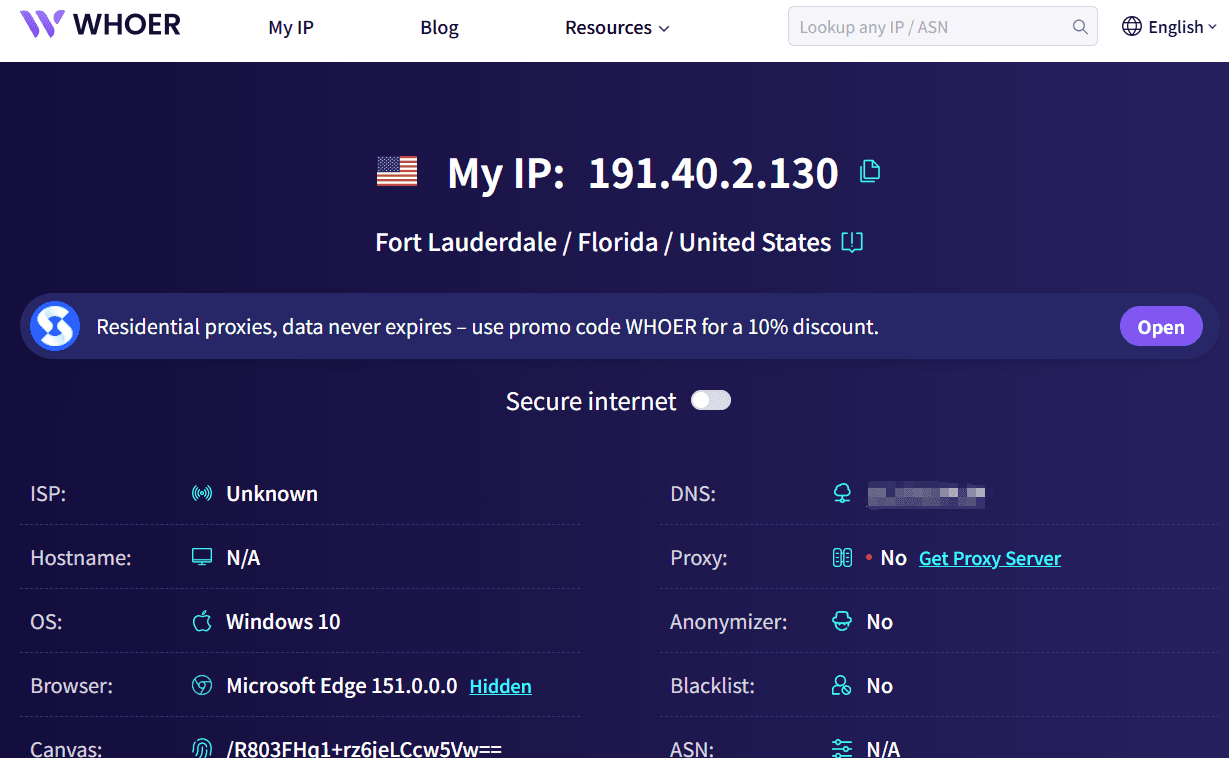
It works well as an entry-level tool for quick checks. However, since residential IP quality relies on multiple variables, it lacks deeper fraud and proxy depth.
For long-term residential proxy usage, static IPs, or high-risk tasks, choosing tools with deeper detection metrics is strongly advised.
9. How to Choose the Right 2026 Residential IP Detection Tool?
Categorizing these tools by use-case makes selection straightforward:
| Your Goal | Recommended Tool | Key Reason |
|---|---|---|
| ⭐ All-in-one residential IP check | ToDetect | Comprehensive multi-dimensional analysis |
| 🛡️ Focus strictly on IP risk & fraud | Scamalytics | Outstanding fraud scoring capabilities |
| 🔍 Dedicated proxy IP detection | IPQualityScore | Strong proxy and threat scoring |
| 🌍 Lookup basic IP location data | IPinfo | Clean and precise network infrastructure data |
| 📍 Focus on geolocation metadata | IP2Location | Rich positioning and network datasets |
| ⚡ Quick browser environment check | WHOER | Simple interface and low learning curve |
If you regularly buy or rotate residential IPs, building a standardized testing routine is best practice. Running a complete inspection before putting any proxy into production saves time and prevents bans.
Summary:
If you prefer evaluating multiple dimensions in a single step without jumping between different test sites, ToDetect serves as the best overall daily residential IP checking tool.
Actual IP performance relies on network type, ISP, ASN, proxy flags, and historical threat logs combined. Regardless of how accurate an IP location appears, abnormal network properties or high risk scores render it unsuitable for long-term operations.
Confirm IP location first, verify ISP and ASN, perform proxy and risk detection, and cross-validate using secondary tools—this workflow easily covers most practical IP screening requirements.