Resources
 Feature overview

 Ganesh
 2026-08-26 10:41
Choosing the right IP lookup tool is far more important than simply looking up a single IP address. There are many online IP detection websites on the market: some focus on IP address querying, some excel at IP risk analysis, while others are better suited for proxy IP detection.
Different tools have varied data dimensions and evaluation criteria. Therefore, which one is "most accurate" ultimately depends on your specific detection needs. With so many online IP lookup tools available, which ones are actually the best to use?
Below, we have compiled currently common and frequently used IP detection tools, comparing them across detection features, user experience, and ideal use cases. If you are looking for easy-to-use IP detection websites, keep reading.

1. What to Look for in IP Detection? Checking IP Location Alone Is Not Enough
When running an IP check for the first time, many people only look at basic details like country, city, and ISP. For instance, if the result shows US, Los Angeles, and a specific ISP, they assume the IP is completely fine. In reality, this only fulfills the most basic IP address query.
To truly judge an IP's quality, it is recommended to examine at least: IP Geolocation, ISP, and ASN to confirm if the basic network info meets your expectations. Next, check the IP Type to determine whether it belongs to a residential network, datacenter network, or other categories.
In short, just because an IP appears to have the "right location" doesn't mean it's a high-quality IP. Different detection platforms focus on different data dimensions, so conducting a multi-dimensional analysis is much safer in practical use.
2. 2026 Comparison of Common IP Detection Tools
To make your choice easier, here is a quick overview of the positioning of several popular tools:
| IP Tool | Key Features | IP Quality Analysis | Proxy Detection | Ease of Use | Overall Rating |
|---|---|---|---|---|---|
| ToDetect | IP Lookup, IP Quality, Proxy Identification, Risk Analysis, Network Environment Check | ★★★★★ | ★★★★★ | ★★★★★ | ★★★★★ |
| IPinfo | IP Geolocation, ASN, ISP, Geographic Data | ★★★☆☆ | ★★★☆☆ | ★★★★★ | ★★★★☆ |
| WHOER | IP Lookup, Anonymity, Network Environment Test | ★★★★☆ | ★★★★☆ | ★★★★★ | ★★★★☆ |
| IPPure | IP Reputation, Purity, Proxy Identification | ★★★★★ | ★★★★☆ | ★★★★☆ | ★★★★☆ |
| IPQualityScore | Proxy Detection, Risk Identification, Reputation Analysis | ★★★★☆ | ★★★★★ | ★★★☆☆ | ★★★★☆ |
| IP2Location | IP Location, ISP, ASN, and Network Data | ★★★☆☆ | ★★★☆☆ | ★★★☆☆ | ★★★★☆ |
| Scamalytics | IP Reputation, Fraud Risk, Proxy Identification | ★★★★★ | ★★★★★ | ★★★☆☆ | ★★★★☆ |
It should be noted that the ratings in the table do not imply that one platform is absolutely more accurate in all scenarios. For crucial IP resources, it is recommended to cross-validate using a "one comprehensive tool + one specialized tool" approach.
3. ToDetect: Convenient All-in-One IP Detection
If you have comprehensive needs—beyond just checking your current IP address—and want deeper insights into IP quality, proxy attributes, and network environments, ToDetect is a top-choice tool to consider.
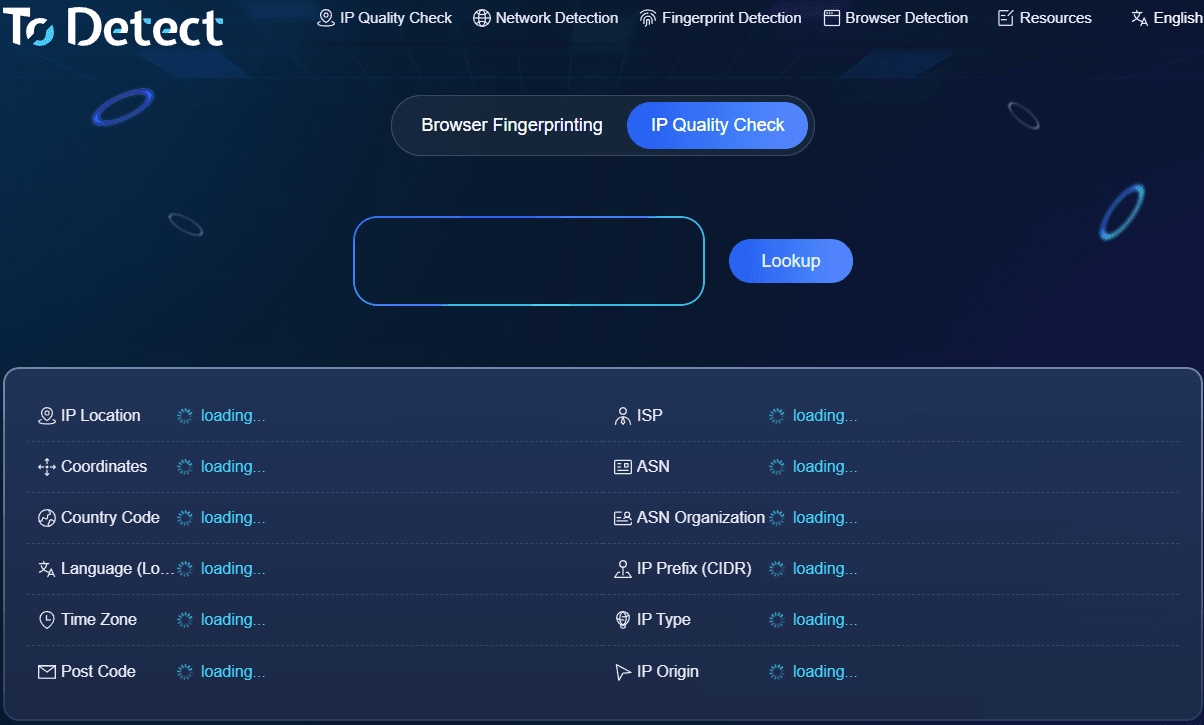
Its advantage lies in centralized data dimensions. In addition to basic IP info, it lets you inspect IP quality, IP type, proxy attributes, and risk details, while covering environmental checks like DNS, WebRTC, and browser fingerprinting.
Especially after purchasing a new proxy IP, residential IP, or static IP, performing an online IP check here is recommended. If you prefer not to open multiple sites to query different data points, ToDetect will save you significant time by offering a complete view at once.
4. IPinfo: Ideal for Basic IP Information
IPinfo focuses heavily on IP databases and network lookup. If you simply want to know which country, city, ISP, or ASN an IP belongs to, it offers a straightforward experience.
You can think of IPinfo as a clean, efficient online IP lookup tool: ideal for checking location, ASN, and ISP. However, when it comes to IP risk assessment, proxy identification, and overall IP quality, it is best paired with additional tools.
5. WHOER: Best for Quick Network Environment Checks
WHOER has a very intuitive positioning. Besides viewing basic details like IP address, geolocation, and ISP, it focuses heavily on anonymity and network environment checks.
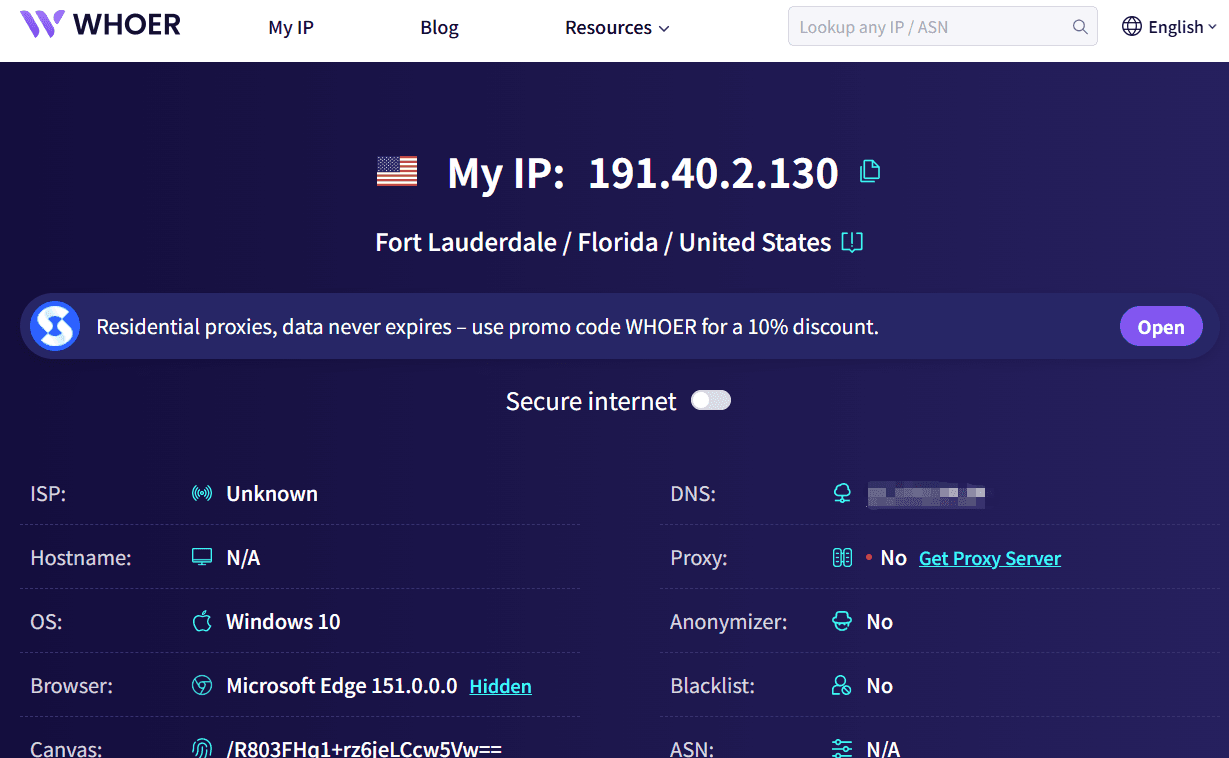
If you just want a quick check to see if your current exit IP has changed or whether your basic network configuration meets expectations, it is very convenient.
However, if your core goal is determining "how clean a proxy IP really is," relying solely on WHOER may not be enough. Proxy users should combine it with dedicated IP quality and risk assessment tools.
6. IPPure: Tailored for IP Purity and Reputation
If you are concerned about IP purity, reputation scores, and proxy recognition, IPPure is another specialized tool worth noting.
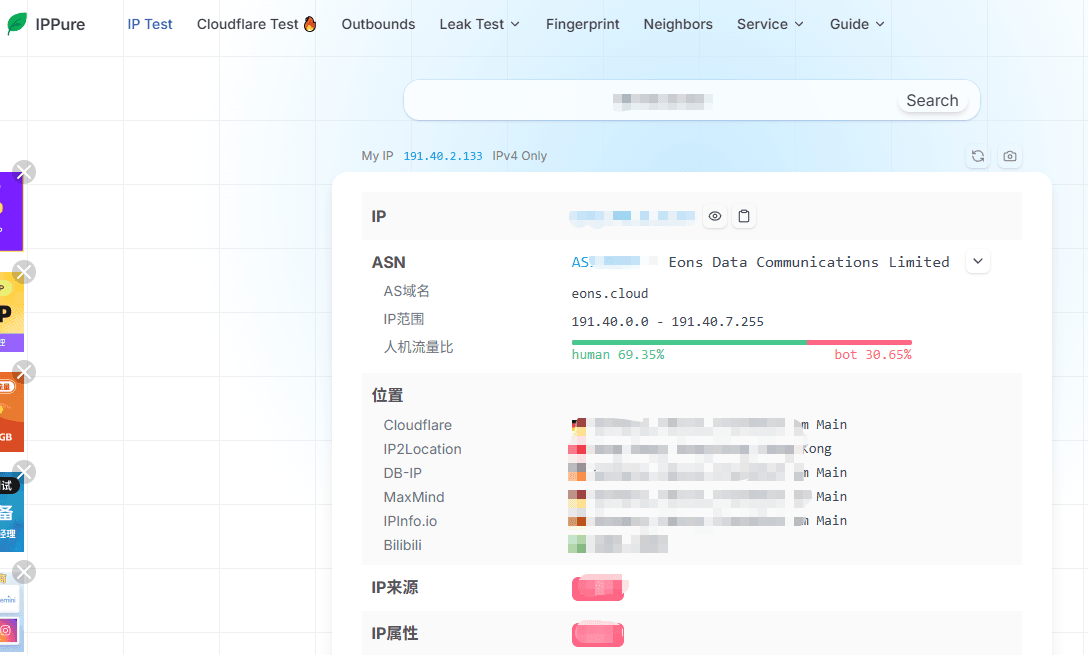
"IP Purity" is not just about whether an IP is flagged as a proxy; it requires evaluating IP type, historical reputation, fraud records, and other metrics together.
When running proxy IP checks, IPPure works great as a dedicated testing tool paired alongside comprehensive platforms like ToDetect for cross-verification.
7. IPQualityScore & Scamalytics
If your requirements skew heavily toward risk analysis, IPQualityScore and Scamalytics are highly recommended choices.
These services specialize in risk scoring, proxy detection, fraud evaluation, and reputation history, making them exceptionally targeted for anti-fraud scenarios.
If you only need a quick IP check, there is no need to use overly complex tools immediately. Start with an all-in-one IP detector to understand the general status, then dig deeper into specific metrics using these tools if anomalies appear.
8. Which IP Detection Tool Is Best?
If you simply want to check your public IP address, country, and city, a basic online IP lookup tool is completely sufficient—no need for extra features.
If you need to verify ISP, ASN, or IP Type, focus on tools like IPinfo and IP2Location. For proxy IP testing, prioritize platforms like ToDetect, IPPure, IPQualityScore, and Scamalytics.
If you want a versatile, user-friendly tool for daily use, ToDetect makes a great go-to bookmark. It neatly consolidates IP basic information, quality scoring, proxy identification, and network environment analysis in one place.
Summary
There is no single "one-size-fits-all" answer to which IP detection tool is best. If you want a reliable comprehensive tool, starting with ToDetect is a solid choice.
Evaluating an IP properly requires looking beyond a single metric—especially more than just "whether the country matches." Inspecting IP quality, proxy attributes, risk status, and network environment together is the most trustworthy approach to IP testing.
Recommended workflow: IP Address Query → Check Geolocation → Verify IP Type → Run Proxy Detection → Analyze Risk Score → Cross-Validate if Necessary. Following this process will give you a clear, comprehensive understanding of any IP.