Resources
 Feature overview

 Ganesh
 2026-08-25 11:04
Nowadays, IP detection is something that cross-border practitioners do every day. Whether checking your own public IP, confirming IP geolocation, or testing whether proxy IPs are working, online IP checker tools are virtually indispensable.
With more and more IP checking websites available online, their features look similar at first glance, but there are noticeable differences in practice: some excel at looking up IP location, while others go further by analyzing IP risk, network environment, and IP quality.
Which IP checking website is actually accurate? Which online IP checker tools are worth using in 2026? Today, we will review the most common IP detection tools one by one.

1. How to Choose Commonly Used IP Checker Websites in 2026?
When you want to perform deeper IP quality checks, proxy IP detection, or IP purity analysis, the differences between tools become quite apparent.
| IP Detection Tool | Main Features | Best Suited For | Overall Experience |
|---|---|---|---|
| ToDetect | IP lookup, IP quality, proxy detection, risk analysis, network environment detection | Comprehensive IP detection, proxy IP testing | ★★★★★ |
| IPinfo | IP location, ASN, ISP, geolocation information | Basic IP information lookup | ★★★★☆ |
| IP2Location | IP geolocation, ISP, connection type | Development, data analysis | ★★★★☆ |
| WHOER | IP lookup, anonymity, leak testing | Privacy and network environment checks | ★★★★☆ |
| AbuseIPDB | IP reputation, report records, risk lookup | IP risk troubleshooting | ★★★★☆ |
| IPQualityScore | Proxy detection, risk identification, fraud analysis | Enterprise risk management, professional detection | ★★★★☆ |
From a practical point of view, if you want a "comprehensive overview of IP information in one go," ToDetect offers stronger all-around capabilities. It doesn't just display the IP address and location, but also provides checks related to IP quality, proxy attributes, and network environments.
2. ToDetect: Ideal for Comprehensive IP Detection
If you ask me which tool is worth prioritizing in 2026 for regular users to conduct complete online IP detection, ToDetect is definitely top of the list.
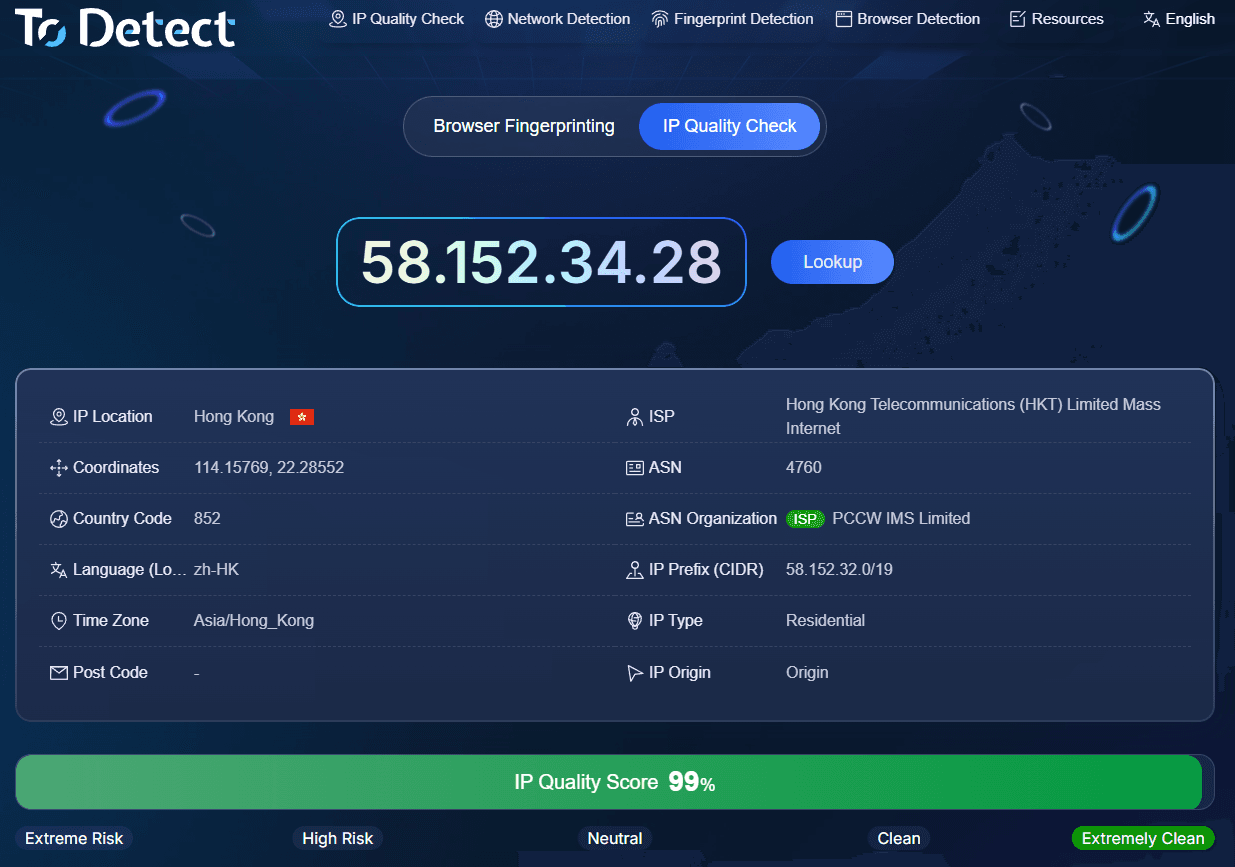
Its design philosophy differs from traditional IP lookup websites. Typical IP checkers usually tell you "where this IP is and which ISP it belongs to." However, when actually using proxy IPs, users often care more about other key questions: What type of IP is this? Does it exhibit proxy characteristics? How is the IP quality? Are there any anomalies in the network environment?
ToDetect provides relatively rich detection dimensions. For users who need proxy IP testing, IP quality evaluation, or static IP testing, this type of information offers significantly higher reference value than simply querying geolocation.
Another convenient aspect is its centralized results presentation. Beginners who aren't familiar with ASN, ISP, or IP databases don't need to study complex technical parameters beforehand—they can simply open the site, run the test, and view the clear results.
3. IPinfo: Convenient for Checking Basic IP Information
If your primary needs center around IP address queries, IP location lookups, and ASN queries, IPinfo remains a classic choice.
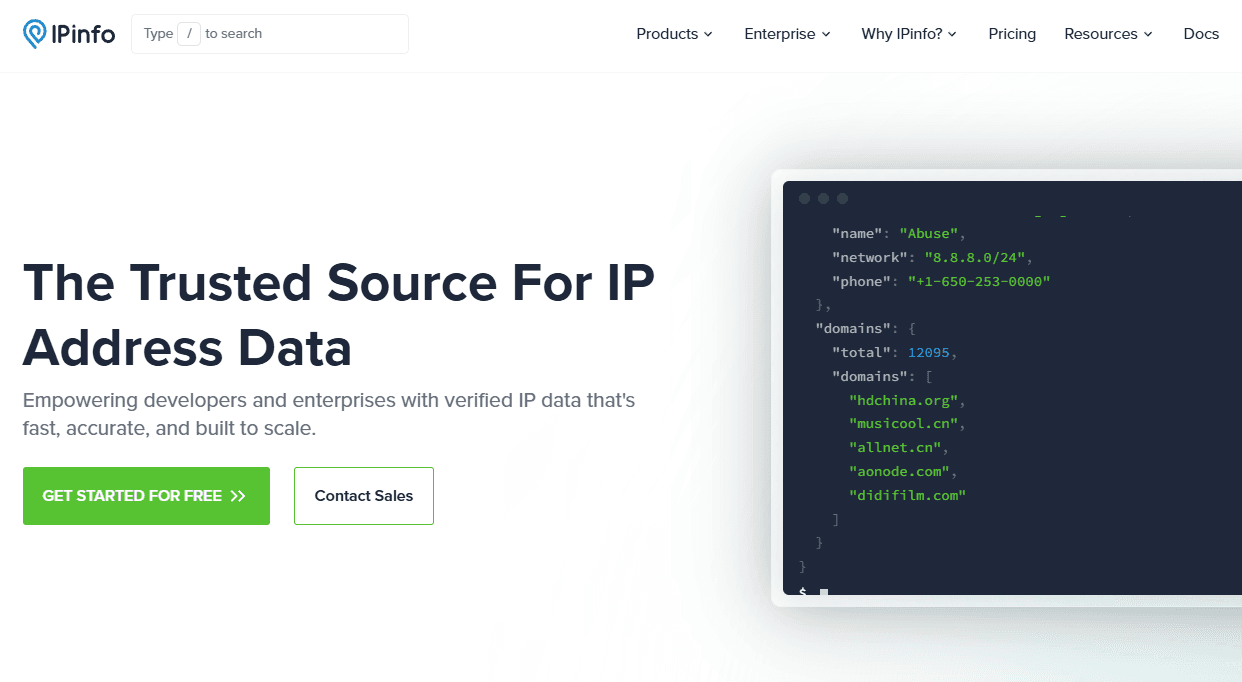
Its focus is very clear: it centers entirely around IP data itself. Users can learn about the region, ASN, ISP, and other details of an IP. For developers, website operators, and data analysts who require raw IP data analysis, this information is highly practical.
However, if you're asking "Is this IP quality good?", IPinfo isn't specifically tailored to answer that, as IP geolocation and IP quality testing are fundamentally two different things.
4. WHOER: Suitable for Checking Anonymity and Network Environment
WHOER belongs to the category of online IP checker tools that are easy to get started with. In addition to checking the IP address, location, and ISP, it places significant focus on anonymity and certain network environment parameters.
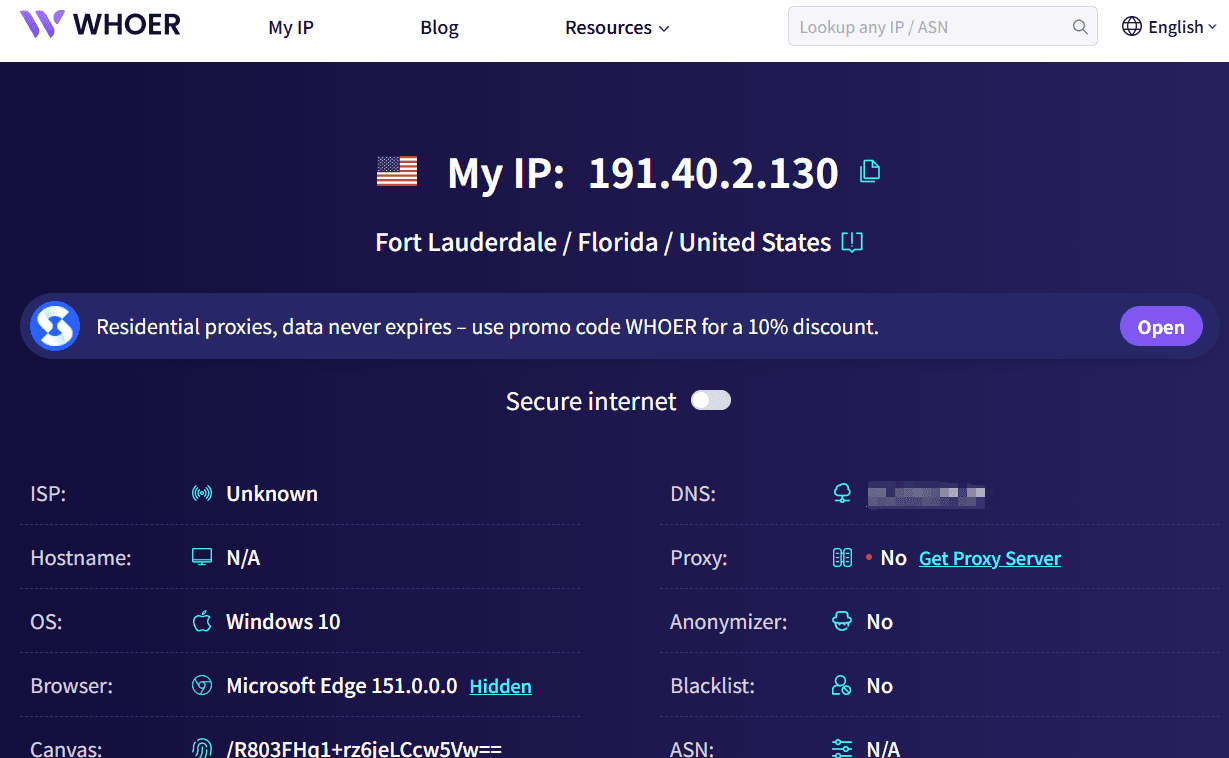
For everyday users, its main advantage is simplicity—you can view the test results intuitively right after opening the page. If you just want to quickly confirm "Has my current IP changed?", "Is the displayed country correct?", or "Are there obvious environment anomalies?", tools like this serve well as a supplementary check.
5. AbuseIPDB: Better suited for IP Reputation and Risk Records
If you are concerned about whether an IP has been reported or has a history of malicious activity, AbuseIPDB offers much more targeted functionality.
Unlike standard IP lookup sites, its core focus is on IP reputation and security risks. For instance, checking whether an IP has past reports involving spam or malicious requests provides valuable insight into IP risk assessment.
6. IPQualityScore: Better Suited for Professional Risk Control Scenarios
IPQualityScore, commonly known as IPQS, is geared more towards professional IP risk identification and fraud prevention.
Rather than simply telling you "where the IP is located," it conducts further analysis on proxies, anonymous access, and potential fraud risks. Public data indicates that IPQS mainly targets enterprise risk management, payment, and security scenarios; thus, its features might feel slightly complex for average users.
7. What Data Should You Look At in IP Quality Detection?
Many people only focus on "country and city" when checking an IP, but that is far from enough. For crucial IP usage, we recommend focusing on the following:
First, check IP Geolocation. Ensure that the country, region, city, and ISP align with your actual requirements.
Second, check IP Type. Residential IPs, Data Center IPs, and Mobile IPs differ in type, which leads to operational differences in real-world environments.
Third, check Proxy Attributes. If you purchased a non-proxy network resource, but the test flags explicit Proxy, or Hosting attributes, it warrants further verification.
Fourth, check IP Reputation and Risk. Checking whether there are historical reports, blacklist records, or other risk logs serves as an essential reference for assessing IP quality.
Fifth, check Network Environment. If your tasks are sensitive to browser environments, you should further verify DNS, WebRTC, and browser fingerprinting details. In short, true IP quality detection isn't just about looking up an IP address—it's about assessing the current state of that IP across multiple dimensions.
Which IP Checker Website is More Accurate?
If your goal is to find an easy-to-use, user-friendly IP checker website with comprehensive detection dimensions, you can prioritize trying ToDetect in 2026, and combine it with other tools according to your specific needs. This approach yields much more reliable judgments than relying solely on a single "IP location" result.
A truly valuable detection tool should help users gain a complete understanding of their current network environment from multiple angles, including IP geolocation, ISP, ASN, IP type, proxy attributes, and risk records.
The recommended practice is not to rely on just one result, but to run a thorough IP test through ToDetect first, then cross-verify with complementary tools based on your specific requirements. This ensures you can quickly grasp basic IP information while comprehensively evaluating IP quality, proxy attributes, and potential risks.