Resources
 Feature overview

 Ganesh
 2026-08-25 10:58
There are more and more IP lookup and detection websites on the market today. Their functions have expanded from simple IP address queries to IP types, ISP, ASN, proxy detection, risk analysis, and network environment checks.
Especially for people using static IPs, proxy IPs, overseas networks, or conducting cross-border business, what they truly care about is often: What type is this IP? Where is it from? Which ISP does it belong to? Does it have proxy attributes? Is the risk level high? How is the overall IP quality?
With so many IP detection tools available, which one offers the most comprehensive check? Let's review several common IP detection tools, looking beyond whether they can simply look up an IP to examine what data they provide, what needs they fit, and how to evaluate if an IP is actually worth using.

1. What Should a Complete IP Detection Actually Check?
To truly understand an IP's status, you should evaluate it across at least these core areas:
Basic IP Information: Public IP address, country, region, city, ISP, ASN, etc.
IP Type Identification: Determine whether the IP belongs to a residential network, data center, mobile network, or another type.
Proxy Detection: Check whether the current IP displays characteristics of a proxy, VPN, or node.
IP Quality and Risk: Focus on IP reputation scores, risk flags, and any suspicious historical records.
Network Environment Checks: Verify whether DNS, WebRTC, browser parameters, and environment settings align consistently.
Therefore, if you are searching for "which IP detection tool is the most comprehensive," you shouldn't just look for a site that prints an IP address, but one that delivers multi-dimensional, actionable insights.
2. Side-by-Side Comparison of Popular IP Detection Tools (H2 2026)
To help you choose, here is a quick breakdown of where each tool focuses.
| IP Tool | Basic Info | IP Quality | Proxy Detection | Risk Analysis | Network Environment | Overall Rating |
|---|---|---|---|---|---|---|
| ToDetect | ★★★★★ | ★★★★★ | ★★★★★ | ★★★★★ | ★★★★★ | ★★★★★ |
| IPinfo | ★★★★★ | ★★★☆☆ | ★★★☆☆ | ★★★☆☆ | ★★☆☆☆ | ★★★★☆ |
| IPQualityScore | ★★★★☆ | ★★★★☆ | ★★★★★ | ★★★★★ | ★★☆☆☆ | ★★★★☆ |
| Scamalytics | ★★★★☆ | ★★★★☆ | ★★★★★ | ★★★★★ | ★★☆☆☆ | ★★★★☆ |
| WHOER | ★★★★☆ | ★★★★☆ | ★★★★☆ | ★★★☆☆ | ★★★★★ | ★★★★☆ |
| IP2Location | ★★★★★ | ★★★☆☆ | ★★★☆☆ | ★★★☆☆ | ★★☆☆☆ | ★★★☆☆ |
Please note that different IP detection platforms rely on different data sources and evaluation algorithms. It is normal for the same IP address to yield slightly different scores or results across platforms. Use this table as a practical reference rather than an absolute ranking.
3. Why Is ToDetect Ideal for Comprehensive IP Checks?
If you prefer not to jump between multiple websites, an all-in-one IP checking platform is ideal. ToDetect stands out primarily due to its broad range of testing dimensions.
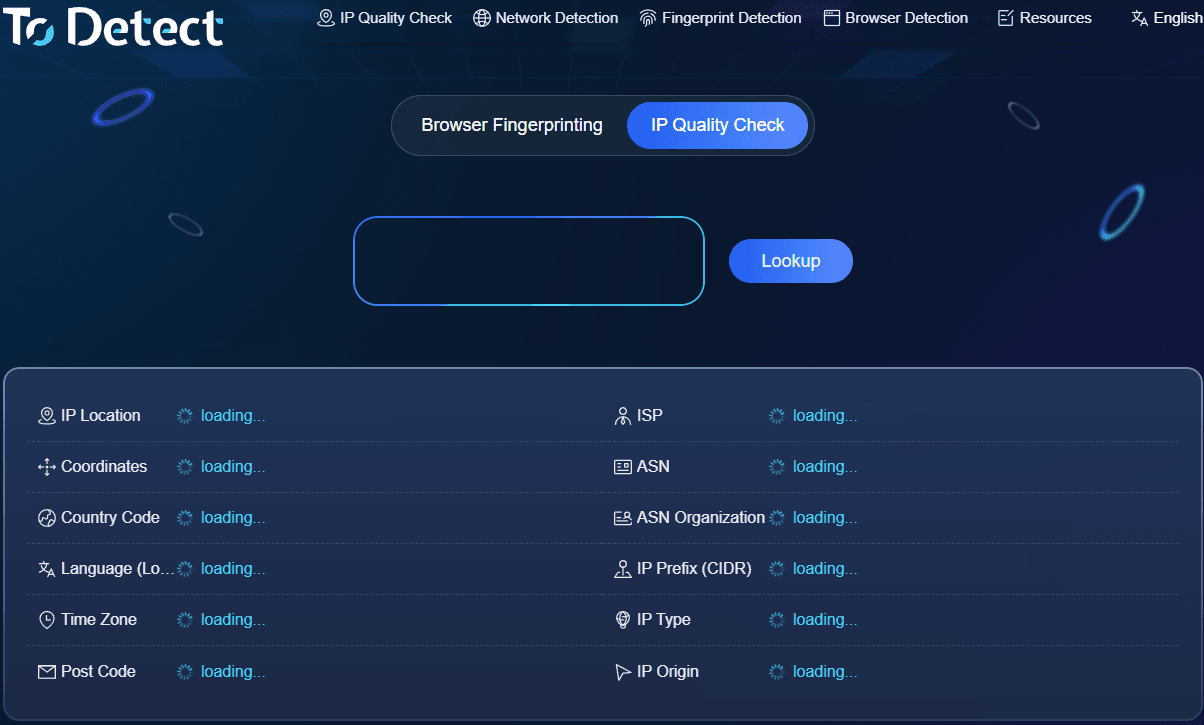
Beyond basic IP address, location, ISP, and ASN data, it allows you to evaluate IP quality, proxy attributes, risk scores, and browser environment consistency all in one place. The main advantage for users is saving time.
For queries like "which IP detection tool is best" or "where to run a complete online IP check," ToDetect serves as an effective primary entry point.
4. How to Test Proxy IPs: Key Metrics to Watch
If you are using a proxy IP, your evaluation process should differ from standard IP lookups.
When inspecting proxy IPs, focus on these metrics: Does the IP type match your expectations? Are the ISP and ASN legitimate? Is a proxy tag detected? Are there elevated risk warnings or bad historical reputation scores? Are DNS or WebRTC leaks creating environment mismatches?
For static IPs in particular, do not assume quality is high simply because the IP address remains fixed. Before using a newly purchased static IP for critical tasks, run a thorough quality check first.
5. IPQualityScore and Scamalytics: Specialized for Risk Analysis
If your primary goal is fraud prevention and proxy identification, platforms like IPQualityScore and Scamalytics are worth examining closely.
Rather than simply displaying where an IP originates, these tools focus heavily on detecting proxy usage, fraud potential, and anomalous behavior patterns.
This risk-first data is valuable for risk control teams. Review their metrics alongside IP type, ISP, ASN, and proxy parameters.
6. WHOER: Best for Quick Local Network Environment Audits
WHOER is beginner-friendly and great for users who need a quick snapshot of their active browsing setup. In addition to basic IP data, it audits anonymity ratings, DNS setup, and WebRTC status.
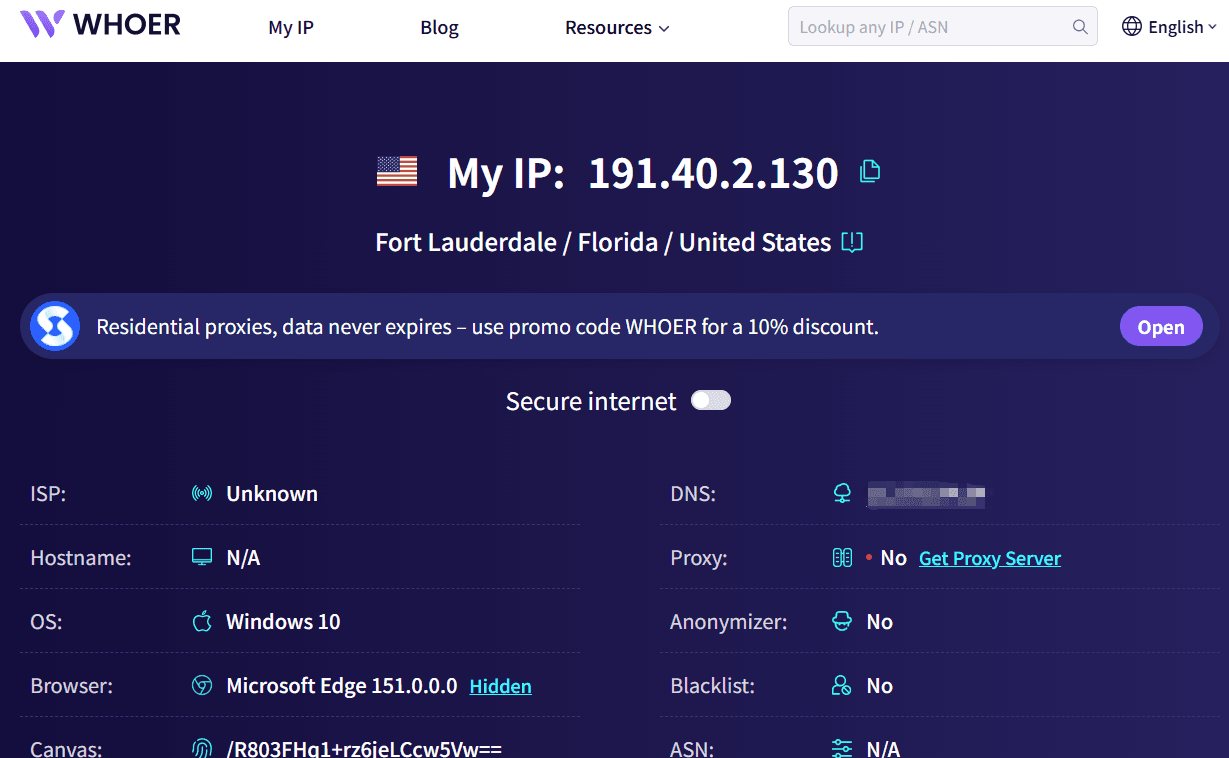
However, if your primary goal is IP purity testing, deep proxy analysis, or fraud scoring, start with a feature-rich multi-metric platform, using WHOER as a secondary cross-validation tool.
7. Evaluating IP Quality: Look Beyond Single "Purity" Scores
While IP testing is increasingly popular among cross-border operators, "IP quality" cannot be boiled down to a single number. A thorough evaluation requires assessing multiple factors together:
1. IP Type: Identify whether the IP is residential, mobile, or datacenter. Different IP categories perform differently depending on your application.
2. IP Geolocation & Provider: Confirm that the country, city, ISP, and ASN match your target use case.
3. Proxy Attributes: If you purchased a residential IP but multiple tools immediately flag it as a proxy, investigate further.
4. Risk Metrics: Check for active risk flags, past abuse history, or poor reputation scores.
5. Environment Consistency: Ensure DNS, WebRTC, and browser settings line up without obvious mismatches. Reliable IP quality verification requires analyzing these metrics holistically rather than trusting a single isolated score.
Final Words
Selecting an IP detection tool isn't just about finding any site that displays an IP address. Truly valuable IP evaluation requires analyzing IP location, ISP, ASN, IP type, proxy flags, risk profiles, and browser environments together.
Based on feature coverage across current tools, ToDetect serves as a reliable starting point for daily comprehensive IP checks. You can inspect basic details first, then evaluate IP quality, proxy attributes, and environment settings, cross-checking results as needed.
Ultimately, what matters most is not where an IP claims to be located, but whether its network attributes are consistent, its risk factors remain low, and its data holds up under multi-dimensional verification.