Resources
 Feature overview

 Ganesh
 2026-05-15 10:52
Anyone involved in cross-border eCommerce knows that account environments are becoming increasingly important — especially on platforms like Amazon, TikTok Shop, eBay, and Shopee.
Before logging into accounts, many experienced teams will first check whether the IP is clean and whether the browser fingerprint exposes any risks, in order to avoid accounts being mistakenly linked by platform risk-control systems.
Today, let’s talk about some of the most useful IP lookup websites currently available, and how to determine whether an IP is actually safe and suitable for cross-border business operations.

1. Why Cross-Border eCommerce Sellers Must Perform IP Reputation Checks
Many beginners mistakenly assume that simply using a proxy IP automatically makes them safe.
• Some IPs may have already been heavily used by other users and may even be flagged as high-risk IPs by platforms.
• For example: identified as a data center IP, carrying proxy labels, previously used for mass registrations, shared across multiple accounts, or associated with abnormal login records.
• Even if such IPs are fast, they may still negatively affect account stability.
Therefore, performing an IP reputation check before officially logging into your store is extremely necessary.
2. Common IP Risks You Should Know
Many people only check IP geolocation, but a truly professional online IP check goes far beyond simply looking at the location.
1. Whether the IP Is Marked as a Proxy
Platforms can detect whether the current IP belongs to a data center proxy, residential proxy, or hosting provider IP. If proxy traces are too obvious, it can easily trigger risk controls.
2. IP Reputation Score
Some IP lookup websites provide reputation scores, such as whether the IP appears on blacklists or has suspicious traffic history.
If an IP has been reported or associated with abnormal behavior, the lower its reputation, the higher the account risk.
3. DNS and WebRTC Leaks
Many users use proxies, yet their browsers still leak real network information — something platforms can easily detect.
That’s why professional sellers also check for DNS leaks, WebRTC leaks, timezone consistency, and language environment consistency in addition to online IP checks.
4. Browser Fingerprint Anomalies
Modern platform risk control systems no longer rely solely on IP addresses. Browser fingerprint detection is now equally important.
This includes Canvas fingerprints, WebGL fingerprints, font information, GPU information, system parameters, and screen resolution.
If multiple accounts use the same browser fingerprint, they may also be linked together by the platform.
3. Recommended IP Lookup Websites for Cross-Border eCommerce
The following tools are widely used within the cross-border eCommerce industry.
1. ToDetect
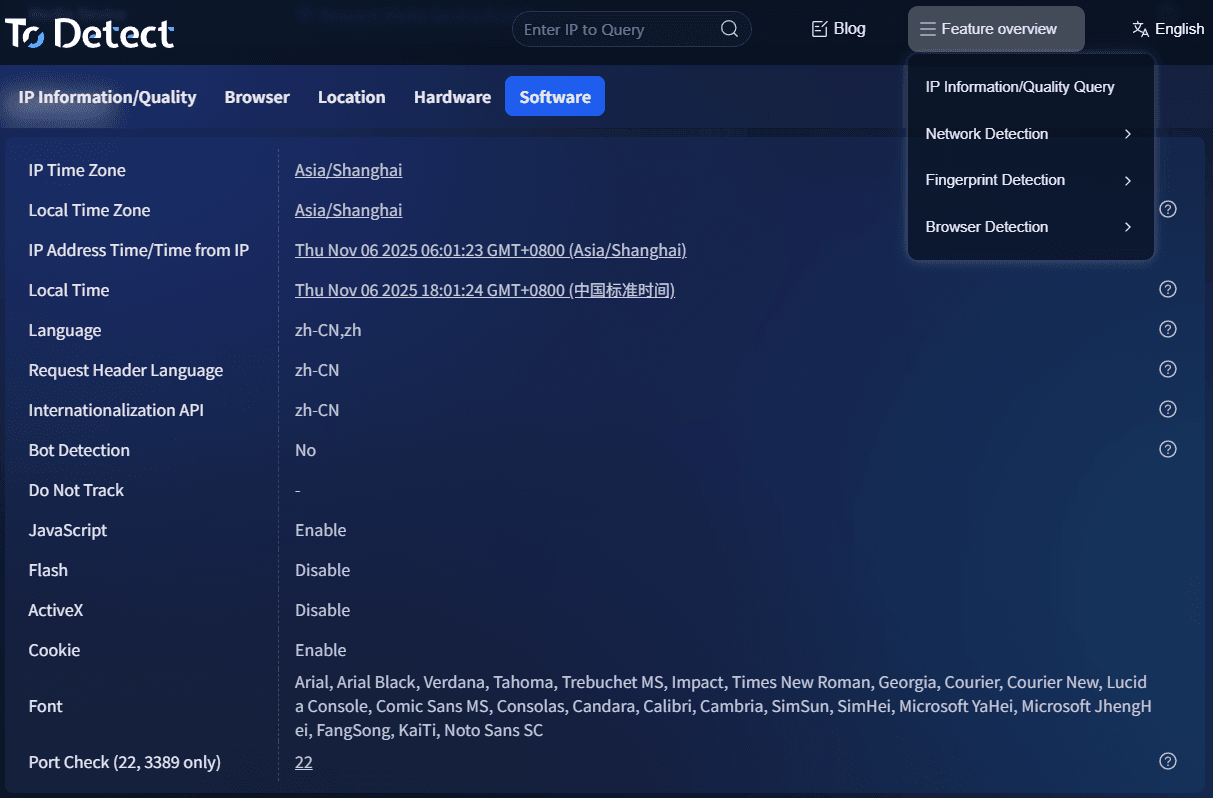
First on the list is ToDetect, which should already be familiar to many people running TikTok and Amazon businesses.
Its biggest strengths are support for IP reputation checks, browser fingerprint detection, proxy exposure detection, DNS/WebRTC leak testing, and environment consistency checks.
For cross-border sellers, a single tool can identify most common risks.
Especially for multi-account operators, running a check before login can help identify environment issues in advance.
2. IPinfo
IPinfo mainly provides IP geolocation lookup, ASN information, ISP identification, and proxy type detection, making it suitable for quickly checking what type of network an IP belongs to.
Many sellers use it specifically to verify whether an IP is residential, data center based, or carries proxy labels.
3. Whoer
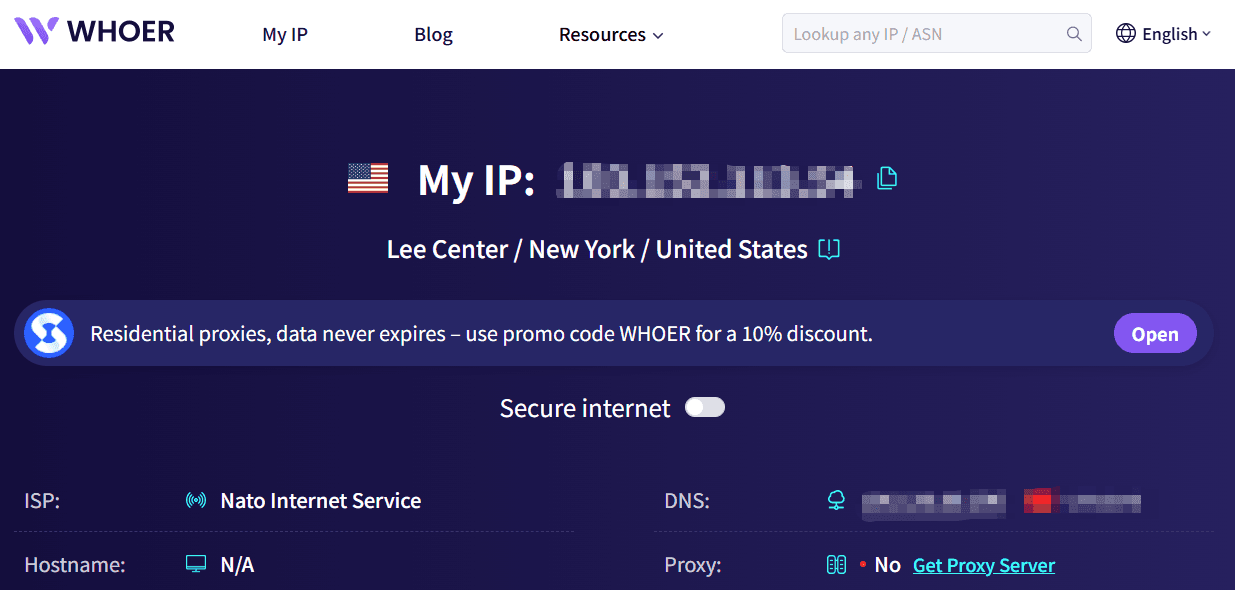
Whoer focuses more on anonymity testing. In addition to basic IP checks, it also supports DNS checks, WebRTC checks, and anonymity scoring.
Many users use it to evaluate how well their proxy is “masked.”
4. BrowserLeaks
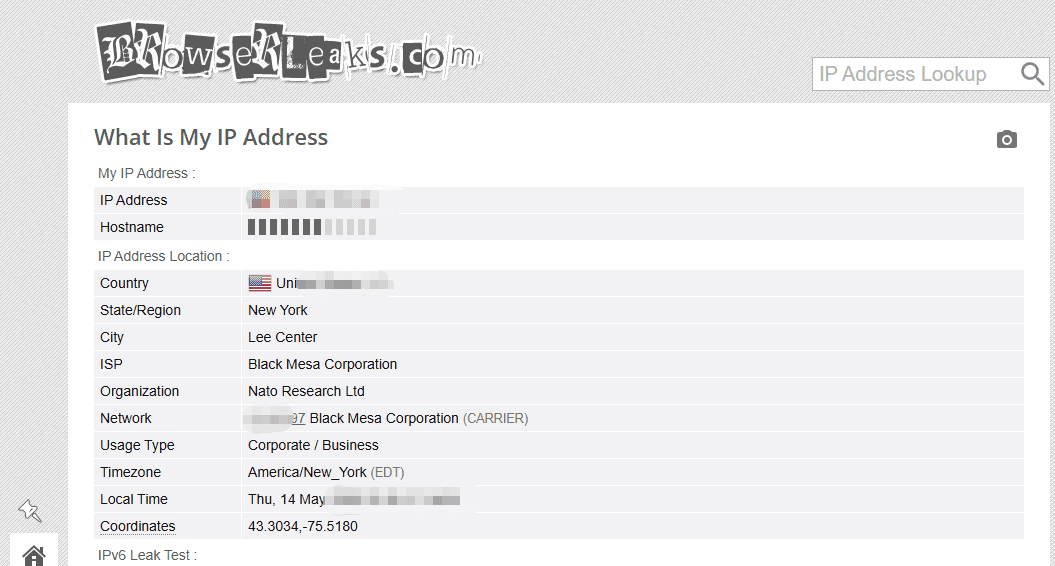
BrowserLeaks can detect Canvas fingerprints, WebGL, AudioContext, fonts, timezone settings, plugin information, and more. Many people are surprised during their first test to discover how much real information their browser leaks.
This issue is especially obvious when using standard browsers combined with cheap proxies.
5. Scamalytics
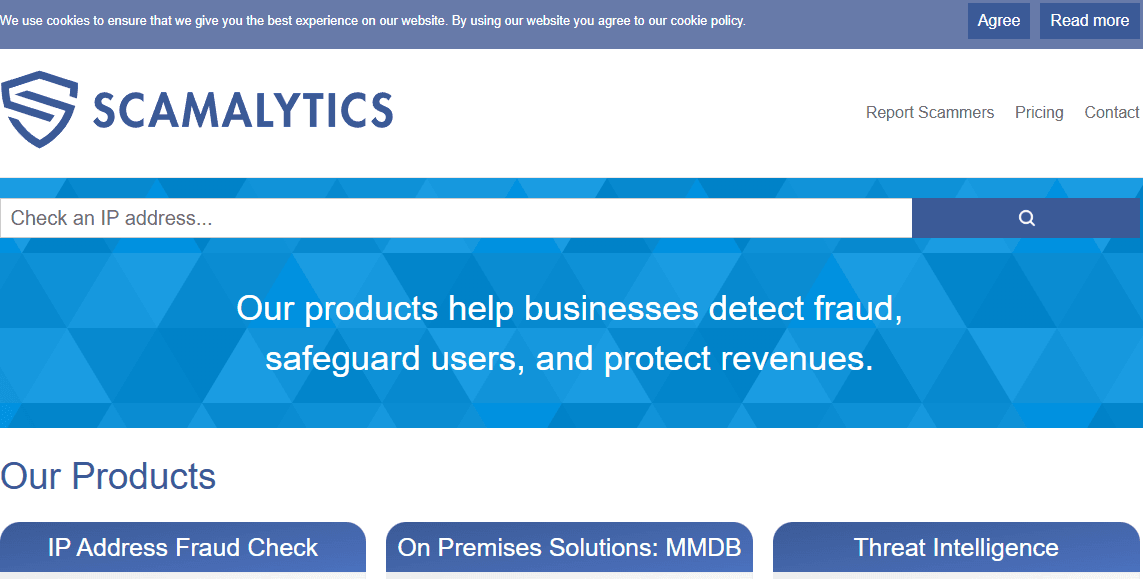
Scamalytics is mainly used for checking IP risk scores.
It directly provides Fraud Scores, high-risk indicators, and abnormal behavior reports. Many cross-border sellers test newly purchased proxy IPs there before using them.
If the score is too high, the IP usually won’t be used for store logins.
4. How to Choose a Reliable Online IP Lookup Website?
There are many IP lookup websites online today, but not all of them are suitable for cross-border eCommerce.
Must Detect Proxy Risks
Don’t just check the IP location. What really matters is whether the IP exposes proxy traces, belongs to a data center, or has blacklist records.
Must Support Browser Fingerprint Detection
Many platforms have already entered the “environment-based risk control” stage. Simply changing IPs is no longer enough, especially on TikTok, Facebook Ads, and Amazon, where device environments are heavily analyzed.
Fast Data Updates
Some online IP lookup tools update their databases too slowly. An IP may already be flagged while the tool still shows it as normal, so it’s recommended to prioritize widely used industry platforms.
5. Tips for Reducing Account Risks in Cross-Border eCommerce
Besides performing IP reputation checks, there are several important operational details sellers should pay attention to.
Use Residential IPs Whenever Possible
Compared with data center IPs, residential IPs more closely resemble real user network environments and are generally trusted more by platforms.
One Account = One Stable Environment
Avoid frequently changing IPs, browsers, timezones, or device parameters. The more stable the environment, the safer the account.
Use Professional Anti-Detect Browsers
Many cross-border teams use anti-detect browsers to isolate browser environments, prevent account linking, and manage cookies. Combined with IP lookup tools, this setup can greatly improve account stability.
Conclusion
For cross-border sellers, regularly performing online IP checks and IP reputation testing is no longer optional — it has become a fundamental part of daily operations.
This is especially important for people managing multiple stores, TikTok account matrices, or Facebook ad campaigns, where browser fingerprint detection and IP environment management are critical.
Platforms like ToDetect, which support both browser fingerprint testing and IP risk analysis, can save cross-border sellers a significant amount of troubleshooting time.