Resources
 Feature overview

 Ganesh
 2026-05-23 11:07
Whether you're doing data scraping, cross-border e-commerce, or multi-account management, a stable and high-quality IP can save you both time and effort.
However, the quality of proxy IPs on the market varies greatly. Some work smoothly without issues, while others disconnect frequently. For beginners, finding the most suitable proxy IP is like searching for the perfect “beacon” in a vast ocean — time-consuming and easy to get wrong.
Next, we’ll walk you through how to quickly identify the most stable and reliable proxy IPs through online IP lookup and IP quality testing.

1. Why Is IP Quality So Important?
Many people only focus on the number of IPs available, but quality is actually the key factor. Poor-quality IPs can cause many problems:
• Slow Access Speed: Low-quality IPs often have high latency, making websites and APIs load slowly.
• Easy to Get Blocked: Frequently using low-quality or high-risk IPs can easily trigger website anti-fraud systems.
• Unstable Connections: Some IPs work for a short time but quickly become invalid, interrupting tasks.
• Privacy & Security Risks: Some low-quality proxy IPs may log browsing behavior and pose security threats.
Therefore, if you want to use proxy IPs efficiently and reliably, selecting high-quality IPs should be your first priority.
2. How to Evaluate IP Quality ? Key Metrics Explained
□ Latency (Ping)
The lower the latency, the faster the connection speed. Generally, an IP with latency under 200ms is considered relatively stable.
□ Uptime Rate
This refers to the percentage of time an IP remains available within a given period. Higher uptime means better reliability.
□ Anonymity Level
Highly anonymous IPs can hide your real IP address, protect privacy, and reduce the risk of being blocked.
□ Protocol Type
Common protocols include HTTP, HTTPS, and SOCKS5. Different protocols are suitable for different scenarios. For example, HTTPS is ideal for secure web scraping and login operations.
□ Geographic Distribution
Some business operations require IPs from specific regions. For example, localized traffic tasks require IPs from designated locations.
Once you understand these metrics, you can more effectively identify high-quality proxy IPs.
3. Proxy IP Type Comparison Table
| IP Type | Anonymity | Speed | Stability | Best Use Cases |
|---|---|---|---|---|
| HTTP | Medium | High | Medium | Web scraping and accessing public websites |
| HTTPS | High | High | High | Encrypted web scraping and login operations |
| SOCKS5 | High | Medium-High | High | Multi-account management, social media operations, cross-border access |
| Transparent IP | Low | High | Medium | Network speed testing and regional testing, not suitable for privacy-focused tasks |
| Elite Anonymous IP | High | Medium | High | Avoiding blocks, privacy protection, bulk operations |
4. Practical Tools: Online IP Lookup & IP Quality Testing
When it comes to selecting high-quality IPs, proper tools are essential. There are many IP testing tools available, but here are several methods I personally recommend for convenience and stability:
🔶 Online IP Lookup
Many platforms provide free online IP lookup tools. Simply enter a proxy IP, and you can view details such as ISP, location, anonymity level, and blacklist status. This is a quick and intuitive first screening step.
🔶 IP Quality Testing Software
If you want deeper insights into IP performance, use specialized IP quality testing tools. Batch testing allows you to evaluate latency, uptime, protocol type, and other metrics all at once, helping you quickly eliminate poor-quality IPs.
🔶 Proxy IP Lookup
Through proxy IP lookup, you can check whether an IP has been blocked by major websites, how often it has been used, and its risk score. This is especially useful for users who require large volumes of long-term stable IPs.
🔶 Browser Fingerprint Detection + ToDetect
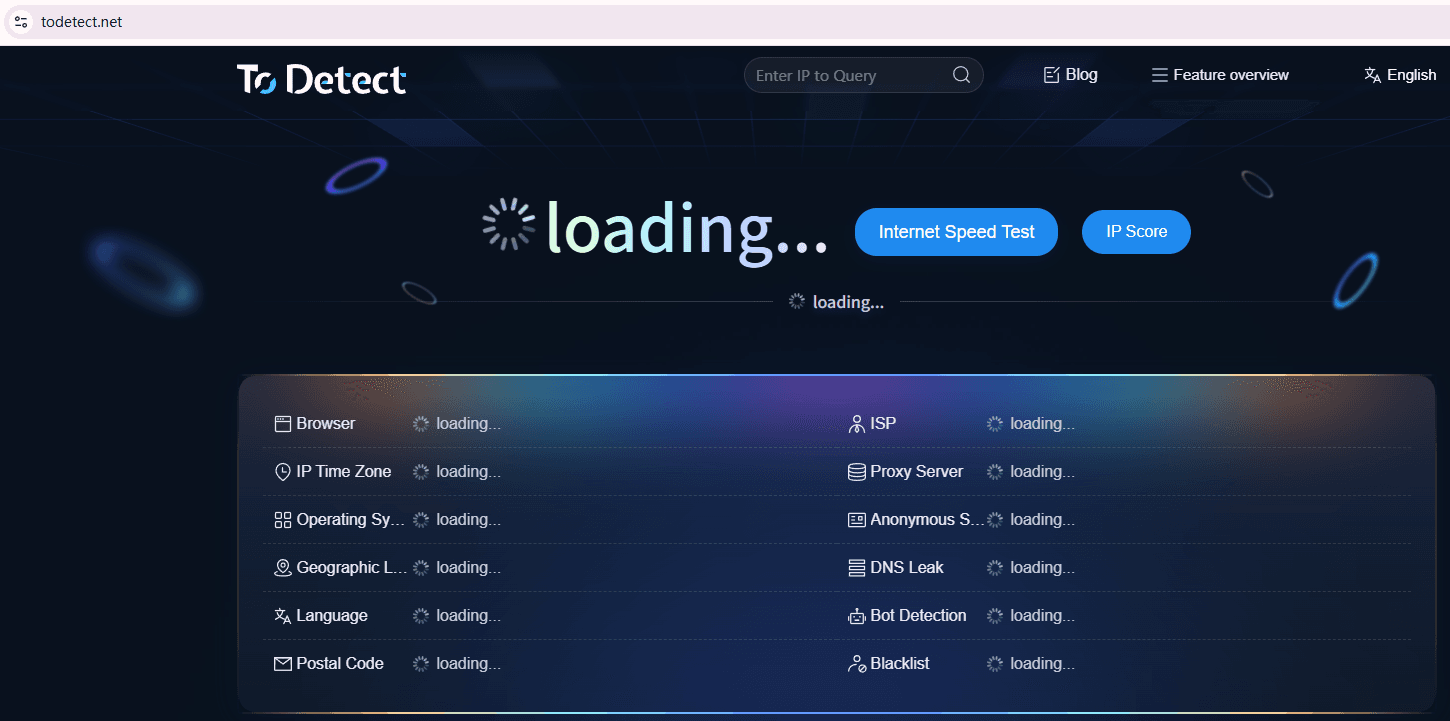
Some IPs may work technically but are still easily detected in specific scenarios. By combining browser fingerprint detection with ToDetect tools, you can evaluate how reliable a proxy IP is when simulating real browser behavior. This helps you select IPs that are both stable and less likely to get blocked, greatly improving work efficiency.
5. Practical Tips for Choosing High-Quality Proxy IPs
□ Use Multiple Sources
Avoid relying on a single provider. Using multiple IP sources reduces the risk of being blocked.
□ Rotate IPs Regularly
Using the same IP for a long time increases the chance of being blocked. Regular IP rotation keeps tasks running smoothly while protecting privacy.
□ Monitor IP Status Frequently
IP status changes quickly and may become unavailable at any time. Use IP quality testing or online IP lookup tools daily to ensure you only use active IPs.
□ Choose IP Types Based on Your Business Needs
Different tasks require different IP types. For example, e-commerce scraping may benefit from high-anonymity HTTP IPs, while social media account management is better suited for high-quality SOCKS5 IPs.
□ Track and Record IP Performance
Use logs to monitor IP speed, stability, and block history. Over time, this helps you build a reliable and stable proxy IP pool.
6. Common Questions About Proxy IP Quality
Q1: Why do my proxy IPs frequently disconnect?
A: Disconnections are mainly related to IP quality, ISP line stability, and usage frequency. It’s recommended to first screen IPs with quality testing tools and combine them with regular IP rotation to significantly reduce connection issues.
Q2: Are elite anonymous IPs really safer than regular IPs?
A: Yes. Elite anonymous IPs hide your real IP address, reducing the risks of blocking and tracking. They are especially suitable for web scraping and account management tasks. Combined with browser fingerprint detection, they perform even better.
Q3: How can I quickly determine whether a proxy IP is reliable?
A: The fastest way is to use online IP lookup or proxy IP lookup tools to check latency, uptime, and anonymity. You can also use ToDetect to simulate visits to target websites and verify real usability.
Q4: Is having more IPs always better?
A: Not necessarily! A large number of low-quality IPs only wastes time and money. It’s better to focus on quality — IPs with high uptime and strong anonymity are far more stable and secure than massive amounts of poor-quality IPs.
Conclusion
In 2026, by combining online IP lookup, IP quality testing, proxy IP lookup, and ToDetect tools, you can quickly identify high-quality, stable, and secure IPs.
Remember, proxy IPs are not about quantity — stability is what truly matters. Choose IPs based on your business needs to maximize efficiency and security.
IP quality directly impacts both operational efficiency and business security. Spending time selecting the right IPs is far more worthwhile than blindly stockpiling large numbers of unreliable IPs.