Resources
 Feature overview

 Ganesh
 2026-08-14 11:08
When selecting proxy IPs or setting up a network environment, many people wonder: Has my IP been flagged as a proxy? What is its reputation? Are there any risk records? These questions can only be answered through IP detection.
Currently, there are more and more online IP lookup, IP detection, and proxy IP detection tools on the market, but different platforms focus on different areas. Some excel at checking IP location/geolocation, while others focus on IP risk analysis.
Today, we have selected 6 representative IP detection tools for a horizontal comparison across detection capabilities, user experience, and target audiences to see which online IP detection tool is most worth using.
1. Horizontal Comparison of 6 IP Detection Tools
| Tool | Core Features | Proxy Detection | IP Quality Analysis | Browser Environment | Recommended Users |
|---|---|---|---|---|---|
| ToDetect | IP quality, proxy, fingerprint, leak detection | ★★★★★ | ★★★★★ | ★★★★★ | Cross-border operators, proxy IP users |
| IPinfo | IP ownership, ASN, ISP, geolocation | ★★★ | ★★★ | ★★ | Developers, general search queries |
| WHOER | IP lookup, anonymity, leak detection | ★★★★ | ★★★★ | ★★★★ | Privacy-conscious users |
| IPPure | IP reputation, purity, proxy identification | ★★★★ | ★★★★★ | ★★★ | Cross-border & e-commerce users |
| Ping0 | IP risk, proxy, reputation detection | ★★★★★ | ★★★★★ | ★★ | Proxy IP users |
| IP2Location | IP positioning, ISP, network details | ★★★ | ★★★ | ★★ | Developers & data analysts |
From a feature perspective, none of these 6 tools covers every single scenario. The ToDetect tool, however, focuses more on "whether this IP is suitable for actual use right now." This distinction is something many beginners easily overlook when doing IP quality checks for the first time.
2. ToDetect: Excellent Overall Experience
If you are looking for an all-in-one IP detection tool, ToDetect is definitely worth trying first.
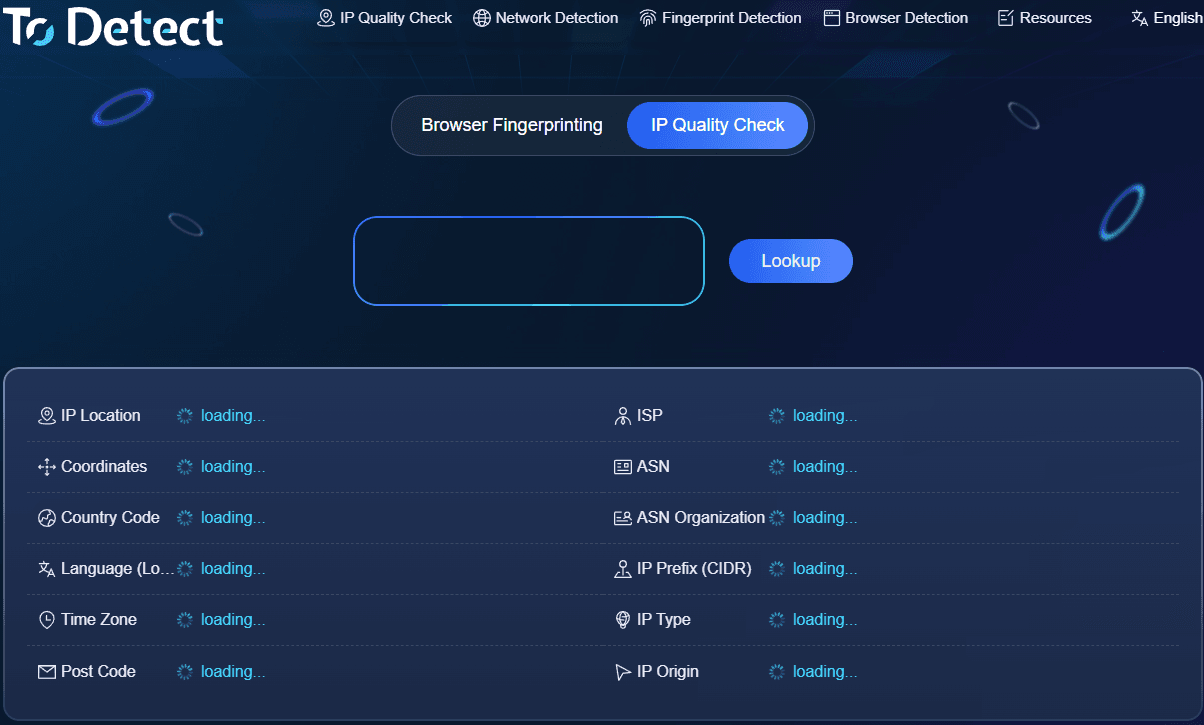
It does not just tell you what your current IP address is; it goes further to analyze IP quality, IP type, proxy attributes, and provides network environment metrics such as browser fingerprints, DNS, and WebRTC. The detection items currently shown on its official website include IP quality scores and browser fingerprint consistency indicators.
While these features might sound slightly complex for general users, they offer immense practical value for cross-border e-commerce sellers, overseas social media operators, or anyone relying on proxy IPs. Evaluating whether an IP is reliable requires looking beyond geolocation to examine IP reputation, proxy attributes, and current browser environments holistically.
Especially for proxy IP detection, ToDetect consolidates information efficiently without forcing you to open multiple websites. It is also beginner-friendly for those just starting out with IP quality detection.
3. IPinfo: Ideal for IP Lookups and Basic Information
If your needs are straightforward—simply wanting to know "where does this IP belong"—IPinfo remains a classic choice.
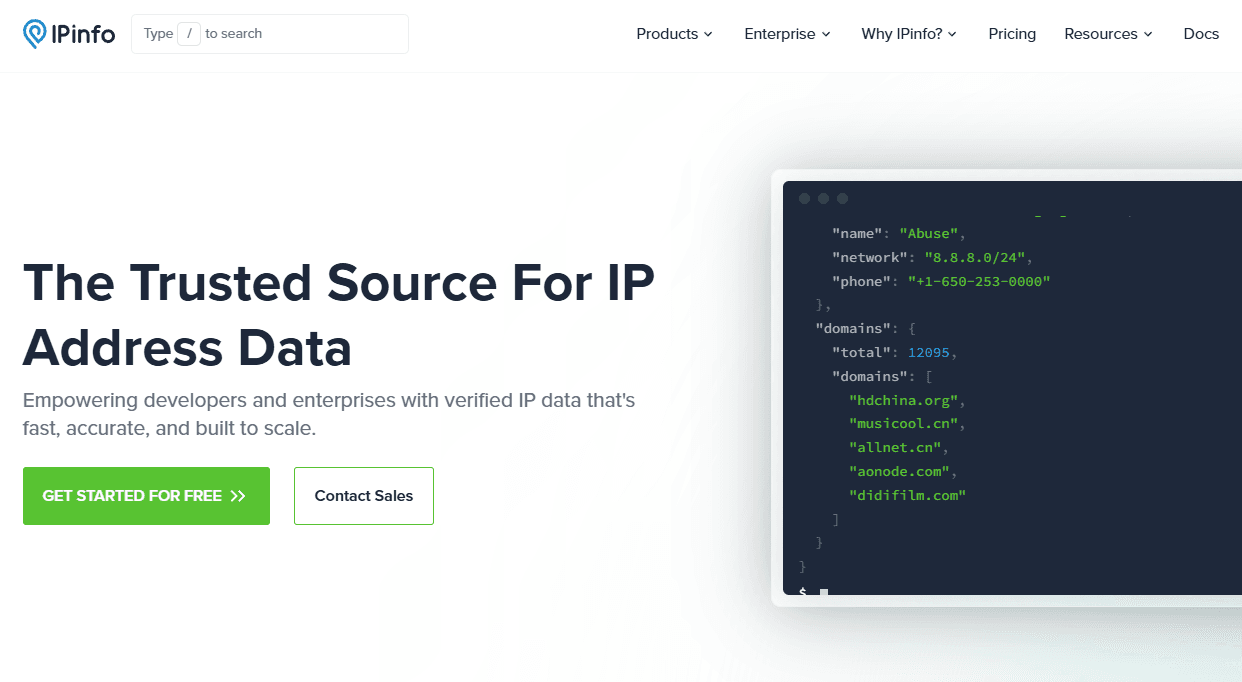
It leans heavily toward IP database queries and basic network information, allowing you to check IP locations, ASNs, ISPs, and other foundational data. This information is very valuable for developers, network administrators, or users needing raw IP data.
However, if your objective has evolved from "looking up an IP" to "evaluating IP quality," IPinfo isn't specifically tailored for that use case. In short, it is great for online IP lookups, but it wasn't built as a dedicated tool for IP purity and risk scoring.
4. WHOER: Convenient for Privacy and Anonymity Checks
WHOER features a distinct focus: besides providing IP address, location, and ISP details, it concentrates heavily on anonymity and network leak testing.
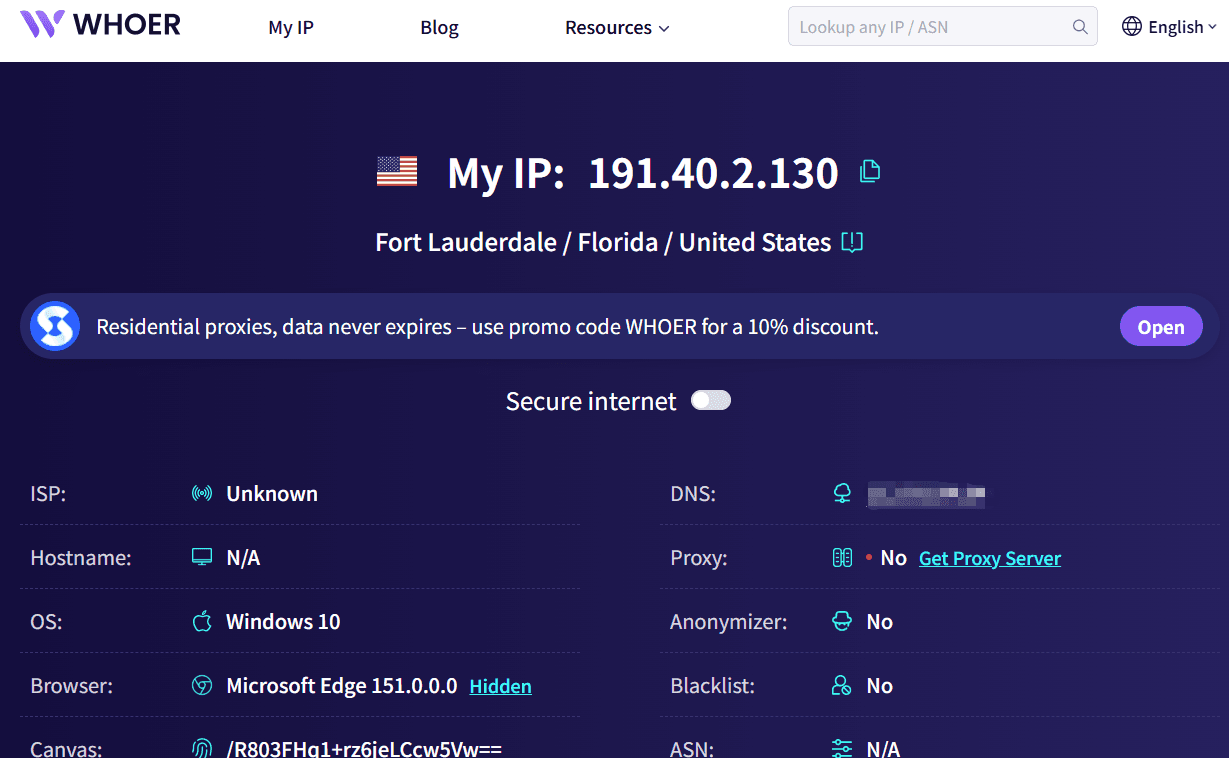
For users who frequently use proxy networks, WHOER offers a very low barrier to entry, presenting intuitive test results right on the page. If you just want to perform a quick online IP test to check if your network environment has obvious anomalies, it is quite convenient.
However, WHOER is not positioned purely as an IP quality scoring tool. If you care more about proxy IP cleanliness or risk scores, pairing it with specialized IP reputation tools will yield a more comprehensive picture.
5. IPPure: Focused on IP Purity and Reputation
As the name implies, IPPure emphasizes "IP purity," focusing heavily on IP reputation, risk evaluation, and proxy identification.
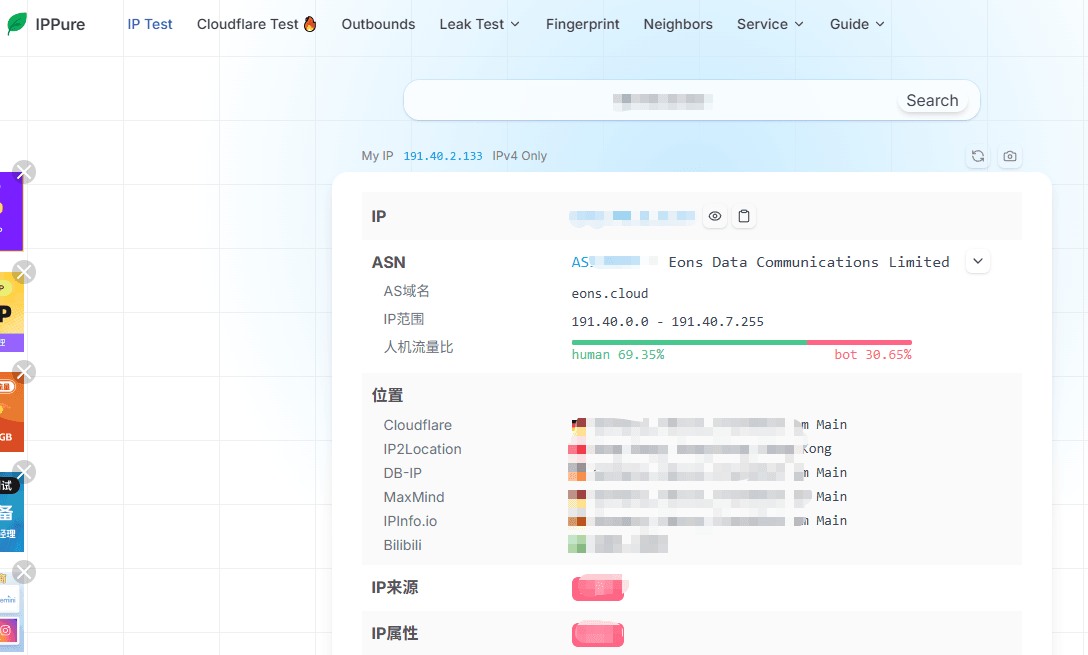
For cross-border sellers, accessing a website is only step one. Knowing whether the IP has bad historical records, is flagged as a proxy, or carries high risk is far more critical.
Of course, "pure IP" is not a standardized concept across all platforms. Different detection services use different data sources and risk models, so a "low risk" score on one site does not guarantee identical results elsewhere.
6. Ping0: Straightforward Proxy IP Detection
Ping0 is ideal for users who regularly purchase, test, or rotate proxy IPs.
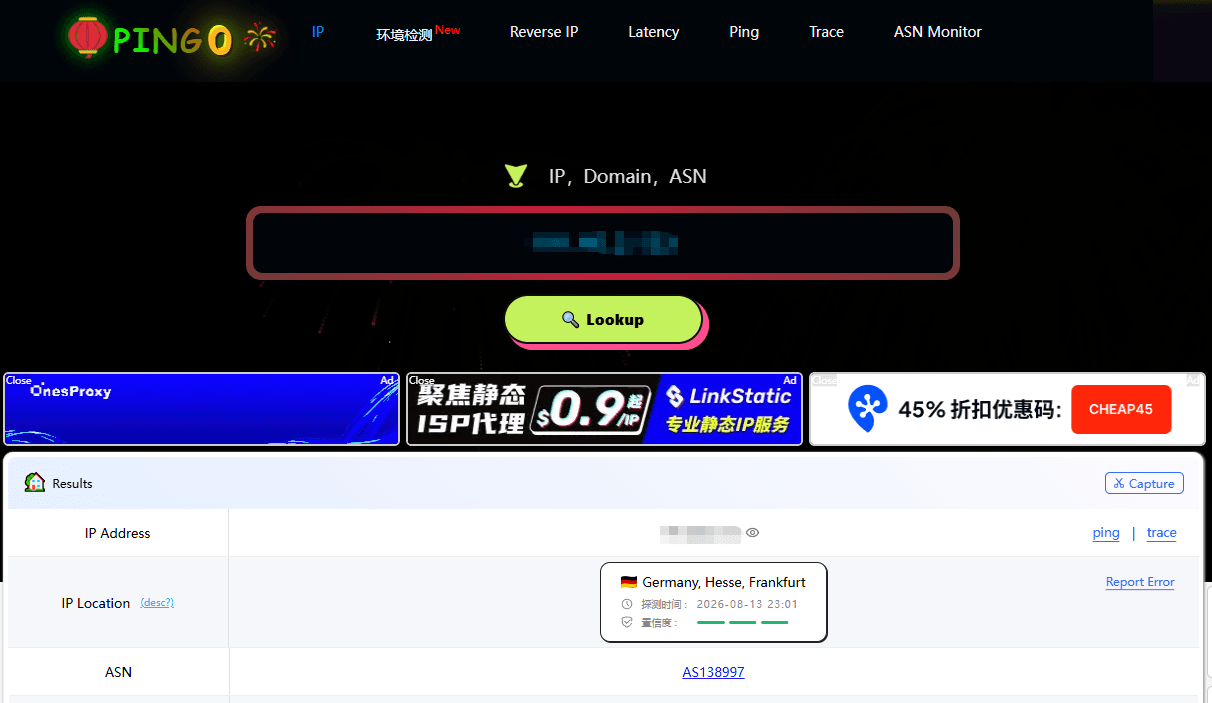
Its workflow is direct: enter an IP, and it immediately highlights the IP type, proxy attributes, risk factors, and reputation data. This "input-detect-filter" workflow saves considerable time for users batch-screening proxy IPs.
If you have a pool of proxy IPs and want to filter out problematic ones before running actual business tasks, Ping0 is very handy. Unlike traditional IP query sites that only display IP address and location, Ping0 prioritizes showing whether an IP poses a risk.
7. IP2Location: Best for Development and Data Applications
IP2Location is highly representative in IP geolocation and network info data. For developers, data analysts, and enterprises looking to integrate IP intelligence into their business systems, its main value lies in its database depth and positioning capabilities.
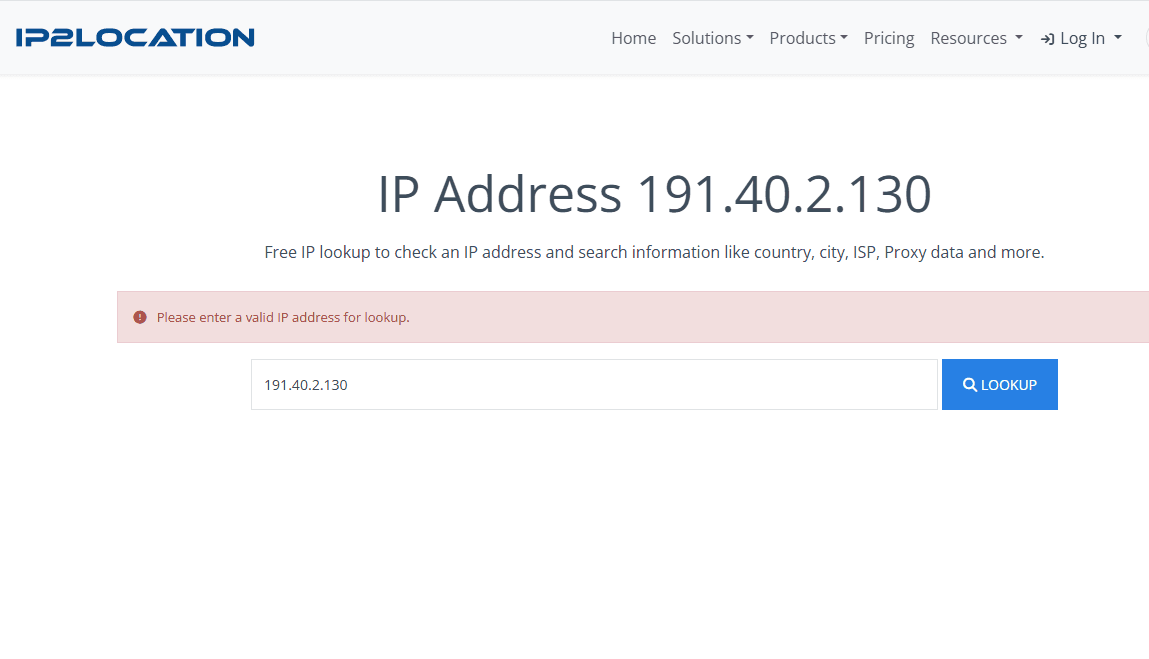
For instance, when identifying country, region, ISP, or network type based on an IP address, this type of database proves indispensable.
However, for regular users who simply want to run an IP quality check, overcomplicating tool selection is unnecessary. Most of the time, users only care about three questions: Where is the IP? Is it a proxy? Is it high risk?
8. Why Do Different IP Detection Sites Yield Different Results?
This is one of the most common questions raised by users running IP checks for the first time.
The reason is quite simple: different platforms utilize different IP databases, threat risk databases, update frequencies, and detection logic. Some focus on geographical mapping, while others evaluate historical reputation and network categories to generate composite scores.
Therefore, conflicting detection results do not necessarily mean a tool is inaccurate. Research confirms that it is common for the same IP to receive different evaluations across various services.
For mission-critical business IPs, cross-verification is recommended. For example, run a full check on ToDetect first, inspect fundamental network details via IPinfo, and re-verify reputation on IPPure or Ping0 as needed. This approach is far more reliable than relying solely on a single platform's score.
Final Thoughts
When choosing an IP detection tool, there is no need to blindly chase the one with the "most features." The best tool is one that presents understandable results, loads quickly, and meets your actual needs.
Through comparison, comprehensive detection platforms like ToDetect prove to align better with current user demands. Beyond basic online IP detection, it thoroughly analyzes IP quality, proxy attributes, and associated browser/network environment parameters.
Whether for daily network checks, cross-border operations, or proxy IP screening, a reliable IP testing strategy keeps your network environment stable and secure. Understanding tool differences and mastering proper detection workflows enables you to maximize the value of your IP resources.