Resources
 Feature overview

 Ganesh
 2026-08-26 10:41
Mobile proxies are increasingly used by businesses that need to view websites, advertisements, search results, applications, and digital services from the perspective of a real mobile network user.
However, not every mobile proxy service is built in the same way. Some providers sell access to large shared pools, while others assign a dedicated mobile connection to each customer.
NafeProxys follows the second model. The service provides dedicated 4G/5G mobile proxies powered by real carrier connections, with a primary focus on Brazil and Spain.
Instead of placing many unrelated customers behind the same shared proxy pool, NafeProxys gives the user access to a dedicated proxy environment connected to a real mobile network.
In this NafeProxys review, we explain how its dedicated mobile proxies work, what features are available, which business use cases they support, what limitations users should understand, and how to test a NafeProxys mobile proxy with ToDetect before starting an important operation.
What Is NafeProxys?
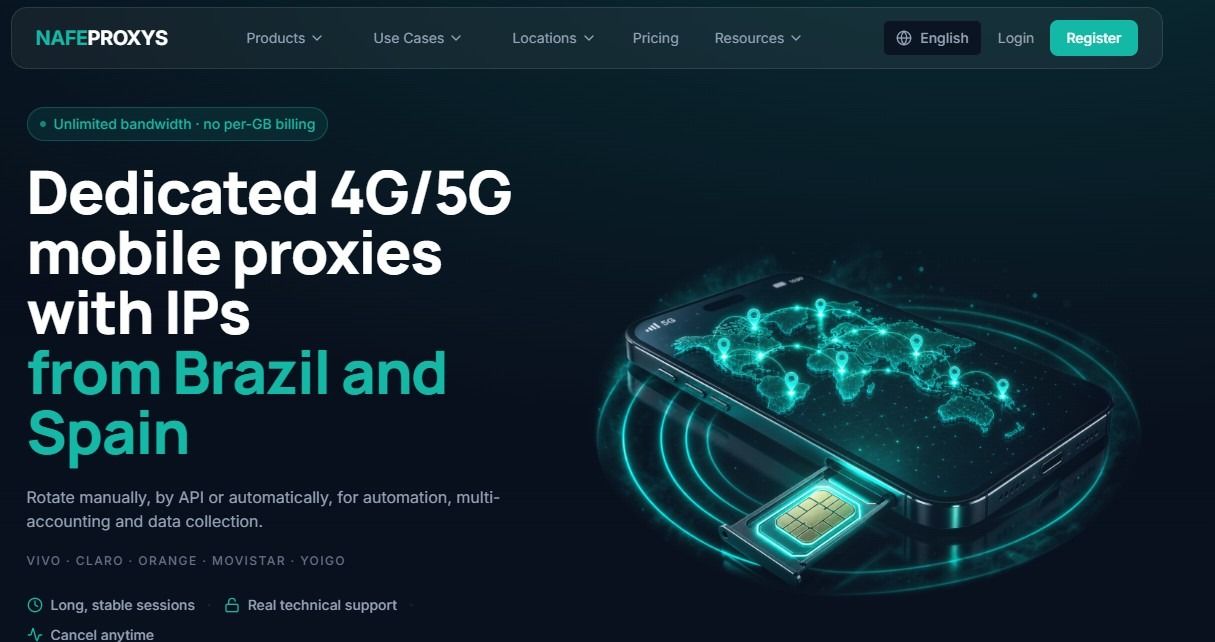
NafeProxys is a mobile proxy provider specializing in dedicated 4G and 5G connections. Its infrastructure uses real mobile devices, SIM cards, and carrier networks to provide mobile IP addresses that originate from telecommunications operators rather than conventional hosting or data center networks.
The service is mainly designed for users who need mobile proxy IPs in Brazil or Spain.
These locations can be valuable for regional advertising verification, website and application testing, market research, search result monitoring, localized data collection, and other legitimate business activities that require a real mobile network perspective.
The key distinction is the word dedicated. A customer is not simply purchasing traffic from a large rotating residential pool. The proxy connection is associated with a dedicated mobile device and its carrier connection for the duration of the plan.
How Do NafeProxys Dedicated Mobile Proxies Work?
A dedicated NafeProxys proxy uses the internet connection of a physical mobile device with an active SIM card. The device connects to a carrier network, and the customer accesses that connection remotely through proxy credentials.
The basic process works as follows:
1. A mobile device connects to a 4G or 5G carrier network.
2. The carrier assigns a public mobile IP address to the connection.
3. NafeProxys makes that connection available through a proxy endpoint.
4. The customer connects using a server address, port, username, and password, or another supported authentication method.
5. Internet requests are routed through the mobile connection and appear to originate from the carrier network.
6. When an IP rotation is requested, the mobile connection reconnects and asks the carrier for another available IP address.
This architecture is different from a data center proxy, where the IP belongs to a hosting company or cloud provider. It is also different from many residential proxy networks, where users receive temporary access to addresses from a large shared pool.
Because the final IP is assigned by the mobile operator, the proxy provider does not directly create or control the IP address. This detail affects rotation, geolocation, IP reuse, and city-level targeting.
Dedicated Mobile Proxies vs. Shared Proxy Pools
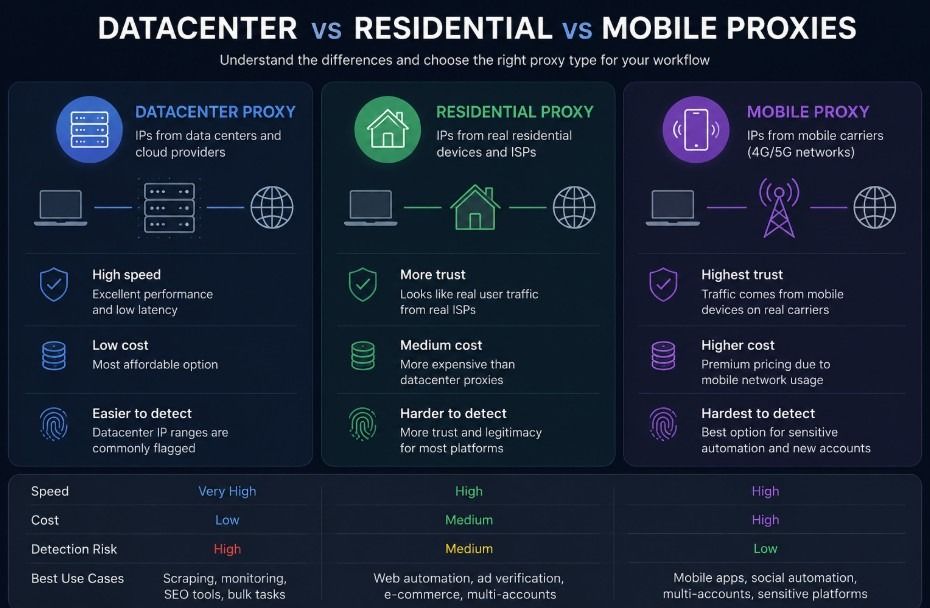
The dedicated model is one of the most important aspects of the NafeProxys service.
With a shared proxy pool, multiple customers may use IP addresses from the same inventory. An address can be assigned to different users at different times, and its recent activity may be influenced by workloads outside one customer’s control.
With a dedicated mobile proxy, the customer receives a dedicated device and mobile connection. This offers greater control over connection timing, IP rotation, usage patterns, and proxy configuration.
Potential advantages of a dedicated connection include:
· More control over when the IP changes
· No unrelated customers simultaneously using the same dedicated device
· A consistent carrier and country during the subscription
· Easier troubleshooting and environment testing
· Better visibility into the behavior of one proxy connection
· Support for longer sessions when the assigned mobile IP remains active
Dedicated does not mean that every IP address is permanently unique. Mobile carriers can reuse addresses across their networks, and carrier-grade NAT is common.
It means that the device and connection assigned through NafeProxys are dedicated to the customer rather than being a shared NafeProxys proxy endpoint.
Real Carrier IP Addresses
NafeProxys mobile proxies route traffic through real telecommunications networks. When websites inspect the source IP, they can generally identify the autonomous system number, internet service provider, network owner, and other characteristics associated with a mobile carrier.
This can provide a more realistic mobile network environment than a server-hosted IP.
For example, a business testing the mobile version of a website in Brazil may want to observe how the service responds to traffic coming from a Brazilian carrier network. The same principle applies to regional testing in Spain.
However, users should verify the current carrier inventory before purchasing. Device and SIM availability may change, and not every operator will be available at all times.
Brazil and Spain Mobile Proxy Coverage
NafeProxys focuses on two valuable mobile proxy markets: Brazil and Spain.
Dedicated Mobile Proxies in Brazil
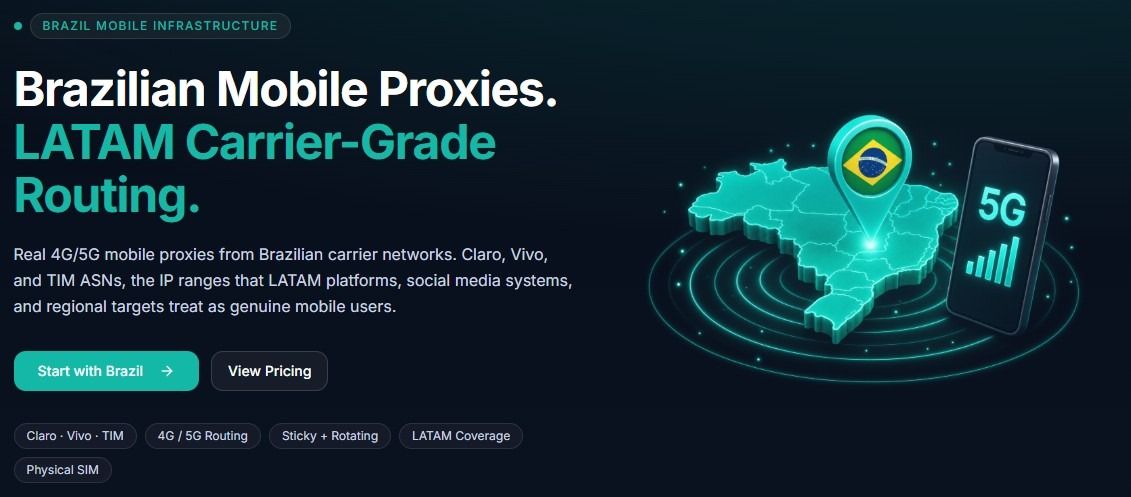
Brazil is a large digital market with substantial regional variation in advertising, e-commerce, search results, mobile connectivity, and online services. A dedicated Brazil mobile proxy can help companies inspect websites and campaigns from a Brazilian mobile network connection.
Typical searches related to this service include “Brazil 4G mobile proxy,” “Brazil 5G rotating proxy,” “dedicated mobile proxies in Brazil,” and “real carrier IP in Brazil.” NafeProxys addresses these needs with connections based on local SIM cards and carrier networks.
Dedicated Mobile Proxies in Spain
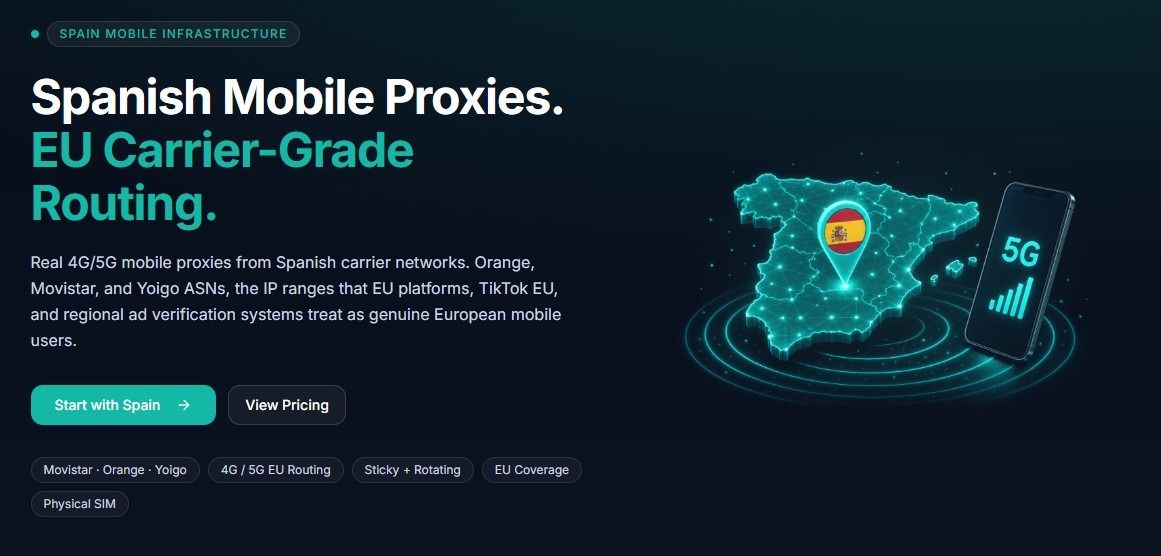
Spain mobile proxies are useful for companies that need to test Spanish websites, localized content, advertising campaigns, e-commerce platforms, and applications from a real mobile network.
A dedicated Spain 4G/5G proxy can provide a carrier-assigned Spanish IP while allowing the customer to control rotations and proxy sessions. As with Brazil, current operator availability should be confirmed before placing an order.
Can NafeProxys Guarantee a Specific City?
This is an important limitation to understand before buying any mobile proxy.
A device can be physically located in one city while IP geolocation databases report another city in the same country or region.
Mobile operators manage large address ranges and may route traffic through network infrastructure located elsewhere. Different geolocation databases can also report different cities for the same IP address.
For this reason, a real mobile proxy should not automatically be expected to guarantee exact city-level geolocation. NafeProxys can provide a mobile connection in the selected country and through an available carrier, but the operator ultimately assigns the IP address and influences how it is geolocated.
Users who require a precise city should test the connection first and confirm whether country-level, regional, or exact city matching is necessary for their project.
How IP Rotation Works
Mobile IP rotation occurs when the device refreshes or reconnects its carrier data session. The mobile operator then decides whether to assign a different IP address.
NafeProxys allows users to request rotation through methods such as a rotation link or API, depending on the selected configuration. This makes it possible to integrate IP changes into testing tools, browser profiles, scripts, or operational workflows.
Users should remember three practical points:
· A rotation request does not manufacture a new IP; it requests a new session from the carrier.
· The carrier may eventually reassign an IP that appeared earlier.
· The detected city, subnet, or IP range may change after rotation even when the device remains in the same physical location.
These are normal characteristics of mobile carrier networks. For projects that need to avoid recently used addresses, IP history should be monitored at the application level.
Supported Proxy Protocols and Authentication
NafeProxys is designed to work with common browsers, anti-detect browsers, automation platforms, scraping tools, and custom applications that support standard proxy connections.
NafeProxys plans include HTTP(S), SOCKS5, SOCKS5 with UDP support, OpenVPN, WireGuard, dashboard access, and API rotation. Customers should still confirm their exact protocol and application requirements before ordering, especially when a workflow depends on UDP traffic or a specific VPN configuration.
Typical proxy credentials include:
· Proxy hostname or IP address
· Port
· Username
· Password
Some configurations can also support access based on an approved client IP. Username and password authentication is usually easier when the user’s own internet address changes frequently, while IP whitelist authentication can be convenient for servers with stable addresses.
Unlimited Bandwidth and Dedicated Capacity
NafeProxys offers plans designed for sustained business use, including options advertised with unlimited bandwidth and fixed pricing.
The current mobile proxy plans and pricing can be compared by location and subscription period. This model can be useful for tasks where per-gigabyte residential proxy pricing would become difficult to predict.
Unlimited bandwidth should not be confused with unlimited speed or infinite network capacity. Actual performance depends on the mobile signal, carrier congestion, device capabilities, network conditions, destination server, and physical location of the equipment.
Before using a proxy for a high-volume workflow, test its latency, download speed, upload speed, connection stability, and compatibility with the target application. A dedicated mobile connection is still subject to the real-world behavior of the carrier network behind it.
Main Use Cases for NafeProxys Mobile Proxies
Dedicated mobile proxies can support many legitimate commercial and technical workflows.
Ad Verification
Advertisers, agencies, and brand protection teams can use a mobile proxy to view landing pages and advertising experiences from a target country. This can help confirm localization, redirects, mobile formatting, and campaign delivery.
Website and Application QA
Development and quality assurance teams can test how websites, mobile web applications, APIs, and regional services behave when accessed through a real carrier connection in Brazil or Spain.
Market Research
Companies researching different markets may use localized mobile connections to observe public pricing, search results, product availability, and region-specific website content.
Search Engine Monitoring
Search results can vary by country, language, device type, and network location. A mobile proxy can help SEO teams inspect mobile search experiences from a supported market.
Localized Data Collection
Businesses can collect publicly available regional information when permitted by the target website and applicable law. Rate limits, robots directives, terms of service, privacy rules, and data protection requirements should always be respected.
Social Media and E-commerce Operations
Teams working across regions may use dedicated connections to maintain consistent operational environments. A proxy alone does not guarantee account safety, however. Platforms also evaluate browser fingerprints, login behavior, device signals, cookies, verification history, and many other factors.
How to Test a NafeProxys Mobile Proxy with ToDetect
Testing is recommended before using any proxy for an important workflow. ToDetect provides network and browser environment checks that can help users understand how their setup appears to websites.
Step 1: Configure the Proxy
Enter the NafeProxys hostname, port, username, and password in your browser, anti-detect browser, operating system, or proxy-compatible application.
Step 2: Confirm the Public IP
Open the ToDetect IP checker and verify that the displayed address is different from your original connection. Review the country, region, internet service provider, autonomous system, and network type.
Step 3: Check the Carrier and Location
Confirm that the detected country and carrier are consistent with the mobile proxy plan. Remember that city-level geolocation may differ between databases and does not necessarily represent the device’s physical location.
Step 4: Test DNS and WebRTC
A proxy can change the visible IP while DNS requests or WebRTC reveal inconsistent network information. Use ToDetect’s DNS leak and WebRTC leak tests to identify unexpected addresses.
Step 5: Review the Browser Fingerprint
Compare the proxy location with the browser’s time zone, language, operating system, User-Agent, Canvas, WebGL, and other fingerprint attributes. Major inconsistencies can make an environment appear unusual even when the proxy itself is working correctly.
Step 6: Request an IP Rotation
Use the NafeProxys rotation link or API, wait for the mobile connection to reconnect, and run the IP test again. Confirm whether the address changed and note any changes in the carrier, range, or detected city.
Step 7: Test the Actual Workflow
An IP quality page cannot guarantee compatibility with every website. After completing the general checks, run a limited test in the intended application before scaling the operation.
Advantages of NafeProxys
Based on its published service model, the main advantages include:
· Dedicated mobile devices and connections
· Real 4G/5G carrier-assigned IP addresses
· Coverage focused on Brazil and Spain
· User-controlled IP rotation
· Standard proxy authentication
· Compatibility with many browser and automation tools
· Plans intended for sustained traffic
· A free one-hour trial that allows users to test compatibility before purchasing a longer plan
The dedicated model is particularly relevant for customers who want more control than a large shared residential or mobile proxy pool normally provides.
Points to Consider Before Buying
No proxy service is ideal for every project. Before purchasing a NafeProxys plan, consider the following:
· Exact carrier availability can change.
· A specific city cannot always be guaranteed because carriers control IP assignment and routing.
· IP addresses may be reused by the mobile operator over time.
· Speed and latency vary with signal quality and network congestion.
· A mobile proxy does not automatically prevent DNS, WebRTC, or fingerprint inconsistencies.
· Website access and account stability depend on more than the proxy IP.
· Customers must ensure that their use complies with applicable laws and platform rules.
A short trial is the best way to confirm that the country, carrier, protocol, rotation behavior, and overall performance meet the project’s requirements. Prospective users can request a free one-hour NafeProxys trial on Telegram without committing to a longer subscription first.
Who Is NafeProxys Best For?
NafeProxys is most relevant for businesses and technical teams that specifically need dedicated mobile proxies in Brazil or Spain rather than access to a broad global shared pool.
It may be a good fit for:
· Advertising and brand verification teams
· QA engineers testing regional experiences
· SEO professionals monitoring mobile search results
· Researchers collecting permitted public market data
· E-commerce teams checking localized storefronts
· Developers testing proxy integrations and rotation APIs
· Agencies that need a dedicated carrier connection for a client or project
Users who need hundreds of countries from one dashboard may prefer a global proxy pool. Users who prioritize a dedicated device, real carrier connectivity, controlled rotation, and focused coverage in Brazil or Spain are more closely aligned with the NafeProxys model.
Frequently Asked Questions
1. Is NafeProxys a residential proxy provider?
NafeProxys primarily provides mobile proxies. Traffic is routed through mobile devices, SIM cards, and telecommunications carrier networks rather than conventional data center infrastructure. Mobile IPs may be classified differently by individual IP intelligence databases.
2. Are NafeProxys mobile proxies dedicated?
The service is built around dedicated mobile devices and connections. The assigned device is not intended to function as a shared NafeProxys endpoint used simultaneously by unrelated customers.
3. Does NafeProxys offer mobile proxies in Brazil?
Yes. Brazil is one of the provider’s primary markets, with dedicated 4G/5G mobile proxy connections using real local carrier networks.
4. Does NafeProxys offer mobile proxies in Spain?
Yes. NafeProxys also provides dedicated mobile proxy options in Spain. Current carrier and device availability should be confirmed before purchase.
5. Can I rotate the mobile proxy IP?
Yes. Customers can request an IP rotation using the available rotation method, such as a link or API. The carrier determines which IP is assigned after the connection refreshes.
6. Does every rotation provide a completely new IP?
Not necessarily. Mobile operators control their address pools and can reuse an address that was previously assigned. Rotation should be understood as a carrier reconnection request, not a guarantee that an IP has never been used before.
7. Can NafeProxys guarantee a specific city?
Exact city-level geolocation generally cannot be guaranteed. The carrier controls routing and IP allocation, while third-party geolocation databases may report different cities for the same address.
8. How can I check whether a NafeProxys proxy is working?
Configure the proxy and visit ToDetect to inspect the public IP, country, carrier, DNS results, WebRTC status, and browser fingerprint. Then request a rotation and repeat the test.
9. Is a mobile proxy enough to create a consistent browser environment?
No. The IP is only one signal. Websites can also evaluate time zone, language, User-Agent, cookies, Canvas, WebGL, WebRTC, DNS behavior, device information, and user activity. The complete environment should be tested.
10. Does NafeProxys offer a trial?
Yes. Prospective users can contact the official NafeProxys support account on Telegram to request a free one-hour trial and verify the proxy before buying a longer plan.
Final Verdict
NafeProxys takes a focused approach to mobile proxy infrastructure. Instead of competing primarily as a massive global shared proxy pool, it provides dedicated 4G/5G mobile connections for customers who need real carrier IPs in Brazil and Spain.
Its strongest characteristics are dedicated device access, carrier-assigned mobile IPs, user-controlled rotation, support for standard proxy workflows, and plans designed for sustained use.
At the same time, users should understand the natural limitations of mobile networks: carriers control IP assignment, city-level geolocation can vary, previously seen IPs may return, and connection performance depends on real network conditions.
For advertising verification, QA testing, market research, SEO monitoring, localized data collection, and other authorized business workflows, NafeProxys can be a practical option when a dedicated Brazil or Spain mobile proxy is required.
Before committing to a longer subscription, configure a trial connection and test it with ToDetect. Confirm the country, carrier, IP rotation behavior, DNS and WebRTC results, browser fingerprint consistency, latency, and compatibility with the intended application.
That process provides a much clearer answer than evaluating a proxy solely by its advertised location.